and the Manor of Fentonagh (1604–1671)
Origins, Rise, Fragmentation, and Transfer to the Eccles Estate
Introduction
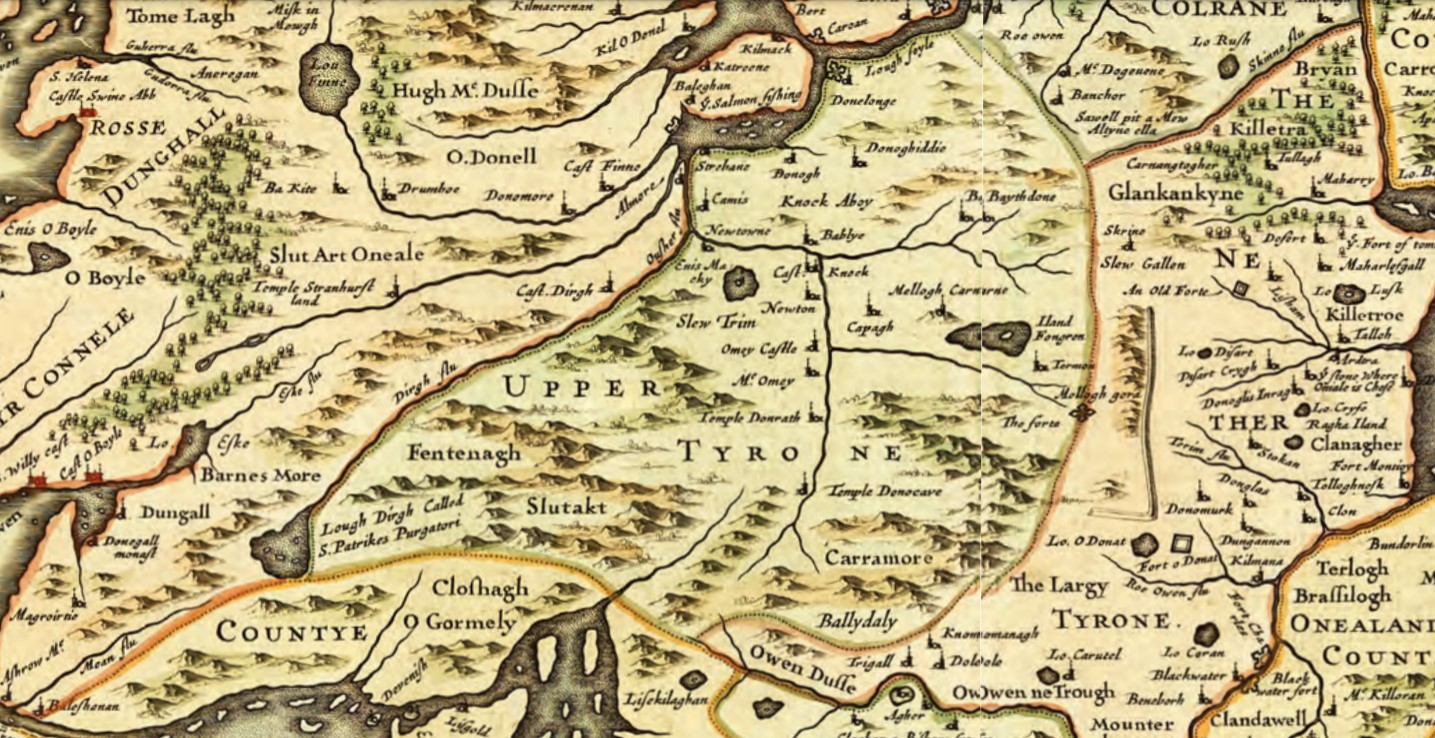
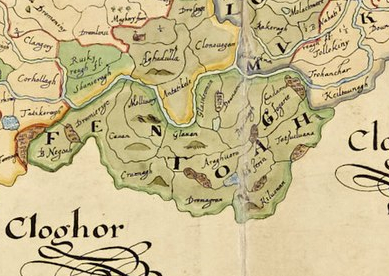
The Leigh Baronetcy of Tyrone, created in February 1622, represents a short but significant phase in the history of landownership in County Tyrone. Although the title itself endured for little more than a decade, it was closely connected with the Manor of Fentonagh (Castleleigh), one of the earliest Plantation estates in the Fintona district.
The estate originated under John Leigh in the early years of the Plantation of Ulster and later passed to his brother, Sir Daniel Leigh, 1st Baronet. Following the extinction of the baronetcy in 1635, the estate entered a prolonged period of fragmentation through inheritance, remarriage, and legal dispute. This process culminated in its sale in 1671 to Gilbert Eccles, marking the foundation of the later Ecclesville estate.
Origins of the Leigh Family in Ulster
In the early seventeenth century, three brothers:
- John Leigh
- Edmond Leigh
- Daniel Leigh
arrived in Ulster under the patronage of Sir Henry Bagenal.
- 1607 – Captain Edmond Leigh served as Sheriff of Omagh
- 1608 – Edmond Leigh died shortly afterwards
The surviving brothers, John and Daniel Leigh, retained lands formerly belonging to the Abbey of Omey, forming the basis of their later estate in Tyrone.
Establishment of the Manor of Fentonagh
- 1 April 1604 – Grant by Sir Ralph Bingley to John Leigh of a manor in County Donegal
(Source: Betham’s Transcripts) - c.1610 – Plantation grant of approximately 2,000 acres in County Tyrone
- Erected into the Manor of Fentonagh (Castleleigh)
- Situated in the Precinct of Clogher
Terms of the Grant
- Rent: £10 13s 4d
- Tenure: Common socage from Dublin Castle
- Included:
- 600 acres in demesne
- A court baron
- Numerous townlands (balliboes)
Development of the Plantation Estate
By 1619 (Pynnar’s Survey)
- Fortified bawn of lime and stone
- Stone dwelling house
- Village of eight houses
- Approximately 41 British settler families
1622 Survey
- Fortified enclosure (approx. 93 feet square)
- Three flankers
- Gatehouse and defensive works
One of the earliest structured Plantation settlements at Fintona.
Creation of the Leigh Baronetcy
- February 1622 – Sir Daniel Leigh created 1st Baronet of Tyrone
Family
- Wife: Mary Stanton
- Children:
- Sir Arthur Leigh
- Mary Leigh (m. George Arundell)
Union of Estate and Title
- 20 February 1631 – Death of John Leigh
→ Estate passes to Sir Daniel Leigh - 6 August 1632 – Regrant of Fentonagh lands confirmed
Estate and title now united in one line
Extinction of the Baronetcy
- 1 February 1633 – Death of Sir Daniel Leigh
- 27 February 1635 – Death of Sir Arthur Leigh (without issue)
The baronetcy becomes extinct
Fragmentation of the Leigh Estate (1635–1671)
Transition from Baronetcy to Dispersed Ownership
Introduction
The extinction of the Leigh Baronetcy in 1635 marked a decisive turning point in the history of the Fentonagh estate. With the death of Sir Arthur Leigh without issue, the estate ceased to exist as a unified hereditary holding and instead entered a prolonged period of fragmentation.
Between 1635 and 1671, ownership passed through a complex network of widows, remarriages, legal claims, and financial pressures. During this period, the estate was no longer controlled by a single lineage, but instead divided among interconnected families, primarily the Bingley and Meredith families, before its eventual consolidation under Gilbert Eccles.
1. Collapse of the Direct Male Line
- 1635 – Death of Sir Arthur Leigh (2nd Baronet) without issue
- The baronetcy became extinct
- No direct male heir to consolidate the estate
This created the structural weakness that led to fragmentation.
2. Control Through Widows and Marriage
Following 1635, control of the estate shifted into the hands of widows:
Dame Mary Leigh
Widow of Sir Daniel Leigh
Married:
- Captain John Bingly
- Captain John Cheswis
- James Chadwick
Elizabeth Leigh (née Ryves)
Widow of Sir Arthur Leigh
Married:
- John Bingley, Esq.
- Alderman William Smith of Dublin
Estate control now depended on marriage alliances rather than inheritance
3. Emergence of the Bingley–Smith–Meredith Line
Through these marriages, estate interests became concentrated in:
- John Bingley (Dublin merchant class)
- Alderman William Smith (civic elite)
- Dorothea Bingley (later Meredith)
- Arthur Meredith
This marks the transition from:
- Plantation settler family → urban/administrative ownership
4. Legal Disputes and Financial Claims
The estate appears repeatedly in legal and governmental records:
- 1640 – Chancery litigation involving Leigh heirs and associates
- 1646 – Petition of Dame Mary Leigh (£4,000+ claim)
- Civil War military arrears and compensation claims
These records indicate:
- Disputed rights and ownership
- Loss of stable rental income
- Dependence on litigation for recovery of funds
The estate was becoming legally complex and financially unstable
5. Civil War Impact
The 1640s significantly accelerated fragmentation:
- Deaths of key figures (Bingly, Cheswis)
- Loss of estate income
- Disruption of tenancy structures
- Increased reliance on Parliament for compensation
The estate shifted from:
- Productive landed unit
→ financially strained and contested asset
6. Evidence from the Civil Survey (1654–1656)
The Civil Survey provides the clearest picture of the estate in its fragmented state:
- Lands held by:
- Alderman William Smith
- Lady Leigh
- Over 1,600 acres still identifiable as part of the former Leigh estate
Despite fragmentation:
- The estate remained geographically coherent
- But was administratively divided
7. Transition to the Meredith Family
By the 1660s, control had effectively passed to:
- Dorothea Bingley (daughter of Elizabeth Leigh)
- Arthur Meredith (her husband)
Key developments:
- 1662 – Administration of Bingley estate to Dorothea
- 1670 – Administration of Elizabeth Leigh to Dorothea Meredith
- Lease evidence referencing estate annuities
This represents the final consolidation before sale
8. Final Disposal of the Estate
- 30–31 May 1671
Sale of the Manor of Fentonagh
Vendors:
- Arthur Meredith
- Dorothea Meredith
Purchaser:
- Gilbert Eccles
Marks the end of Leigh-derived ownership
Chain of Control (Simplified)
Leigh (pre-1635)
→ Widows (Mary & Elizabeth Leigh)
→ Bingley / Smith
→ Meredith
→ Eccles (1671)
Historical Significance
This period represents:
- The collapse of a Plantation baronetcy within one generation
- The transfer of land through female inheritance lines
- The growing role of:
- Urban elites
- Legal mechanisms
- Civil War compensation systems
Most importantly, it explains how:
A structured Plantation estate became a fragmented legal asset
before being reconstituted under the Eccles family
Documented Timeline and Evidential Record
1604
- 1 April: Grant by Sir Ralph Bingley to John Leigh
(Betham’s Transcripts)
c.1610
- Marriage of Sir Daniel Leigh to Mary Stanton
Early 17th Century
- Births of Arthur Leigh and Mary Leigh
20 February 1631
- Death of John Leigh
- Estate inherited by Sir Daniel Leigh
6 August 1632
- Regrant of Fentonagh confirmed
1 February 1633
- Death of Sir Daniel Leigh
27 February 1635
- Death of Sir Arthur Leigh (no issue)
c.1636
- Dame Mary Leigh marries Captain John Bingly
19/27 September 1638
- Elizabeth Leigh marries John Bingley
Sir John Bingley, Knt
28 March 1638, 17 Nov/d
Wife Elizabeth
only son John
daur Flower
gdson John Bingley son of John
5th Dec 1639
This assurance is taken
in Y hand of me Sir Wm.
Ryves to Y use of the
La: Grey also Bingley &
of my Sonn in Law John
Bingley and Dame Eliz
abeth his wife according
to the certain articles of
agreement made between
Ye
DameLady Grey andJohn Bingley of Y one part
and Y said Sir Wm Ryves
of Y other part on
Y Intermarriage of the
said John Bingley and Y said
Dame Elizabeth
Y Testator
Wm Ryves
Easter Term 1640
- Chancery Bill involving Leigh estate
c.1642
- Death of Captain John Bingly
c.1642–1645
- Marriage to Captain John Cheswis
2 October 1645
- Payment for arrears due
23 December 1646
- Petition of Dame Mary Leigh (£4,000+ claim)
10 March 1647
- Death of Sir William Ryves
c.1654
- Death of John Bingley
- Elizabeth Leigh remarries William Smith
1654–1656
- Civil Survey records estate holdings
1654–1656 – Civil Survey of Ireland (Detailed Returns)
The Civil Survey provides a detailed breakdown of lands associated with the former Leigh estate in the parish of Donocavey and surrounding areas.
Church Lands (See of Clogher)
- Held by Alderman William Smith of Dublin and Lady Leigh
- Lands: Rachearan, Feinon, Ravarron (4 townlands)
- Total: 200 acres
Breakdown:
- Meadow: 20 acres
- Arable: 120 acres
- Pasture: 10 acres
- Mountain & Bog: 50 acres
Rent (1640): £12
Parish Holdings – Donocavey
Holding 1
- Toghafadda, Lisnecrieve, Edentudrie, Lackaghboy
- 240 acres
Breakdown:
- Arable: 60
- Pasture: 60
- Barren: 90
- Mountain & Bog: 30
- Rent: £2 : 13 : 4
Holding 2
- Aghnabrissel, Draughton, Dongoran, Screggore, Killaberrie, Dromlaghlin, Tullarush, Seanew
- 430 acres
Breakdown:
- Meadow: 24
- Arable: 110
- Pasture: 115
- Mountain: 100
- Bog: 81
- Rent: £5 : 6 : 8
Holding 3 (Principal Leigh Holding)
- Held by William Smith (Alderman of Dublin) and Lady Leigh
- Tonnagh, Terenan, Mullasilago, Corvelley, Scrunick, Tatewille, Cariglas, Corcries
- 550 acres
Breakdown:
- Meadow: 22
- Arable: 120
- Pasture: 113
- Mountain: 190
- Bog: 110
- Rent: £5 : 6 : 8
Holding 4
- Tanaghittragh, Skelgagh, Killaliss, Lagashegall, Mullan, Druman, Ardatiny, Stradogor, Garvolly, Gargrim
- 550 acres
Breakdown:
- Meadow: 34
- Arable: 161
- Pasture: 138
- Mountain/Barren: 97
- Bog: 30
- Rent: £6 : 4 : 5
Summary of Survey
- Total Acreage: 1,682 acres
- Profitable Land: 960 acres
- Unprofitable Land: 722 acres
- Total Recorded Rent: £19 : 11 : 1
These returns demonstrate that, despite fragmentation, the estate remained substantial, structured, and still identifiable as the former Leigh holding in the mid-seventeenth century.
Barony of Strabane – Parish of Cappy
- Held by Heirs of Sir Daniel Leigh
- Lands: Shirrygrum & Lissnammallogh (Abbey lands)
- 66 acres
Breakdown:
- Arable: 40
- Pasture: 16
- Bog & Mountain: 10
Value (1640): £8
20 January 1658
- Death of Dame Mary Leigh
20 October 1662
- Administration to Dorothea Bingley
c.1668
- Chancery evidence of earlier marriage
21 May 1670
- Administration to Dorothea Meredith
14 October 1670
- Lease referencing estate annuity
30–31 May 1671
- Sale to Gilbert Eccles
2 August 1675
- William Smith elected Mayor of Dublin
8 November 1684
- Death of William Smith confirmed
Key Individuals
- Sir Daniel Leigh, 1st Baronet
- Sir Arthur Leigh, 2nd Baronet
- Dame Mary Leigh
- Elizabeth Ryves / Leigh / Bingley / Smith
- Dorothea Bingley / Meredith
- George Arundell
Sources
- Betham’s Transcripts
- Patent Rolls, Ireland
- Civil Survey of Ireland
- Parliamentary Petitions
- Chancery Bills
- PRONI D526/1; T962/1
- Plantation Papers (Hill)
- TNA: C 7/323/18
See Also: