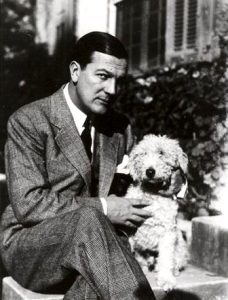
Wilfred Heyman Joynson-Wreford, usually known as “Tony”, was connected with Seskinore through his marriage to Amelia Isobel Eccles McClintock (“Leila”). His life encompassed three marriages, involvement in early transatlantic aviation, and the final years of Seskinore as a family home. His surviving correspondence provides a detailed record of estate affairs during his prolonged illness and absence abroad.
Early Life and Family
Tony was born on 30 July 1896 at 18 Belsize Grove, London. His birth certificate records his name as Wilfred Samuel Joynson Wreford; in later records, he used Wilfred Heyman Joynson-Wreford.
He was the son of Dr Heyman Wreford, MRCS, LRCP, and Catherine Hannah Guerrier. He had two elder siblings: Bertran William Heyman Wreford and Christabel Emma Catherine Wreford.
Heyman Wreford initially worked in the family’s gentlemen’s drapery business in Exeter before entering the medical profession. In 1892, he married Catherine Hannah Guerrier, daughter of Henry John Guerrier, a corn merchant. Catherine’s mother, Emma, was a daughter of William Joynson, owner of the prominent Joynson papermill at St Mary Cray, Kent.
After a period in Brighton, the family settled at “The Firs”, Denmark Road, Exeter.
Although formally recorded as Wilfred, he became widely known as Anthony or “Tony”. Contemporary newspaper reports from the 1920s refer to him as Captain A. Joynson-Wreford.
First Marriage: Frances Agnes Parker
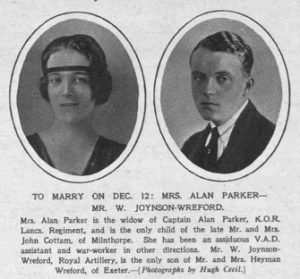
On 12 December 1918, Tony married Frances Agnes Parker, widow of Captain Alan Foggett Parker, at the Chapel Royal, Savoy, London. Frances had a daughter, also named Frances, from her previous marriage.
In 1923, Tony began a relationship with Olive Fletcher (née Trainor), wife of Henry Keddey Fletcher, a director of Fletcher, Son and Fearnall, marine engineers of Union Docks, Limehouse and Tilbury.
Both marriages subsequently ended in divorce. Olive’s daughters, Patricia and Barbara, remained with their father, while Olive received an annuity under the arrangements following her divorce.
Tony’s divorce from Frances was finalised on 1 February 1926.
Second Marriage: Olive Trainor and the Birth of Patrick

Tony married Olive on 10 March 1926 at the British Consulate in Paris.
In January 1928, Olive was nearing the end of her pregnancy. According to the family account later related by their son, she became unwell after eating oysters in Paris and went into premature labour. On 10 January 1928, she gave birth in a hotel on the Rue de Bassano.
Their son was named Anthony Patrick Joynson-Wreford, usually known as Pat.
The marriage broke down during 1928. By October, Olive had left England with their infant son for America. Surviving correspondence and the subsequent divorce proceedings document the financial and personal difficulties surrounding the separation.
Pat later recalled that his mother told him his father had left shortly after his birth and never returned. This shaped his early understanding of Tony. In later life, research and contact with people who had known his father led him to reconsider that account.
Correspondence preserved with the divorce papers at The National Archives provides further evidence of Tony’s circumstances during this period, including the consequences of his aviation interests.
Related page: Wreford v Wreford (1929 Divorce Case)
Breakdown of the Marriage
According to Pat, his mother later told him that his father had left shortly after his birth and never returned. This account shaped his early perception of Tony as distant and uncaring—an impression he would later revise through research and conversations with those who had known his father.
Documents preserved in the National Archives, including correspondence submitted during divorce proceedings, present a more complex picture. They reveal a man under considerable financial and emotional strain following the events of the previous year, including the failed Princess Xenia venture and the loss of Captain Hinchcliffe and Elsie Mackay.
Aviation and the Princess Xenia Flight
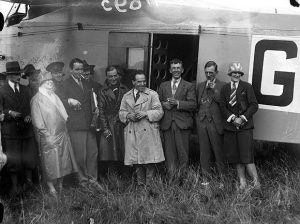
In September 1927, Tony was involved in financing an attempt to fly from Baldonnel, Ireland, to America in a Fokker F.VIIa monoplane named Princess Xenia.
Watch the British Pathé footage
He was originally intended to take part as navigator alongside Captain Robert MacIntosh. Contemporary accounts report that a recurrence of an old leg injury prevented him from participating, and Commandant James Fitzmaurice took his place.
William Bateman Leeds Jr. was the principal financier. The aircraft was named after his wife, Princess Xenia Georgievna. The circumstances in which Tony and Leeds first became acquainted have not yet been established.
Newspaper coverage and surviving Pathé footage refer to Tony as “Capt. A. Joynson-Wreford”, showing that the name Anthony was already in public use.
The name Xenia later appeared within Tony’s own family when he and Leila named their daughter Penelope Xenia, known as Xenia.
Hinchcliffe and Elsie Mackay
Tony remained associated with aviation after the Princess Xenia attempt. In early 1928, he accompanied Captain W. G. R. Hinchcliffe, DFC, on a visit to Baldonnel Aerodrome.
A report in The Irish Times of 14 March 1928, headed “A Visit to Baldonnel”, recorded that the two men had visited about a fortnight earlier and that Baldonnel had been considered as a possible base for Hinchcliffe’s transatlantic attempt.
On 13 March 1928, Hinchcliffe departed in the Endeavour, a Stinson SM-1 Detroiter, accompanied by the Hon. Elsie Mackay, daughter of the 1st Earl of Inchcape. Both were lost during the flight.
There was a later family connection: Tony’s daughter Xenia became a friend of Lady Rosemary Mackay, a grand-niece of Elsie, and served as a bridesmaid at her wedding.
Marriage to Leila McClintock and Return to Seskinore
In 1932, Tony married Amelia Isobel Eccles McClintock, known as Leila, the only child of Colonel John Knox McClintock and Amy Henrietta Frances Eccles McClintock of Seskinore.
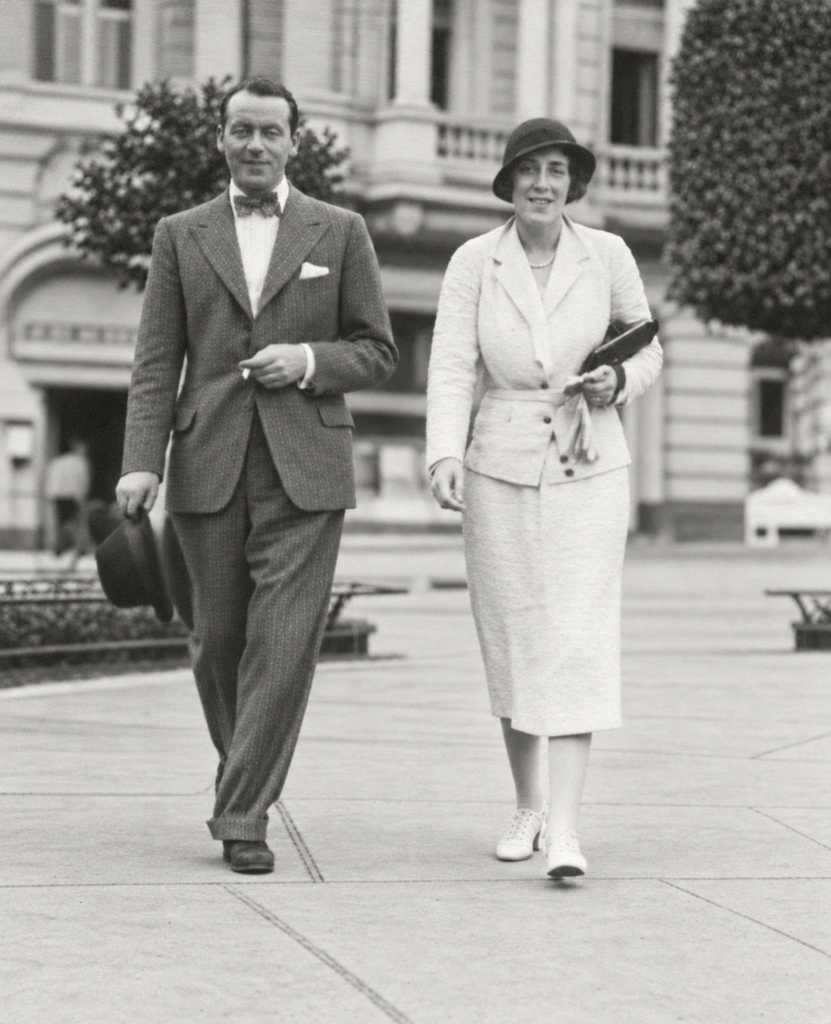
Collection. AI-restored from the original scan
Following Colonel McClintock’s death on 24 October 1936, Tony and Leila returned to Seskinore with their young daughter, Xenia. Leila succeeded to the remaining settled estate under the McClintock marriage settlement of 1893.
Their time together at Seskinore was brief. Leila died from meningitis on 30 January 1937, little more than three months after her father.
Under her will, dated 22 January 1935, Leila appointed Tony sole executor and left him her real and personal estate absolutely. The subsequent settlement and conveyancing documents of 1937–1938 record the arrangements through which the remaining Seskinore property and associated assets passed into his ownership.
Related pages:
- Leila McClintock: The Final Generation
- The Will and Probate of Amelia Isobel Eccles Joynson-Wreford
- 1937–1938 Settlement and Conveyance of Seskinore
Leila’s Garden of Remembrance
Leila was buried at Seskinore in the Garden of Remembrance.
Later recollections of life on the estate describe Tony walking Leila’s dog to the garden in the evenings and spending time beside her grave. These accounts form part of the remembered history of his final years at Seskinore.
His surviving letters provide contemporary evidence of his continuing attachment to the garden. Writing from hospitals and sanatoria between 1938 and 1940, he repeatedly asked Andy McHugh, the Seskinore gardener, to maintain “the Mistress’s Garden”, arrange flowers and prepare wreaths.
The correspondence also records his concern for the staff and tenants, household expenses, repairs, livestock, fuel supplies and the upkeep of the church and school.
Related pages:
- The Garden of Remembrance at Seskinore
- Tony Joynson-Wreford’s Letters from England, Egypt and Davos, 1938–1940
Illness and Treatment Abroad
Tony’s health deteriorated during the late 1930s. He spent extended periods in hospitals and nursing homes, while continuing to oversee Seskinore through correspondence.
During his stay in Barnstaple in late 1938, the Chapel of Ease at Seskinore was damaged on Christmas Eve. His sister, Christabel Gladwell, wrote to McHugh about the incident.
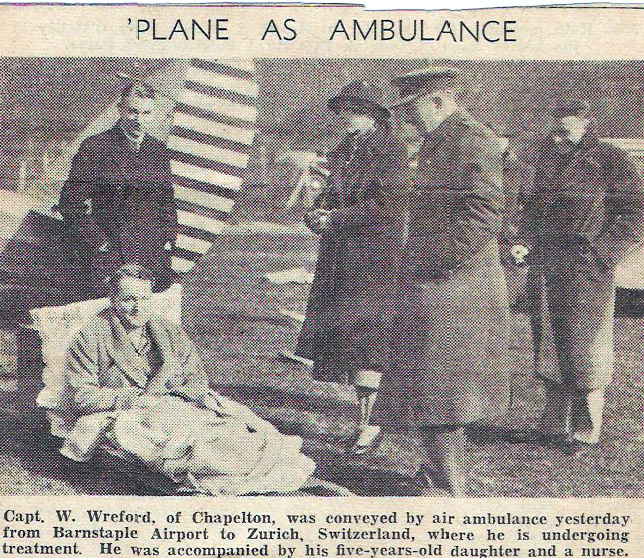
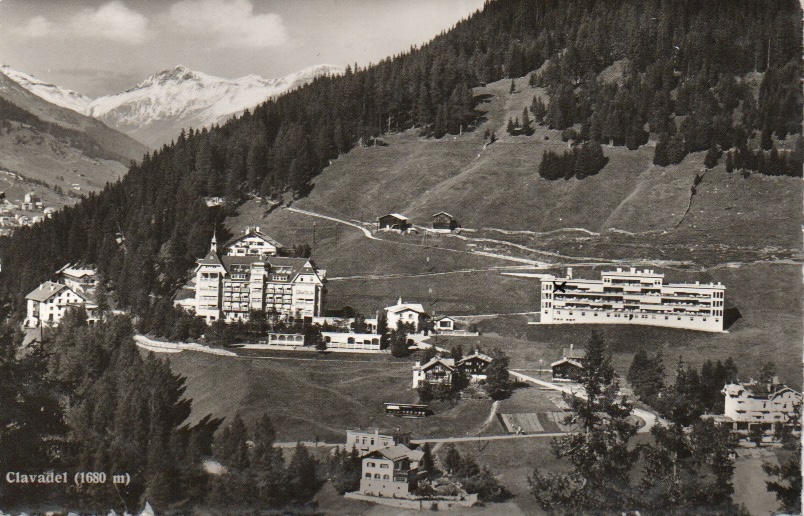
By early 1939, Tony was suffering from tuberculosis. In March, he travelled by air ambulance from Barnstaple to Zurich before continuing to the Kurhaus at Clavadel, near Davos, for treatment.
He was accompanied by his daughter Xenia, his nurse, and Xenia’s nurse, Helen Hunter, affectionately known as “Nursie”.
From Switzerland, Tony continued to write to McHugh. His letters combine practical instructions with expressions of loneliness and a wish to return home. After the outbreak of war in September 1939, he also discussed communications, food production and the possible wartime use of Seskinore House.
Death at Clavadel
Tony died at the Kurhaus, Clavadel, on 23 March 1940, aged 43.
His final surviving letters, dated February 1940, show that he remained concerned with wages, accounts and the welfare of people at Seskinore, despite considerable weakness.
His death left Xenia without either parent. The subsequent administration of his estate, and the arrangements made for his daughter, form part of the later history of Seskinore.
Related pages:
- Final Letters from Davos, 1940
- Tony Joynson-Wreford’s Will and the Sale of Seskinore
- Xenia’s Early Life: Guardianship, Separation and Silence
Amy McClintock and the Estate Settlement
Tony’s connection with Seskinore was also shaped by the financial provisions of the 1893 marriage settlement between Leila’s parents.
After Colonel McClintock’s death, Amy retained a jointure entitlement of £300 a year. During the reorganisation following Leila’s death, this entitlement was converted into a lump-sum payment of £3,703 15s. The relevant settlement and conveyancing papers explain how the earlier obligations were addressed.
Amy survived her husband, daughter and son-in-law. She died at Effingham, Surrey, on 4 April 1942.
Her probate papers and the documents relating to the settlement provide further evidence of the final arrangements affecting the McClintock and Joynson-Wreford interests in Seskinore.
Related pages:
- Amy Henrietta Frances Eccles
- Will of Amy Henrietta Frances Eccles McClintock
- Marriage Settlement of John Knox McClintock and Amy Eccles (1893)
Dispersal of the Contents of Seskinore Lodge
The contents of Seskinore House appear to have been dispersed during the winding down of the estate.
An article dating from approximately 1949 refers to the acquisition of a bound volume of estate maps when the goods and effects of Seskinore Lodge were disposed of. It describes the house as the former residence of Colonel J. K. McClintock, but does not, in the passage quoted, establish the date of the dispersal.
No complete auction catalogue or formal sale record has yet been identified. The date and circumstances therefore remain subjects for further research.
The 1846 estate maps are preserved at the Public Record Office of Northern Ireland, under reference D568:
Related Pages and Sources
- Tony Joynson-Wreford’s Letters from England, Egypt and Davos, 1938–1940
- Wreford v Wreford (1929 Divorce Case)
- Letters Relating to the Breakdown of the Marriage of Olive and Tony Joynson-Wreford (1928)
- Leila McClintock: The Final Generation
- The Garden of Remembrance at Seskinore
- Will of Tony Joynson-Wreford’s (Full Transcription, 1939–1940)
- Xenia Joynson-Wreford: Early Life, Loss and Rediscovery
- Patrick Joynson-Wreford: Final Years and Return to Seskinore
- The Decline and End of the Seskinore Estate
- Princess Xenia at Baldonnel — British Pathé footage
- William Bateman Leeds — Museum of the City of New York
- PRONI D568 — McClintock estate maps, 1846