Introduction
The Browne-Lecky family represents the final phase in the history of Ecclesville as a privately held estate.
Through inheritance within the extended Eccles family, the Ecclesville demesne passed into the hands of the Browne-Lecky family in the early twentieth century. Their ownership marked the transition of the estate from a traditional landed property to a more limited private holding following the sale of much of the surrounding lands under the Land Acts.
The family’s tenure at Ecclesville is closely associated with Raymond Saville Conolly de Montmorency Lecky Browne-Lecky, the last private owner of the house and demesne.
The Browne-Lecky Inheritance
The Browne-Lecky family’s connection to Ecclesville arose through their relationship to the Eccles family.
Following the break-up of the wider estate and the retention of the demesne lands, Ecclesville House passed within the extended family to the Browne-Lecky line. This transfer reflects the complex network of inheritance linking the Eccles, Browne, and Lecky families.
Raymond Browne-Lecky
The central figure in this period is:
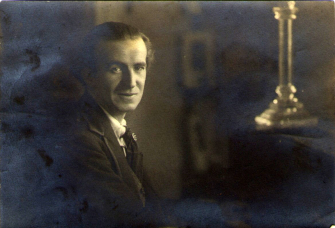
Raymond Saville Conolly de Montmorency Lecky Browne-Lecky (1881–1961)
He was the final private owner of Ecclesville and the last representative of the estate as a functioning country house.
His life reflects the changing character of the Irish landed class in the twentieth century, combining elements of tradition, cultural engagement, and adaptation to a very different social and economic environment.
Later Years of Ecclesville
Under the Browne-Lecky family, Ecclesville survived as a reduced demesne rather than a large estate.
Following Raymond’s death in 1961, the property passed out of private ownership. Subsequent attempts to repurpose the house were unsuccessful, and it was eventually demolished in 1978.
See Also
- Raymond Browne-Lecky (1881–1961)
- Character & Personality
- Theatre & Charitable Work
- Later Life at Ecclesville
- Scrap Album (PRONI D1385/4)