Tony Joynson-Wreford’s Letters from Seskinore, Egypt and Davos, 1938–1940
Overview
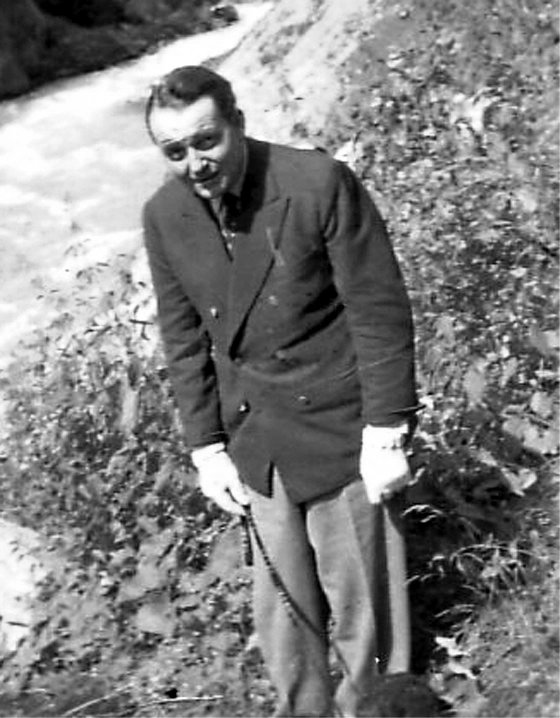
The surviving letters of Captain Wilfred Heyman (“Tony”) Joynson-Wreford, written between 1938 and 1940, provide one of the most intimate records of Seskinore during its final years as a family estate.
Written from London, Cairo, Devon, and the Kurhaus at Clavadel above Davos, the letters were addressed chiefly to Andy McHugh, who remained at Seskinore and helped manage the estate during Tony’s absence.
They reveal a man seriously ill, increasingly unable to return home, yet still deeply involved in every aspect of Seskinore: wages, repairs, staff, livestock, church maintenance, fuel, gardens, and the welfare of those living and working there.
Above all, the letters show Tony’s continuing devotion to Leila’s garden — the Garden of Remembrance — which he repeatedly calls “the Mistress’s Garden.”
Why the Letters Matter
The letters are important because they preserve the voice of the estate at a moment of transition.
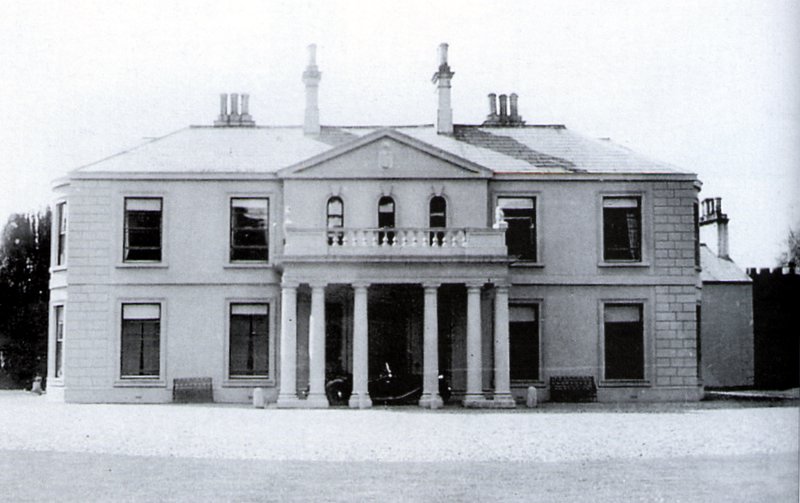
Seskinore House was still standing, the household still functioned, and the grounds were still being maintained, but the future was uncertain.
Tony’s letters show both practical estate management and personal grief. He writes about wages and insurance cards in one paragraph, and in the next asks whether the garden is looking well.
They also record the approach of war in 1939, his isolation in Switzerland, and his longing to return home.
The Mistress’s Garden
The most repeated emotional thread in the letters is Tony’s concern for Leila’s garden.
Again and again he asks Andy to care for it, send flowers from it, make wreaths for it, and keep it beautiful.
In February 1939 he wrote:
“I do hope ‘The Garden’ is looking very lovely now.”
In April 1939, writing from Davos, he asked for tulips and narcissi to be sent from Seskinore:
“It will be so good to see something again from Seskinore.”
In July 1939, for Leila’s birthday, he asked Andy to make a wreath for the garden:
“I want you to make my wreath for the garden this time… I think it would be nicer to use our own flowers.”
These letters show that the garden was not simply a burial place, but the emotional centre of Tony’s remaining connection to Seskinore.
Estate Management from Afar
The letters also show Tony managing the estate in extraordinary detail despite serious illness.
He wrote about:
- wages and insurance cards
- repairs to the house
- labourers and staff
- church heating
- the sawmill engine
- livestock, hay, sheep, pigs and cattle
- gates, paths and painting
- coal, coke, turf and fuel
- the school stove
- the house, servants and caretaking arrangements
Even from hospital beds and sanatoria, he continued to think of Seskinore as a living estate that needed constant attention.
Illness and Longing to Return
The letters become increasingly poignant as Tony’s illness worsened.
In January 1938, from Middlesex Hospital, he wrote:
“I have lost the use of both my legs.”
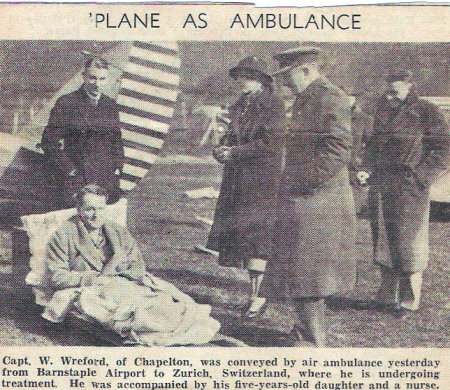
By 1939, from Switzerland, he was still hoping to return:
“I shall be so glad to get home again. It is nearly a year since I last saw you all.”
The letters show his physical decline, but also his continuing attachment to the people and place he had left behind.
War and Isolation
The outbreak of war in September 1939 changed the tone of the correspondence.
Tony, then in Switzerland, became increasingly anxious about communication, transport, food production, and the possible use of Seskinore House as a hospital.
He wrote:
“It is very worrying being so far away.”
He asked Andy to communicate by telegram if necessary, and discussed ploughing available land, raising sheep and pigs, and preparing the house for possible wartime use.
By this stage, he was largely confined to bed or a wheelchair and uncertain whether he would ever return home.
The SS Motor Car
One letter, written from Clavadel on 29 January 1940, is important for identifying Tony’s blue SS motor car.
In it he referred to taking the car to Egypt in 1938 and asked Andy to search his desk for the Automobile Association Carnet de Passage:
“When I took the S.S. (I forget the number now but it was E.P.B. I think) to Egypt in 1938…”
He explained that the document was a grey book marked:
“CARNET. DE. PASSAGE”
and that it contained counterfoils describing the car.
This letter confirms that the car travelled abroad with him and that formal motoring documents once existed which may have recorded its details.
Selected Extracts
London, 21 January 1938
“If you knew how ill I was you would see that this sort of thing didn’t happen. I have lost the use of both my legs.”
Cairo, 6 February 1938
“Miss Xenia is very well and rides her donkey every day.”
Cairo, 26 February 1938
“I was glad to get your letters and hear that everything is alright at Seskinore.”
Devon, 6 December 1938
“I am so glad the Mistress’s Garden is looking well.”
Barnstaple, 1 February 1939
“I am always glad to think I have you looking after my interests at Seskinore.”
Davos, 14 April 1939
“It will be so good to see something again from Seskinore.”
Davos, 18 July 1939
“July 21st is the Mistress’s birthday. I want you to make my wreath for the garden this time…”
Davos, 30 August 1939
“In case of War they will want the house as a hospital…”
Davos, 18 September 1939
“I shall be so glad to get home again. It is nearly a year since I last saw you all.”
Davos, 29 January 1940
“When I took the S.S. … to Egypt in 1938…”
Significance
Taken together, Tony Joynson-Wreford’s letters are among the most valuable personal documents connected with the final years of Seskinore.
They show:
- the estate still functioning after Leila’s death
- Tony’s grief and attachment to her memory
- the continued care of the Garden of Remembrance
- the practical realities of managing a country house from afar
- the effects of illness, distance and war
- and the slow closing of the final chapter of family life at Seskinore
They are deeply personal, but also historically important.
They preserve the voice of a man trying, from hospital beds and foreign sanatoria, to keep Seskinore alive.
Full Letter Transcriptions
The complete surviving letters are best presented separately in chronological groups:
Full Letter Transcriptions
- Letters from Egypt and London, 1938
- Letters from Devon and Barnstaple, 1938–1939
- Letters from Clavadel, Switzerland, 1939
- Wartime Letters from Switzerland, 1939–1940
- Final Letters from Davos, 1940