John (Jack) Knox McClintock & Amy Henrietta Frances Eccles
Marriage, Estate, and Division at Seskinore
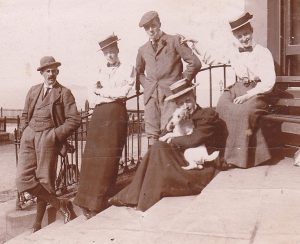
in front, Rose Eccles (sister of Amy McC), Portrush 1896
Introduction
Colonel John (Jack) Knox McClintock inherited the Seskinore estate in 1887 following the death of his father, George Perry-McClintock.
His marriage in 1893 to Amy Henrietta Frances Eccles, co-heiress of the Ecclesville estate near Fintona, brought together two significant Tyrone estates and marked a new chapter in the history of Seskinore.
This union linked the McClintock family not only to Ecclesville, but to a wider network of families including the Browne-Leckys.
John (Jack) Knox McClintock
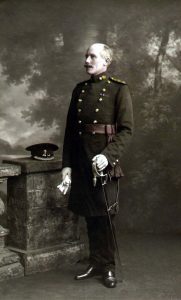
John (“Jack”) Knox McClintock was born on 8 February 1864 and educated at Cheltenham College and Oxford Military College.
He pursued a distinguished military career with the Royal Inniskilling Fusiliers, later commanding the 3rd Battalion from 1909 to 1919. During the First World War, he was mentioned in despatches and attained the rank of Brevet-Colonel.
He also played a prominent role in civic life:
- High Sheriff of County Tyrone (1891)
- County Commandant, Ulster Special Constabulary
He maintained the sporting traditions of the estate as Master of the Seskinore Hunt.
Amy Henrietta Frances Eccles
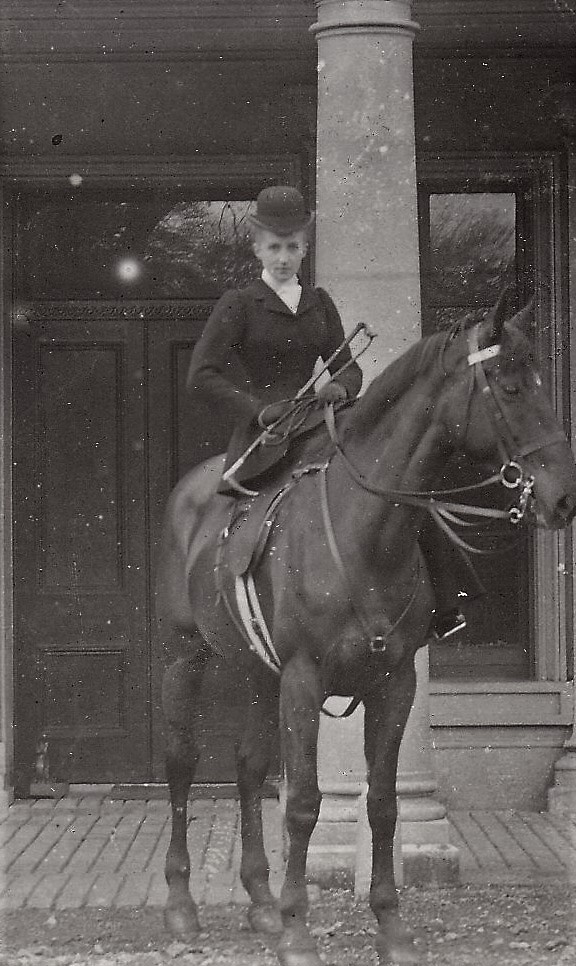
Amy Eccles was the eldest daughter and co-heiress of John Stewart (or Stuart) Eccles of Ecclesville, a substantial estate of over 9,000 acres.
Through her mother, Caroline Frances Browne, she was connected to the Browne (later Browne-Lecky) family of Aughentaine, linking her to a wide network of landed families.
The Ecclesville estate was governed by a strict entail in tail male, meaning Amy held only a life interest—its future dependent on male succession.
Marriage and Estate Settlement (1893)

The marriage in April 1893 was accompanied by a formal legal settlement that reshaped the future of Seskinore.
A disentailing deed altered succession, allowing the estate to pass to a daughter in the absence of a male heir—an important departure from earlier practice.
Ecclesville and Seskinore
Following their marriage, John and Amy initially resided at Ecclesville.
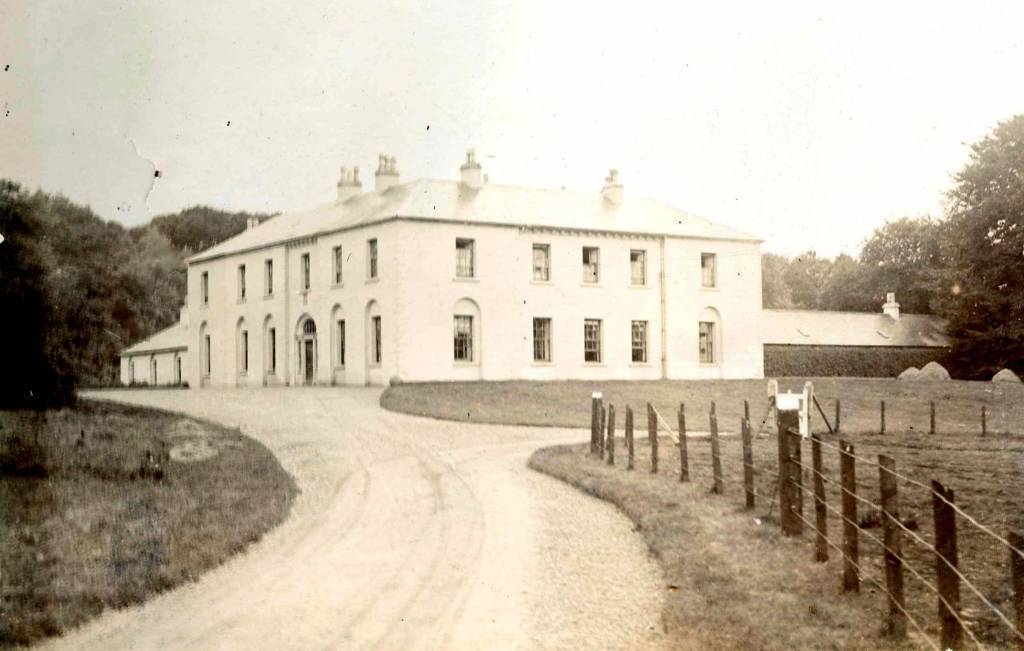
By the 1901 census, Amy and their daughter were living at Seskinore, while John was absent on military duties.

The connection between the two estates was both practical and symbolic—linking land, inheritance, and identity.
Family Life
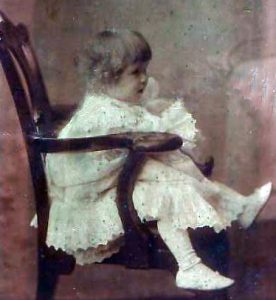
The couple had one child:
- Amelia (“Leila”) Isobel Eccles McClintock, born 21 July 1898
Very little survives in the written record of her early life. A handful of photographs—rescued during the sale of Seskinore House—offer only fleeting glimpses.
Newspaper accounts from around 1912 describe concerts at Ecclesville hosted by Raymond Browne-Lecky, in which Amy performed—yet Leila is notably absent from these accounts.
Strain and Separation
By the early 20th century, the marriage had broken down.
Letters preserved in the McClintock archives reveal a relationship marked by deep and lasting strain.
Financial Strain
The breakdown of the marriage had clear financial consequences for both Amy and her daughter.
A revealing letter written in October 1923 by Lt.-Col. Henry G. S. Alexander—agent for the Ecclesville estate and John (Jack) Knox McClintock’s maternal uncle—provides a rare and candid insight into their circumstances at the time:
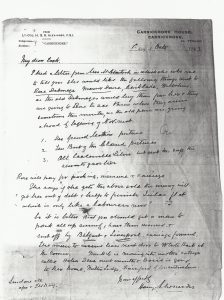
Letter from Lt.-Col. H. G. S. Alexander to Colonel John (Jack) Knox McClintock
Carrickmore House, County Tyrone – 1 October 1923
My dear Jack,
I had a letter from Mrs McClintock in which she asks me to tell you she would like the following things sent to Rose Delmege Manor House, Cricklade, Wiltshire.
As the old Delmeges would buy them from her & they are going to come to see them when they arrive sometime this month, as the old pair are going abroad by beginning of Nov. next.
Her Grand Mother’s picture.
The Best of the Claud pictures.
All Ecclesville Silver but not the cup from servants gantrie.
Rose will pay for packing, insurance & carriage.
She says “if she gets the above sold the money will get her out of debt & helps to furnish Leilas flat which is only like a labourers room”
So it is better that you get a man to pack all up securely, have them insured & sent off by Belfast & Liverpool, carriage forward.
The man to insure lives next door to White Hart at the corner.
Mrs McC is moving into another cottage called Holm Dene next month & Dosie is going to her home, Milton Lodge, Fairford, Gloucestershire.
Yours affectionately,
Henry Alexander
Send me all
c/o Dickey
Interpretation
This letter offers a stark contrast to the world of Seskinore.
It reveals:
- The sale of family possessions, including Ecclesville silver and paintings
- Financial pressure significant enough to require liquidation of assets
Leila living in modest accommodation, described as
“only like a labourers room”
It also confirms that Amy and Leila were firmly established in Gloucestershire, living away from both Seskinore and Ecclesville.
Context
Lt.-Col. Henry George Samuel Alexander (1848–1931), who wrote the letter, was:
- Agent for the Ecclesville Estate
- John Knox McClintock’s maternal uncle
- A key intermediary in managing estate affairs during this period
The Cause of the Break
The precise circumstances surrounding the breakdown of the marriage between John (Jack) Knox McClintock and Amy Eccles are not fully documented in formal records. However, a consistent account survives through local testimony and later family recollection.
During a visit to Seskinore in 2005, questions about Amy’s life—and particularly her departure—were met with noticeable hesitation among local residents. Only later, in more private conversation, did a version of events emerge that had clearly been remembered, but rarely spoken of openly.
According to accounts later recalled locally and within the wider family circle, sometime around 1916, Colonel McClintock—by then too old for active front-line service—was commanding the 3rd Battalion of the Royal Inniskilling Fusiliers in Londonderry. During this period, it came to his attention that Amy was involved in an affair with a man from Omagh.
He is said to have returned to Seskinore unexpectedly, where he discovered the pair together. In the confrontation that followed, he reportedly chased the man from the house, brandishing a horsewhip.
This account was later corroborated by Rosalie McClintock (née Orr), daughter of W. E. Orr, Clerk of the Crown and Peace, and a close associate of the Colonel. Rosalie identified the man as George Fleming, son of Dr. Fleming of Campsie House, Omagh. She further recalled that the Colonel had threatened to shoot him on the spot—and believed he would have been justified in doing so.
Consequences
Whether embellished in the retelling or not, the consequences of the incident were clear and lasting.
Amy was effectively excluded from the McClintock family circle and compelled to leave Ireland. She settled in Gloucestershire, near her sister, and did not return during her husband’s lifetime.
Leila accompanied her, and by 27 November 1917, she is recorded as enrolling at the RFC station at Rendcomb, confirming that both mother and daughter were established in England by that time.
The rupture was never healed. Its effects extended beyond the personal, influencing family relationships and, ultimately, the future management and stability of the Seskinore estate.
Later Years
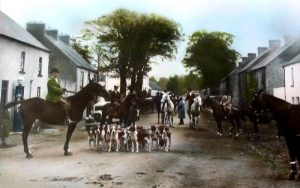
John (Jack) Knox McClintock remained at Seskinore until his death on 24 October 1936.
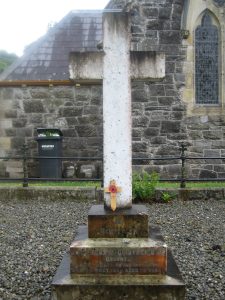
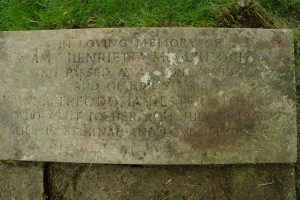
Amy died in England on 4 April 1942 and was buried at St. Lawrence Churchyard, Effingham.
Legacy
Their marriage stands at the centre of the Seskinore story.
It united estates and families—but also introduced division and instability that shaped what followed.
Their only child, Leila, would become the final link between these worlds.