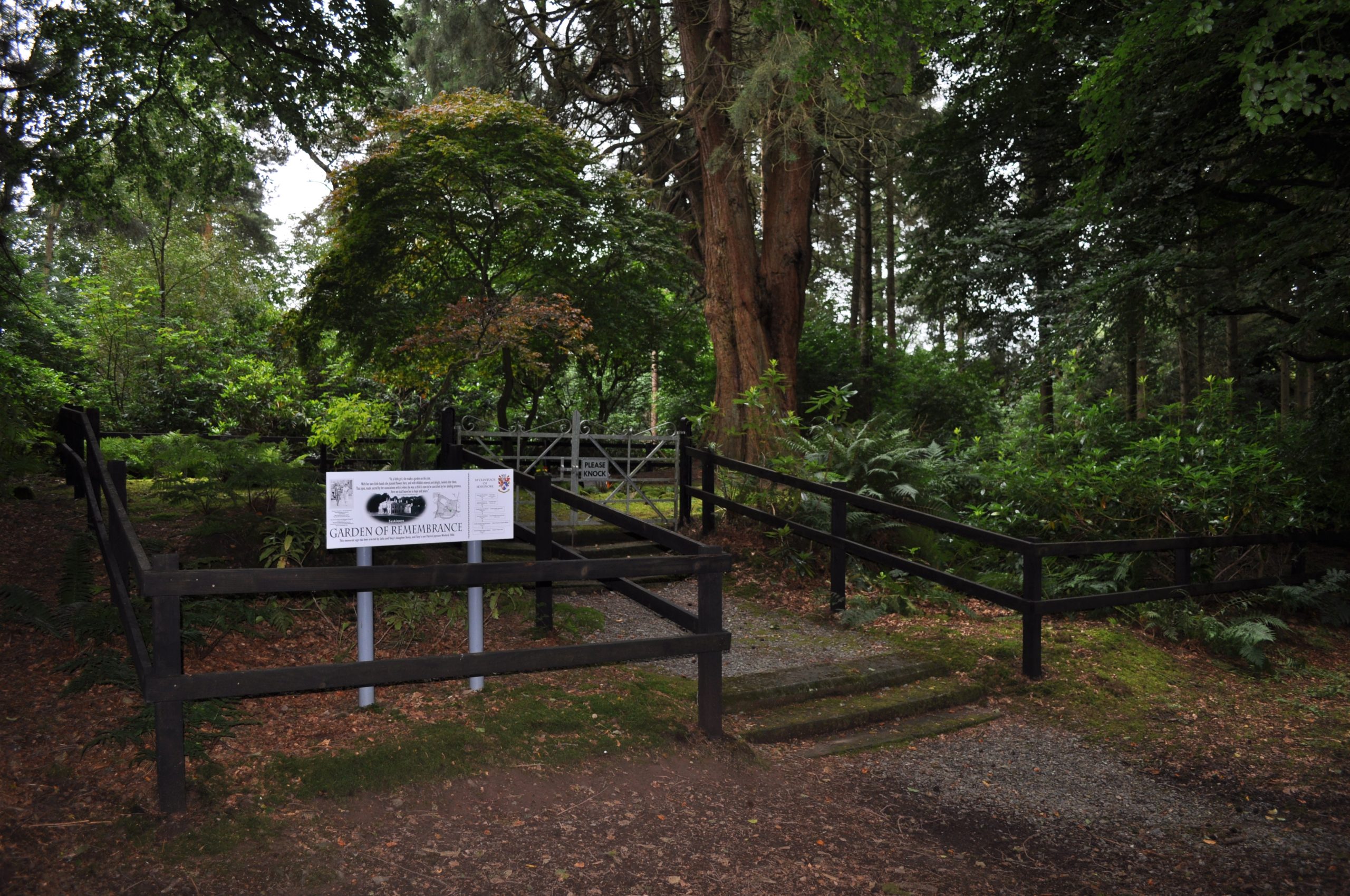
 The Garden of Remembrance at Seskinore occupies a unique place in the history of the estate. Unlike the house, the lands, and much of the demesne, it was neither abandoned nor lost, but preserved as a place of personal and historical continuity.
Origins
The garden originated in the childhood of Amelia (Leila) Isobel Eccles McClintock.
As a young girl, she created a small garden of her own near the house, setting it apart as a private space. At its entrance, she placed a sign bearing the words:
“Please Knock.”
This simple detail reflects both the character of the child and the sense of ownership she felt over the space.
A Place of Burial
Following her death in January 1937, this same garden was chosen as her place of burial.
Rather than being interred in the formal family burial ground, she was laid to rest in the space she had created herself—a decision that gave the garden a deeply personal significance.
At the time of her burial, the connection between her childhood and her final resting place was noted in the words spoken there:
“As a little girl, she made a garden on this site…
That spot, made sacred by her associations with it when she was a child is now to be sanctified by her abiding presence.”
Tony Joynson–Wreford
Following Leila’s death, her husband, Captain Wilfred Heyman Joynson–Wreford, formed a strong and lasting attachment to the garden.
Each evening, he would walk to the garden and sit beside her grave, often remaining there for extended periods. His daily visits became part of the life of the estate during its final years as a family residence.
In his will, he made specific provision for the preservation of the garden, stating that access should be retained for members of both his own family and the McClintock family, and that the garden should be maintained in perpetuity.
He further expressed the wish that his ashes should be scattered there.
Preservation Through Change
The importance of the garden was recognised even as the estate itself was being broken up.
When Seskinore House and surrounding lands were sold in 1941, the Garden of Remembrance was specifically excluded from the sale. Rights of access were retained, ensuring that it would remain connected to the family despite the transfer of ownership.
This decision set the garden apart from the wider fate of the estate.
Final Resting Place
Following Tony’s death in Switzerland in 1940, his ashes were eventually returned to Seskinore.
After the end of the Second World War, they were interred beside Leila in the garden. A simple memorial stone was placed alongside hers, marking their final resting place together.
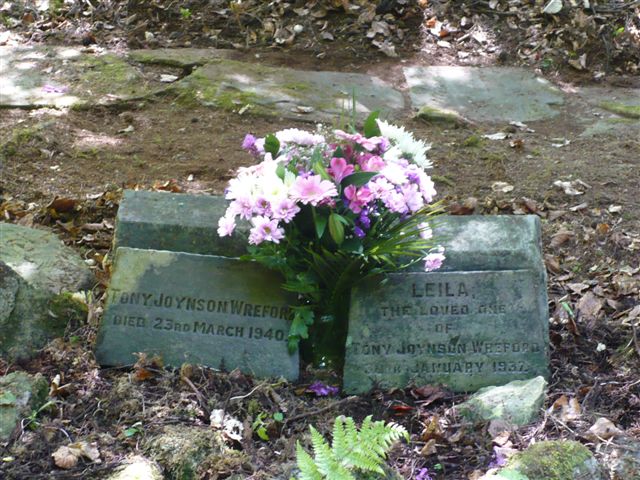
The Garden Today
Although the house at Seskinore was demolished in 1952, the Garden of Remembrance survived.
It remains one of the most significant surviving elements of the estate:
- A place of burial
- A link between generations
- A physical reminder of the personal history of the family
Unlike many features of the estate, which have been lost or altered, the garden continues to preserve its original purpose.
Restoration and Remembrance
In later years, the Garden of Remembrance continued to hold deep significance for those connected with the history of Seskinore.
On:
28 October 2006
a commemorative sign was erected within the garden to mark the resting place of:
- Leila McClintock
- and Captain Tony Joynson-Wreford
The intention was not only to identify the secluded burial place hidden within the woodland, but also to preserve the memory of those associated with it for future visitors to the estate.
The project brought together members of the extended family, including:
Anthony Patrick (“Pat”) Joynson-Wreford
and
Penelope (“Xenia”) Joynson-Wreford
who jointly agreed to fund the sign as a lasting memorial.
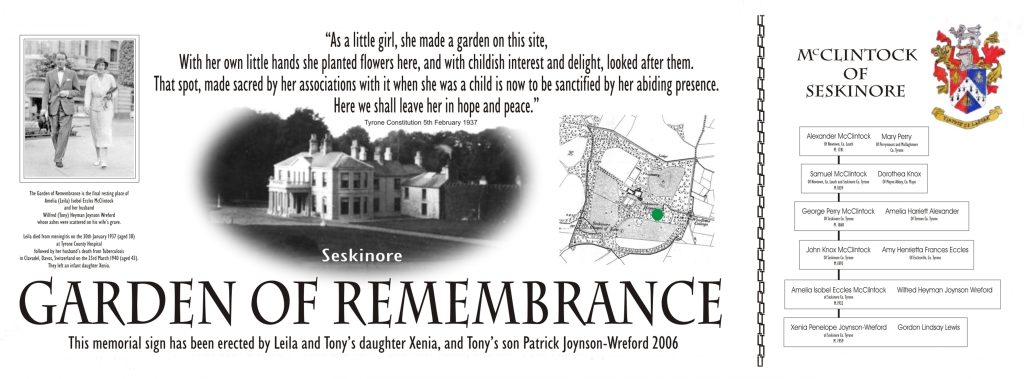
The plaque was designed by my friend Jim Kelly who created a simple and understated design centred upon an interlaced chain of the initials:
“L & T”
symbolising the bond between Leila and Tony Joynson-Wreford.
The memorial also included:
- a short account of their lives
- and a small ancestry diagram placing them within the wider history of the Seskinore family.
The installation of the sign became a significant moment in the continuing rediscovery and preservation of Seskinore.
On a cool autumn day, family members travelled to the garden carrying cement, tools, brushes, and materials needed for the work. Among those present were my mum, dad, and Peter, all of whom assisted in the installation.
My dad carefully prepared the ground and dug the post holes, and before long the sign stood securely in place among the trees surrounding the graves.
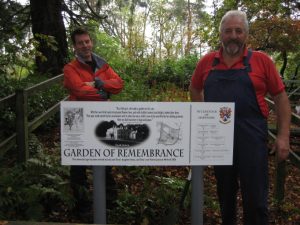
Quietly positioned within the woodland, it became more than a marker alone. It stood as:
- a memorial
- a gesture of remembrance
- and a continuation of the connection between the family and Seskinore itself.
In a landscape where so much has disappeared, the Garden of Remembrance remains one of the few surviving places where the personal history of the estate can still be directly felt.
Return to Seskinore (2008)
On:
2 June 2008
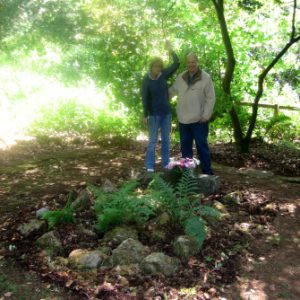
Xenia Joynson-Wreford, Pat Joynson-Wreford, and I returned together to Seskinore, staying for several days at nearby Greenmount Lodge.
By this time, Pat’s health had begun to decline following a stroke in 2006, and considerable care was taken throughout the journey to ensure that he could comfortably revisit the places so closely connected with his family history.
During the visit we met with:
- Lisa Morgan
- and Roisin Anagnostides
with whom I had worked for several years in identifying and helping secure the registration of surviving residual properties associated with the Seskinore estate.
The work had become more than a legal or administrative exercise. It formed part of a wider effort to reconstruct and preserve the fragmented remains of the estate and its history.
Later that day we travelled to:
The Garden of Remembrance
bringing the car as near as possible to allow Pat to make the short walk through the woodland.
The forest retained its familiar stillness, and as we approached the garden both Pat and Xenia paused quietly, taking in the scene before them.
The memorial sign erected in 2006 now stood firmly in place among the trees. Its understated design, centred upon the interlaced initials:
“L & T”
continued to mark the memory of:
- Leila McClintock
- and Tony Joynson-Wreford
and their enduring connection with Seskinore.
Nearby stood the renewed garden gate, reconstructed in galvanised aluminium to withstand the passage of time while preserving the character of the original entrance.
For both Pat and Xenia, the return to the garden represented more than a visit alone. It formed part of a renewed connection with a place deeply bound to family memory, loss, and continuity across generations.
Final Visit (2012)
In the summer of:
2012
Xenia Joynson-Wreford returned once more to Seskinore, accompanied by family members during what would become her final visit to the estate and to the Garden of Remembrance.
By this stage, the rediscovery and restoration of Seskinore’s surviving history had already been largely achieved. The remaining visits carried a quieter character — less concerned with research or recovery, and more with reflection, memory, and personal connection.
During this final return, Xenia again visited:
The Garden of Remembrance
where the graves of:
Leila McClintock
and Captain Tony Joynson-Wreford
remained sheltered beneath the trees of the old demesne woodland.
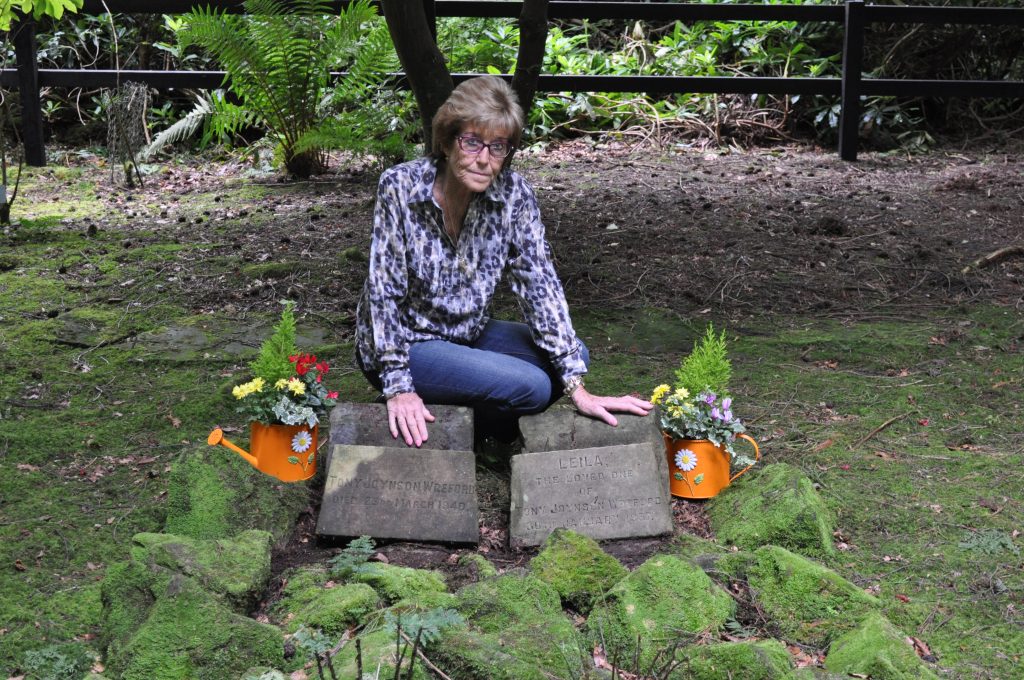
The garden, preserved through decades of change and loss, continued to represent one of the most personal surviving links to the family’s history at Seskinore.
A photograph taken during this final visit captures Xenia within the landscape so closely connected to her family story — a final return to a place which, after many years of separation, had once again become part of her life.
Significance
The Garden of Remembrance stands apart within the history of Seskinore.
It represents:
- Continuity in the midst of change
- The personal dimension of estate history
- The enduring connection between place and memory
While the estate itself has been transformed, the garden remains a focal point through which its history can still be understood.
See also:

