The Chapel of Ease at Seskinore (Consecrated 1873)
A Church Built in Grief
The construction of the Chapel of Ease at Seskinore was closely connected to a period of profound personal loss within the McClintock family.
Following the deaths of young family members in the 1860s and early 1870s, the chapel became not only a place of worship, but a memorial space at the heart of the estate.
Contemporary Account
A contemporary newspaper report records the consecration and details of the building:
SESKINORE CHURCH, CO. TYRONE
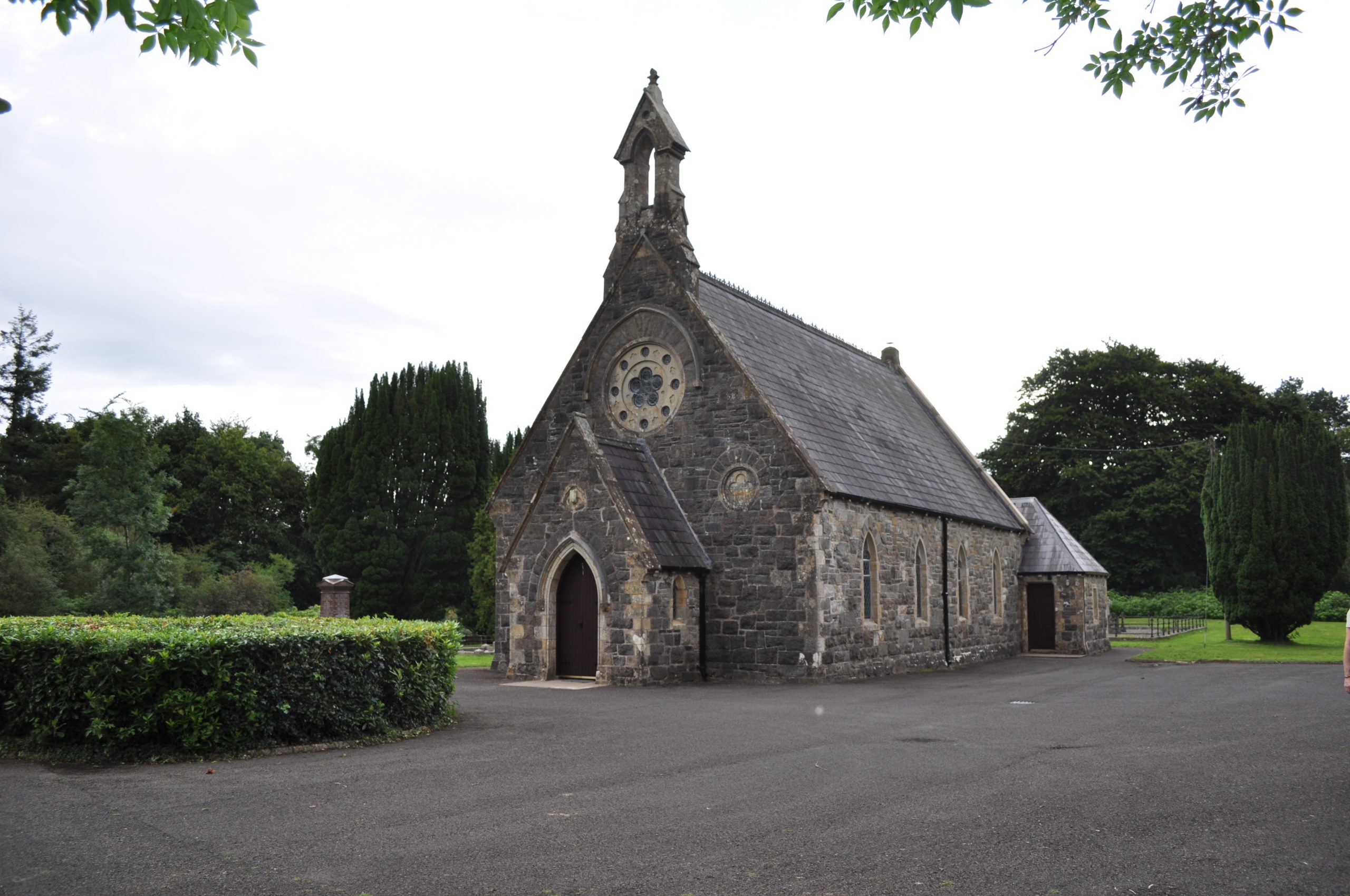
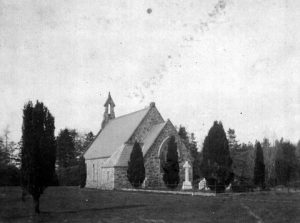
The new church at Seskinore, County Tyrone, has been consecrated by the Lord Primate. It is erected on the estate of Major G. P. McClintock. The building is in the early Gothic style, and, while the ornamentation is not profuse, the general effect is singularly neat and pleasing.
The church is built of the black stone of the neighbourhood, with quoins and dressings of Dungannon freestone. The fittings are of pine, stained and varnished, and the roof is sheeted between the rafters with stained and varnished sheeting.
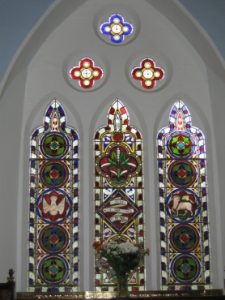
The chancel window is filled with an exceedingly pretty design, the subject of which was suggested by Mrs. McClintock, in commemoration of a very painful family bereavement.
On a brass plate below the window is the following inscription:
“This window was erected in memory of our darling boy, Beresford George Perry McClintock, by his fond mother, grandmother (Dora McClintock), and nurse. The Lord gave him 15th February, 1861, and took him 31st January, 1870.”
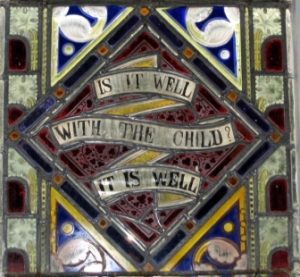
In the centre of the window is the text,
“IS IT WELL
WITH THE CHILD
IS IT WELL.”
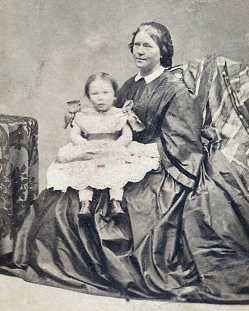
Beresford with Jane (“Ninny”) Knews, his nurse.
The plans were prepared by Mr. Robert A. Ferguson, of the firm of Messrs. G. and R. Ferguson, of Londonderry, builders, by whom the work was executed.
Architecture and Design
The chapel was designed in an early Gothic style, modest in ornament but carefully executed.
Notable features include:
Use of local black stone
Dressings in Dungannon freestone
A restrained but harmonious interior
A commemorative stained-glass window at its centre
The work was carried out by G. & R. Ferguson of Londonderry, providing a rare documented attribution for part of the estate’s built environment.
A Memorial in Glass and Stone
The chancel window stands as one of the most poignant elements of the chapel.
Commissioned by the family, it commemorates the death of Beresford George Perry McClintock, and reflects the depth of grief experienced within the household.
The inscription—“It is well with the child”—captures the religious sentiment of the period, while also personalising the building in a deeply intimate way.
Connection to the Burial Ground
The chapel was not built in isolation.
It formed part of a wider vision:
A family burial place
A religious centre within the demesne
A focal point for both estate life and remembrance
This is directly reflected in the later petition (c.1873) to transfer the remains of family members to the adjoining churchyard.
Significance
The Chapel of Ease at Seskinore represents:
The spiritual centre of the estate
A response to personal tragedy
A key element in the Victorian remodelling of the demesne
It stands as one of the most enduring physical expressions of the McClintock family’s presence at Seskinore.