Plantation Origins and Development (1607–1631)
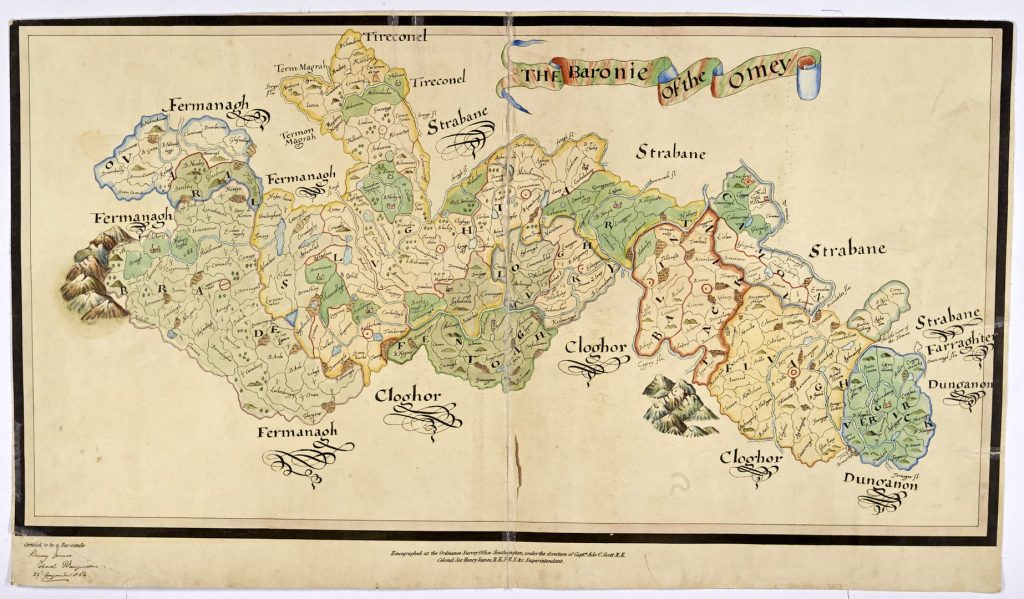
The Manor of Fentonagh (Castleleigh)
Plantation Origins and Development (1607–1631)
Introduction
The Manor of Fentonagh (Castleleigh) represents the earliest organised phase of estate formation in the Fintona district during the Plantation of Ulster. Established in the early seventeenth century under John Leigh, the estate formed the foundation of later developments under the Leigh baronets and, ultimately, the Eccles family.
The Leigh Family in Early Ulster
Between 1607 and 1610, three brothers:
- John Leigh
- Edmond Leigh
- Daniel Leigh
arrived in Ulster under the patronage of Sir Henry Bagenal.
1607–1608
- Captain Edmond Leigh was appointed Sheriff of Omagh in 1607
- He died shortly afterwards in 1608
Following his death, the estate was consolidated under John and Daniel Leigh.
Early Land Claims and Disputes
The lands held by the Leigh family had originally belonged to the Abbey of Omey, but were not correctly identified during early plantation surveys (1608–1609). As a result, portions were mistakenly granted to other undertakers.
The Leighs petitioned the Crown, stating:
“Some parcels of their lands had, by the oversight of the King’s Surveyors, been included in the grants to undertakers… which they were willing to resign rather than disturb the said undertakers.”
This willingness to cooperate impressed the Crown, and Sir Arthur Chichester was instructed to regrant their lands on favourable terms.
The undertakers who had received portions included:
- Sir John Davies
- Sir Thomas Boyd
- Mr. Clephane
- George Hamilton
- The Bishop of Derry
Petition of John and Daniel Leigh
A surviving memorandum in the Calendar of State Papers (James I) records several petitions submitted by the Leigh brothers concerning their position at Omagh.
These included requests:
- To retain command of the fort of Omagh for life
- For compensation for constructing the fort (estimated at £800)
- For financial support due to the heavy cost of maintaining the fort
- For additional lands in Tyrone in exchange for lands attached to the fort
- For increased daily allowance (from 3s to 5s) due to:
- Housing travelling officials
- Hosting judges and commissioners
- For provision of a porter and cannoneer
👉 These petitions highlight the strategic and financial importance of the Leigh position in early Plantation Ulster.
The Plantation Allotment of Fentonagh (1610)
The Manor of Fentonagh formed part of the wider Plantation settlement of the Precinct of Clogher in County Tyrone.
In 1610, the escheated lands of this district were divided among a number of undertakers under Crown direction.
Undertakers in the Precinct of Clogher
- Sir Thomas Ridgeway — Portclare & Ballykeirgire (2,000 acres)
- Thomas Roche of Essex — Ballmecowley & Balliranell (2,000 acres)
- Francis Willoughby — Fentonagh (2,000 acres)
- George Ridgeway — Ballimackell (1,000 acres)
- William Parsons — Ballaclogh (1,000 acres)
- William Orley — Dirribard & Killarie (2,000 acres)
- Walter & Thomas Edney — Loughmaguiff (1,500 acres)
- William Turvin — Moyenner (1,000 acres)
Official Direction (30 April 1610)
A directive issued to the Plantation Commissioners recorded:
“I have made choice of the persons above named… whom I think to be of sufficient ability to undertake the said several quantities of land… to be set out so as every of them may take his portion by lot or agreement…”
This formed part of the administrative process leading to the issuing of formal patents.
Acquisition of the Fentonagh Proportion
Although Fentonagh was initially associated with Francis Willoughby, it passed at an early stage into the hands of John Leigh.
Rev. George Hill records:
“John Leigh… appears to have bought the proportion of Fintona from Sir Francis Willoughby even before the latter had taken out a patent.”
Leigh’s background as an engineer and his prior experience in Ulster suggest that this acquisition was both strategic and informed.
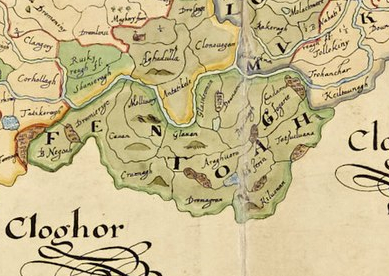
Grant of the Manor of Fentonagh
1610 – Formal Grant
John Leigh was granted approximately 2,000 acres, erected into:
The Manor of Fentonagh (Castleleigh)
Precinct of Clogher, County Tyrone
Terms of the Grant
- Rent: £10 13s 4d
- Tenure: Common socage from Dublin Castle
- Included:
- Numerous townlands (balliboes)
- 600 acres in demesne
- A court baron
The estate occupied the north-western portion of the barony of Clogher and formed a clearly defined plantation unit.
Development of the Plantation Settlement
By 1619 (Pynnar’s Survey)
- A bawn of lime and stone with flankers
- A substantial stone dwelling house
- A village of eight houses
- Approximately 41 British settler families
Many settlers held:
- Houses
- Garden plots
- Common grazing
1622 Survey
Further improvements included:
- Stone bawn (93 feet square, 12 feet high)
- Three flankers
- Gatehouse
- Base court enclosed by rampart
👉 This represents one of the earliest fortified plantation settlements in the Fintona district.
Transfer to the Baronetcy Line
20 February 1631
- Death of John Leigh
- Estate passed to his brother:
Sir Daniel Leigh
6 August 1632
- Regrant of Fentonagh lands confirmed by Letters Patent
(Source: Patent Rolls, Chancery, Ireland)
This marks the transition of Fentonagh into the Leigh Baronetcy estate.

Regrant of Fentonagh lands (Castleleigh) confirmed by Letters Patent to John Leigh.
Source: Patent Rolls, Chancery, Ireland


Position in Estate Development
Fentonagh represents the first stage in the evolution of the estate:
Fentonagh (Plantation phase) →
Leigh Baronetcy (1622–1635) →
Fragmentation (1635–1671) →
Eccles Acquisition (1671)
Historical Significance
The estate is significant as:
- One of the earliest organised plantation manors in Tyrone
- A well-documented example of early settlement and defence
- The foundation of the later Ecclesville estate
- A case study in land dispute, negotiation, and Crown policy
Appendix: The Fentonagh Land Grant (1610)
The grant to John Leigh included numerous townlands (balliboes), forming a proportion of approximately 2,000 acres.
These included:
Leggetiggill
Ballinemullan
Killelussie
Townagheitra
Shragduffgawra
Garowry
Ballineskelgie
Tooughgorrhan
Edentooderry
Lackaboy
Tiregrenan
Tonnoghonewe
Tatmoyle
Correceskan
Syonhugh
Tollenshee
Corbally
Drumhurke
Shraghmaske
Mullasilloge
Kilberry
Dromlaghan
Skegagowre
Derriaghna
Mullanedrymon
Ardtonny
Aghebrassill
Tatfadda
Aghownaghbane
Ravarran
Edenesoppe
Lissnegorduffe
Tatecrewe
Part of Gargrame
Corglasse
Sources
- Gallachair, Parish of Donaghcavey
- Calendar of State Papers, Ireland (James I)
- Ulster Plantation Papers (Moody, 1938)
- Hill, George – Plantation Papers
- Betham’s Transcripts
- Pynnar’s Survey (1619)
- Treadwell, Survey of Armagh and Tyrone (1622)
- PRONI Maps (T1652/17)
See Also: