Final Owner of Ecclesville
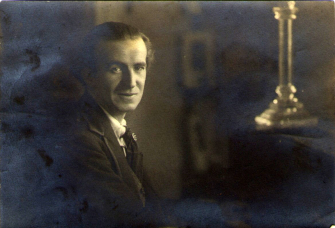
Raymond Saville Conolly de Montmorency Lecky Browne-Lecky
Final Owner of Ecclesville
Introduction
Raymond Saville Conolly de Montmorency Lecky Browne-Lecky (1881–1961) was the final private owner of Ecclesville House, Fintona, County Tyrone.
He inherited not only a historic demesne, but a complex network of family connections linking the Browne, Lecky, McCausland, de Montmorency, and Eccles families.
A figure of striking individuality, Raymond was remembered for his theatrical flair, musical interests, hospitality, and generosity to charitable causes. In his life and character, he represents the last distinctive phase of Ecclesville as a lived country house — shaped as much by personality and performance as by lineage and land.
Family Background and Inheritance
Raymond was the son of Conolly William Lecky Browne-Lecky and Annie Henrietta Eccles.
Through his mother, he was connected directly to the Eccles family of Ecclesville, while through his father he belonged to the Browne-Lecky line, linked with Aughentaine Castle, Castlefin, Drenagh, and the de Montmorency family of Castle Morres.
These connections placed Raymond at the intersection of several important landed families:
- Browne of Aughentaine
- Lecky of Castlefin
- McCausland of Drenagh
- de Montmorency of Castle Morres
- Eccles of Ecclesville
Through this inheritance, Ecclesville became part of the later Browne-Lecky story, while still retaining its older identity as the seat of the Eccles family.
On his father’s side, Raymond belonged to a line deeply connected with the Browne family of Aughentaine Castle, County Tyrone, and through them to the de Montmorency family of Castle Morres, County Kilkenny.
His grandmother, Sarah de Montmorency, was the daughter of Hervey Randall Saville Pratt de Montmorency and Rose Lloyd Kearney, herself daughter of the Rt. Rev. John Kearney, Bishop of Ossory.
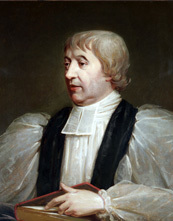
Through these connections, the Browne-Lecky family inherited associations not only with Ecclesville and Aughentaine, but also with the wider de Montmorency, Pratt, Kearney, Lecky, and McCausland networks. These relationships linked the family to significant landed, ecclesiastical, and political circles extending across Tyrone, Kilkenny, Donegal, and Londonderry.
The Browne-Lecky name itself reflected earlier inheritance through the Lecky and McCausland lines, bringing with it property interests connected with Castlefin and Drenagh, while the de Montmorency connection preserved the legacy of the Castle Morres family.
Through this complex network of inheritance and marriage, Raymond stood at the intersection of several important landed families whose histories became closely intertwined during the eighteenth and nineteenth centuries.
Ecclesville and the Browne-Lecky Line
Following the death of his father in 1924, Raymond became the final private owner of Ecclesville House and its surviving demesne.

By this time, the estate had already been greatly reduced under the Irish Land Acts, with much of the surrounding land transferred to tenants. Ecclesville itself, however, remained intact — a substantial house set within its grounds, retaining collections of portraits, furniture, decorative objects, and family papers accumulated over generations.
Under Raymond’s ownership, the house preserved the atmosphere of an earlier world, even as the economic and social foundations of that world were disappearing.
Early Character and Personality
A vivid early glimpse of Raymond’s personality survives in a letter written around 1896 by Augustus McClintock, a relative by marriage.
Though critical in tone, it offers a striking portrait of the young Raymond:
“Nell and I went to church yesterday, it was dull enough. Young Raymond was there — his hands covered with large diamond rings, big button hole, specs with gold chain, gold chain to hold his Tyrolean hat on with — altogether a terrible sight; I think it’s a pity of the boy.”
The description, though disapproving, is revealing. Even in youth, Raymond appears as a figure of strong individuality, marked by a taste for display, theatricality, and aesthetic expression — qualities that would later define his life at Ecclesville.
Raymond as “Actor-Musician”
By adulthood, Raymond had become widely known as an eccentric but engaging figure — witty, generous, and deeply immersed in artistic life.
He was remembered as an:
“actor-musician”
a phrase that captures both his artistic interests and his broader character.
Theatre, music, and performance were not merely pastimes, but central to how he expressed himself and engaged with the world.
Ecclesville as a House Shaped by Personality
Ecclesville itself became an extension of Raymond’s character.
A contemporary account in Irish Society and Social Review in 1921 described the house as filled with:
- paintings and objects of art
- long corridors and stately rooms
- open hospitality during the summer months
- and a private theatre in the west wing
This was not a conventional country house. It was a setting for performance, sociability, and artistic life — carefully curated and actively used.
At the centre of this world was Raymond himself.
The “Sanctum” at Ecclesville
The 1921 account provides an unusually intimate glimpse into Raymond’s private room at Ecclesville:
“Mr. Raymond Browne-Lecky, the ‘actor-musician,’ as he is called, has his own special sanctum fitted up in graded shades of rose-pink — everything in exact harmony and tastefully selected… the semi-grand Bechstein piano is draped with rose-coloured satin, embroidered in gay-plumaged birds.”
This description is striking not only for its detail, but for what it reveals.
Raymond’s private room — the only modern interior in the house — was:
- carefully designed
- aesthetically unified
- theatrical in tone
- and unapologetically individual
It reflected a man deeply engaged with beauty, performance, and artistic culture, and one willing to depart from conventional expectations.
Personality and Contemporary Views
Raymond’s theatricality invited both admiration and misunderstanding.
The same 1921 account directly addressed the way he was sometimes perceived:
“People spoke… of this wonderful man as ‘effeminate’… Such critics do not know anything at all…”
This is one of the most important contemporary statements about him.
It shows that Raymond was subject to criticism because of his style, manner, and artistic personality, but that those who knew his work recognised the substance beneath the surface.
His actions — particularly during the First World War — revealed a far more serious and committed individual than superficial impressions suggested.
Historical Misinterpretations
Some later published accounts of Raymond Browne-Lecky contain inaccuracies which require clarification.
Mark Bence-Jones, in Twilight of the Ascendancy (1987), repeated a story that Raymond’s mother dressed him as a girl beyond the age at which this was customary, supposedly because she longed for a daughter. However, contemporary family evidence contradicts this interpretation. Raymond was born in 1881 as the second child of Conolly William Lecky Browne-Lecky and Annie Henrietta Eccles Browne-Lecky. His elder sister, Isabella Caroline Annie Browne-Lecky, had already been born in 1879, making it clear that he was not raised as a substitute daughter.
Similarly, Ann Morrow, in Picnic in a Foreign Land (1990), suggested that Raymond later became “a resident in his own home” after Ecclesville was converted into a nursing home. This is also incorrect. Ecclesville did not become a care home until after Raymond’s death, by which time the house had already passed out of his direct occupation and had been leased. Raymond remained the private owner and occupant of Ecclesville until the end of his life in 1961.
These later misunderstandings appear largely to reflect retrospective interpretations of Raymond’s unconventional personality and theatrical manner, rather than the documented realities of his life and position at Ecclesville.
Theatre as Identity
Raymond’s involvement in amateur dramatics went far beyond occasional participation.
He:
- performed in character roles
- organised theatrical productions
- hosted entertainments at Ecclesville
- appeared in comic and cross-dressed roles that delighted audiences
- and used performance to raise money for charitable causes
A contemporary account of a performance at Fivemiletown described him appearing in the role of a young widow, with such convincing disguise that many in the audience were reportedly mystified.
His theatricality was not confined to the stage. It informed his speech, manner, hospitality, and social presence.
Ecclesville as a Cultural House
Under Raymond’s ownership, Ecclesville functioned not merely as a residence, but as a cultural and social centre.
The west wing contained a private theatre, where amateur performances were staged for guests and visitors.
The house itself was filled with paintings, musical instruments, decorative objects, and theatrical associations, creating an environment that blended the traditions of the landed house with the atmosphere of a private artistic salon.
Guests were frequently entertained, particularly during the summer months, and the house became known locally for its distinctive character — at once grand, eccentric, and welcoming.
Theatre, Music and Charitable Work
Raymond’s greatest public contribution lay in his involvement with music, theatre, and charitable fundraising.
A scrapbook preserved at PRONI, covering the years 1909 to 1920, records his active role in organising concerts, dramatic performances, and social entertainments.
These events supported a wide range of causes, including:
- the poor of Fintona
- the Winter Coal Fund
- the Women’s Health Association
- Titanic disaster relief
- wartime charities
- the Soldiers’ and Sailors’ Families Association
- the Red Cross
His use of performance as a means of public service formed one of the defining features of his life.
Notable Performances and Events
Among Raymond’s recorded activities were:
1910
Charitable concerts for the poor of Fintona and the Winter Coal Fund.
1911
Concerts in support of the Women’s Health Association.
1912
Fundraising performances connected with Titanic disaster relief.
1913
Amateur theatricals at Fivemiletown, where Raymond appeared in both comic and dramatic roles.
1914
A major dramatic evening at the Abbey Theatre, Dublin, held on 9 March under the patronage of the Duke and Duchess of Abercorn, with proceeds devoted to the poor of Fintona.
Although Raymond was unable to perform at the Abbey Theatre event due to illness, contemporary reports praised his role as organiser and promoter.
Wartime Service Through Performance
During the First World War, Raymond was unable to serve in the military on health grounds.
Instead, he devoted himself to fundraising through entertainment.
A contemporary account noted that he travelled through northern towns giving performances for the benefit of the Red Cross, often under uncomfortable conditions and with little concern for his own convenience.
This was not symbolic or occasional work. It involved:
- travel
- organisation
- personal financial contribution
- physical discomfort
- and sustained commitment
In a society that often equated masculinity with military service, Raymond created a different model of contribution — one rooted in culture, organisation, and practical philanthropy.
Wit, Performance and Social Theatre
Later recollections reinforce the impression of Raymond as a man of sharp wit and strong theatrical instinct.
Mark Bence-Jones, in Twilight of the Ascendancy, recalled Raymond as an elderly host at Ecclesville. When an over-earnest guest delivered dramatic recitations and musical performances, Raymond, unwilling to be outshone in his own drawing room, quietly remarked:
“Rather amateurish, don’t you think?”
The comment captures his:
- sharp wit
- awareness of performance as social hierarchy
- and instinctive need to remain, in some sense, the central figure.
Raymond and Joel Henry Hart
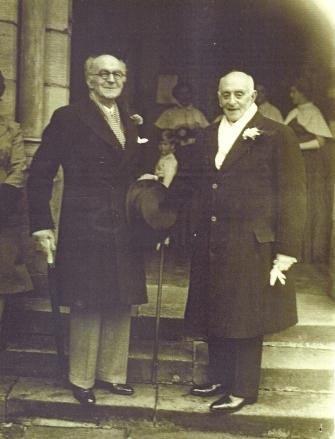
Raymond shared a long and close companionship with Joel Henry Hart, who was associated with Ecclesville for many years.
Hart died on 1 February 1953, aged 84, and was buried in the Eccles family lair at Castletown graveyard.
When Raymond died in 1961, he was buried in the adjoining plot.
Their burial arrangement remains one of the most personal surviving markers of Raymond’s private life and relationships.
Later Life at Ecclesville
In his later years, Raymond continued to reside at Ecclesville, though the house and estate increasingly reflected the wider decline of the landed system in Ireland.
The demesne had been reduced, and the maintenance of a large country house became progressively more difficult.
Nevertheless, Ecclesville retained its distinctive character, and Raymond continued to live there surrounded by the objects, memories, and associations of earlier generations.
Ecclesville During the Second World War
During the Second World War, part of Ecclesville House was requisitioned for use by American military personnel.
This marked a significant change in the character of the house, bringing external pressures and unfamiliar occupants into what had long been a private family residence.
Raymond, by then an elderly man, is remembered as viewing this development with a mixture of tolerance and irritation.
The Ecclesville Ghost
Among the stories associated with Ecclesville, one of the most enduring concerns the resident ghost.
According to a tale later recounted by Raymond, a long-deceased great-aunt was said to walk nightly through the house.
During the wartime occupation, one of the stationed soldiers reportedly encountered the figure and, uncertain how to react, fired his weapon at the apparition.
The ghost, unperturbed, was said to have turned and rebuked him:
“Young man… whoever you are… you have no savoir faire. One simply does not fire on anyone — especially a lady, and especially dead, in their own home.”
The story, delivered in Raymond’s distinctive voice, reflects both his humour and theatrical sense of storytelling, as well as the layered history of Ecclesville itself.
Social Life and Visitors
Even in later life, Ecclesville continued to receive visitors.
Raymond remained part of a wider social network that included:
- local gentry families
- longstanding friends
- theatrical and musical acquaintances
- and occasional notable visitors
A remembered occasion in 1951 records a wedding reception held at Ecclesville following a ceremony at St. Columba’s Church, Omagh, attended by Raymond and his long-time companion.
Such events show that Ecclesville, though increasingly anachronistic, was still functioning as a social centre into the mid-twentieth century.
Death and Funeral
Raymond Saville Conolly de Montmorency Lecky Browne-Lecky died on:
11 November 1961
Remembrance Day, aged 80.
His death marked the end of Ecclesville as a privately occupied family seat.
His body rested in Donacavey Parish Church, and the funeral service was conducted with full ceremony, attended by clergy, local figures, and representatives of the community.
Tributes emphasised:
- his lifelong support for ex-servicemen
- his charitable work during the First World War
- his generosity
- and his enduring connection to Fintona and Ecclesville
He was buried at Castletown, near Fintona, in a plot adjoining that of Joel Henry Hart.
Will and Charitable Legacy
In his will, Raymond directed that Ecclesville House and its remaining lands should be transferred to the Government of Northern Ireland, or to such public body as might be nominated, subject to certain conditions.
It appears that he hoped the house might be preserved and adapted for public or charitable use.
He also made provision for personal bequests, including family portraits and objects of historical significance.
Beyond these, Raymond’s will contained a significant charitable provision. He directed that the residue of his estate should be divided between:
- a charity supporting members of the theatrical profession at Denville Hall
- the Musicians Benevolent Fund
These bequests reflected his lifelong commitment to the performing arts and to the welfare of those connected with them.
The End of Ecclesville as a Private House
With Raymond’s death in 1961, Ecclesville effectively passed out of private family ownership.
Although attempts were made to preserve the house for public or charitable use, these ultimately failed.
The contents were dispersed at auction in 1962, and Ecclesville House itself was later demolished.
Raymond’s death therefore marks the end of the final private phase of Ecclesville.
Final Significance
Raymond Browne-Lecky represents the last phase of Ecclesville as a private house shaped by personality, artistic life, and inherited tradition.
He was:
- the final private owner of Ecclesville
- a custodian of its history and contents
- a patron of amateur theatre and charitable performance
- and one of the most distinctive figures in the later history of the estate
With his death in 1961, the world he inhabited effectively came to an end.
Yet through surviving records, photographs, scrap albums, auction catalogues, and family memory, Raymond remains one of the most vivid and memorable figures associated with Ecclesville.
See Also
- Raymond Browne-Lecky’s Scrap Album (PRONI D1385/4)
- Will and Bequest of Raymond Browne-Lecky (1961)
- Ecclesville Auction Catalogue (1962)
- Ecclesville Contents, Portraits and Auction Sale (1962)
- Final Attempts to Save Ecclesville (1961–1962)
- Later Years of Ecclesville House
- Ecclesville House, Fintona, County Tyrone
- The Eccles Family of Ecclesville, Fintona and Fermanagh
- The Morres / de Montmorency Family of Castle Morres
- Browne-Lecky Family