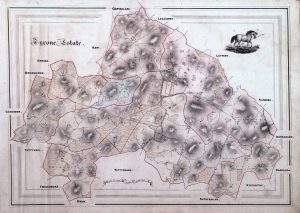
The extent and composition of the Seskinore estate in the mid-nineteenth century is clearly defined in a Chancery record dated 17 June 1854.
This legal record provides one of the most comprehensive descriptions of the lands comprising the estate following its transfer into the McClintock family.
The Chancery Declaration
By order of the Court of Chancery in Ireland, it was declared that George Perry McClintock was seized of an estate tail in possession of a substantial body of lands in County Tyrone and elsewhere.
The record confirms the legal position of the estate and its descent under the provisions established following the will of George Perry.
Extent of the Estate
The lands described in the Chancery record include a large number of townlands, forming a coherent and extensive estate.
These include:
• Drumconnolly
• Tullyrush
• Tullyharm
• Tullytemple
• Rarone
• Upper Mullaghmore
• Lower Mullaghmore (including the Mansion House and demesne lands)
• Moylagh
• Ranelly (including the mill)
• Seskinore
In addition to these, the estate also comprised lands in other baronies and counties, including:
• Freighmore
• Tullyvally
• Kilgort
• Camowen
• Knockadreenan
Scale of the Estate
The total extent of the estate amounted to approximately 4,553 acres.
This confirms the Seskinore estate as a substantial landed property within the region, reflecting both the earlier acquisitions of the Perry family and the subsequent consolidation under the McClintock line.
Significance
The 1854 Chancery settlement provides a definitive statement of the extent and legal structure of the Seskinore estate in the nineteenth century.
It illustrates the culmination of a process that began with the establishment of the Perry estate at Mullaghmore in the seventeenth century, and its subsequent transfer and expansion under the McClintock family.
As such, it represents a key documentary source for understanding the full scope and organisation of the estate.
See also:
Leave a Reply