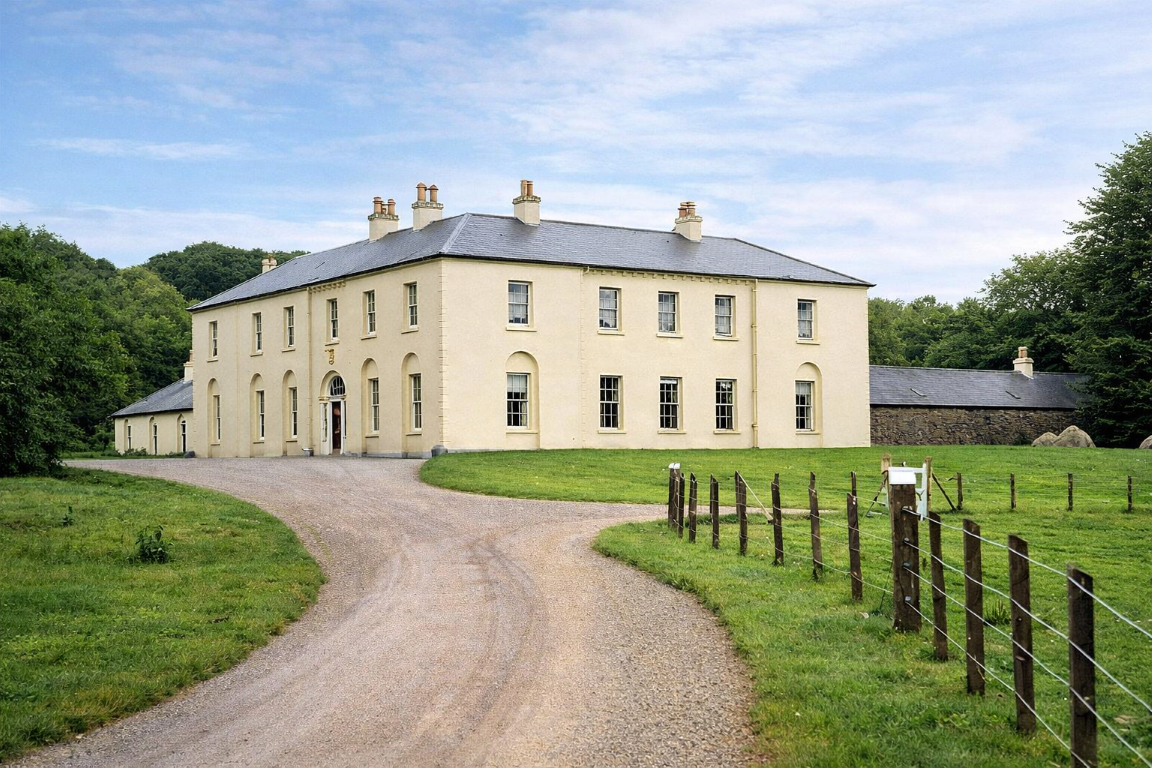
Eccles Family of Ecclesville, Fintona: Genealogical Register (c.1668–1978)
Introduction
This page provides a structured genealogical register of the Eccles family of Ecclesville, Fintona, County Tyrone, tracing the descent of the family from its seventeenth-century Scottish origins to the extinction of the male line and the eventual passing of the estate into allied families.
Over successive generations, the Eccles family became one of the principal landed families of County Tyrone, closely associated with Ecclesville House and the wider Fintona district. Through inheritance and marriage, the family became interconnected with the Lowry, Dickson, Browne, Browne-Lecky, Delmege, Stoney, Lucas, and McClintock families.
The history of Ecclesville also became closely entwined with that of Seskinore through the marriage of Amy Henrietta Frances Eccles to Colonel John Knox McClintock in 1893.
I. John Eccles of Kildonan
(fl. mid-seventeenth century)
John Eccles of Kildonan, Dumfriesshire, Scotland, is regarded as the progenitor of the Eccles family later established in Ireland.
Issue included:
- Gilbert Eccles (see II)
II. Gilbert Eccles
(1602–1694)
Gilbert Eccles settled in Ireland in the later seventeenth century and acquired extensive lands in Counties Tyrone and Fermanagh, including portions of the former Leigh baronetcy estate of Fentonagh (Castleleigh).
He served as:
- High Sheriff of County Fermanagh (1665)
- High Sheriff of County Tyrone (1673)
Married:
ANN COCKBURN.
Issue included:
- Daniel Eccles, of Shannock, died in the lifetime of his father
- Charles Eccles (see III)
- Joseph Eccles, of Rathmoran
Gilbert Eccles died 26 July 1694.
III. Charles Eccles
(d. 1726)
Charles Eccles succeeded to the Tyrone estates and established the family seat at Ecclesville.
He is traditionally credited with building Ecclesville House c.1703.
He served as:
- High Sheriff of County Tyrone
- Justice of the Peace during the reigns of Queen Anne and George I
Married:
[Name uncertain]
Issue:
- Daniel Eccles (see IV)
Charles Eccles died intestate in 1726.
IV. Daniel Eccles
(1692–1750)
Daniel Eccles succeeded to Ecclesville and consolidated the family’s standing within the Tyrone landed community.
He served as:
- High Sheriff of County Tyrone (1720)
Will dated 10 November 1747; proved 2 July 1750.
Married in 1718:
MARY LOWRY, daughter of Robert Lowry of Ahenis and Anna Sinclair of Holyhill.
Issue:
- Charles Eccles – heir (see V)
- Robert Eccles, of County Fermanagh; married Miss Boggs; died 23 April 1753
- James Lowry Eccles; married Miss Parry
- Mervyn Eccles – died without issue
Daughters:
- Anne Eccles
- Frances Eccles; married John Dickson of Ballyshannon
- Margaret Eccles; married Robert or John Smyth of the 14th Dragoons
- Mary Eccles; married Mr Delamere; died without issue
- Elizabeth Eccles; married firstly Dr Draydon and secondly Captain Ley
- Isabella Eccles; married Rev. Francis Lucas, Rector of Drumgoon
Daniel Eccles died in 1750.
V. Charles Eccles of Ecclesville
(d. 1786)
Charles Eccles succeeded to Ecclesville during the later eighteenth century.
He married Rebecca Anne Stewart, of Bailieborough Castle.
Issue included:
- Daniel Eccles (see VI)
- John Eccles – died without issue
- Rev. Charles Eccles – drowned at Bath
Charles Eccles died 30 December 1763.
VI. Daniel Eccles of Ecclesville
(1746–1808)
Daniel Eccles inherited Ecclesville and maintained the estate during a period of expansion and consolidation.
He served as:
- High Sheriff of County Tyrone (1772)
Married 28 February 1773:
ANNE DICKSON, daughter of John Dickson of Ballyshannon.
Issue included:
- Charles Eccles – High Sheriff 1802; died without issue
- John Dickson Eccles (see VII)
- Gilbert William Eccles – died without issue
- Daniel Eccles (1787–1869)
- Thomas Eccles – died without issue
- James Eccles
Daughters:
- Frances Eccles; married Charles Lucas
- Anna Rebecca Eccles
- Mary Eccles; married Rev. James Lowry Dickson
- Elizabeth Letitia Sarah Eccles; married William Newcombe
- Hester Eccles; married William Dickson
Daniel Eccles died 31 July 1808.
VII. John Dickson Eccles
(1783–1830)
John Dickson Eccles inherited Ecclesville in the early nineteenth century.
Justice of the Peace.
Married 30 October 1810:
JEMIMA DICKSON, daughter of Thomas Dickson of Woodville.
Issue included:
- Daniel Eccles – died without issue
- Charles Eccles (see VIII)
- Thomas Dickson Eccles – died without issue
- John Eccles – died without issue
- James William Eccles – died without issue
- Rev. Robert Gilbert Eccles, Rector of Kilbrogan
Daughters:
- Hester Catharine Eccles
- Anna Jemima Eccles
- Eliza Frances Wilhelmina Eccles; married Rev. Benjamin Newcombe
John Dickson Eccles died 12 October 1830.
VIII. Charles Eccles of Ecclesville
(1813–1869)
Charles Eccles, of Ecclesville, JP and DL.
Served as:
- High Sheriff of County Tyrone (1835)
Married 9 April 1840:
ISABELLA BLAKE, daughter of Edward Blake of Castle Grove, County Galway.
Issue:
- John Stewart (or Stuart) Eccles (see IX)
- Captain Charles Edward Eccles; married Mathilda Theodosia Browne of Aughentaine
- Robert Gilbert Eccles – died young
Daughters:
- Annie Henrietta Eccles; married Connolly William Browne-Lecky, son of Thomas Richardson Browne of Aughentaine Castle, County Tyrone
- Gertrude Marian Eccles – died in infancy
- Constance Isabella Eccles; married Captain James Vesey Lendrum
Charles Eccles died 4 November 1869.
IX. John Stewart (or Stuart) Eccles
(1847–1886)
John Stewart Eccles became the final male head of the Eccles family of Ecclesville.
Deputy Lieutenant for County Tyrone.
He executed a will in 1873 creating a strict entail in tail male governing the future descent of the Ecclesville estate.
Married:
FRANCES CAROLINE BROWNE, daughter of Thomas Richardson Browne of Aughentaine Castle, County Tyrone.
Issue:
- Charles Raymond Eccles – died in infancy
- Amy Henrietta Frances Eccles (see X)
- Rose Isabella de Montmorency Eccles (see XI)
- Anna Theodosia Hester Eccles (“Dosie”) (see XII)
John Stewart Eccles died 24 April 1886.
Frances Caroline Eccles died 12 February 1887.
Guardianship of the Eccles Sisters
Following the deaths of both parents in 1886–1887, the three Eccles daughters — Amy, Rose, and Dosie — came under the guardianship and protection of their uncle:
CONOLLY WILLIAM LECKY BROWNE-LECKY
of Aughentaine and Ecclesville.
This guardianship further strengthened the close relationship between the Eccles and Browne-Lecky families and helps explain the later prominence of the Browne-Lecky connection in the history of Ecclesville.
X. Amy Henrietta Frances Eccles
(1874–1942)
Eldest daughter of John Stewart Eccles.
Held the Ecclesville estate as life tenant and beneficial heir under the terms of the entail.
Married in 1893:
COLONEL JOHN KNOX McCLINTOCK
of Seskinore.
Issue:
- Amelia (“Leila”) Isobel Eccles McClintock (1898–1937)
Married:
- Cecil Rhodes Field (divorced)
- Captain Wilfred Heyman Joynson-Wreford
Issue:
- Penelope (“Xenia”) Joynson-Wreford (b. 1935)
As no surviving male heir existed, the entail prevented Ecclesville from passing within Amy’s direct line.
Amy Eccles died 4 April 1942.
XI. Rose Isabella de Montmorency Eccles
Second daughter of John Stewart Eccles.
Married:
CAPTAIN CARFRAE HAMILTON DELMEGE
21st Lancers.
Issue included:
- Anthony Charles Stuart Delmege
Tenant in tail male under the terms of the Ecclesville entail.
The Delmege family later became principal beneficiaries of the Ecclesville succession.
XII. Anna Theodosia Hester Eccles (“Dosie”)
Third daughter of John Stewart Eccles.
Married:
CAPTAIN LEIGH SADLEIR STONEY
of the Stoney family.
Issue included descendants within the Stoney family line.
Dosie later shared a grave in Surrey with her sister Amy McClintock.
XIII. Browne–Lecky Connection
Through the marriage of John Stewart Eccles to Frances Caroline Browne, the Eccles family became closely connected with the Browne family of Aughentaine and subsequently with the Browne-Lecky family.
The Eccles daughters were raised within a family network deeply intertwined with the Browne-Leckys, leading to close social, familial, and estate connections throughout the twentieth century.
XIV. Browne–Lecky Succession
Through both inheritance connections and long-standing guardianship arrangements, the Ecclesville demesne and house became closely associated with the Browne-Lecky family during the early twentieth century.
By at least the 1910s, members of the Browne-Lecky family were resident at Ecclesville, although Amy Henrietta (Eccles) McClintock remained legally associated with the estate and was registered in owner in simple fee of the demesne in 1921.
The precise legal transition of the demesne into Browne-Lecky ownership remains somewhat unclear, reflecting the complex overlap of family occupation, inheritance, and estate administration during this period.
Following the death of Conolly William Lecky Browne-Lecky in 1924, Ecclesville became principally associated with his son:
RAYMOND SAVILLE CONOLLY DE MONTMORENCY LECKY BROWNE-LECKY
(1881–1961)
who later formally registered title to the Ecclesville demesne in 1948 and became the final private owner of Ecclesville House.
Under Raymond Browne-Lecky:
- Ecclesville remained one of the last surviving great houses in the district
- substantial portions of the estate were gradually dispersed
- the house survived into the later twentieth century
XV. Final Transition of Ecclesville
Following the death of Raymond Saville Conolly de Montmorency Lecky Browne-Lecky in 1961, Ecclesville passed out of private family ownership.
The contents of the house were dispersed at auction in 1962, and Ecclesville House itself was demolished in 1978.
With its demolition ended nearly three centuries of continuous association between the Eccles family and Ecclesville.
Summary
The Eccles family line illustrates:
- seventeenth-century Scottish origins
- establishment of a major Tyrone estate
- consolidation through the eighteenth century
- the decisive impact of entail in the nineteenth century
- transition through female lines into allied families
- final dissolution of the estate in the twentieth century
Ecclesville’s history reflects the wider story of the Irish landed estate system — from Restoration settlement and Georgian expansion to fragmentation, inheritance disputes, and eventual decline.
See Also
- Ecclesville House, Fintona
- John Stewart (or Stuart) Eccles and the Ecclesville Entail
- Ecclesville Estate: Ownership Timeline
- The Break-Up of the Ecclesville Estate
- Disentailing of the Ecclesville Estate (1944)
- Raymond Saville Conolly de Montmorency Lecky Browne-Lecky (1881–1961)
- The Delmege Inheritance
- Amy Henrietta Frances Eccles
- John (Jack) Knox McClintock & Amy Henrietta Frances Eccles
- The Browne-Lecky Family of Aughentaine
- The Morres / de Montmorency Family of Castle Morres
- The Kearney Family and the Bishops of Ossory