Return to Seskinore (2008): Memory, Restoration and Reunion
Introduction
On 2 June 2008, Xenia, Pat, and I returned to Greenmount Lodge, where we stayed for five days.
This visit came three years after Xenia’s first return to Seskinore. But this time, it was different.
The initial rediscovery had passed. What followed was something deeper — a return shaped by memory, restoration, and the gradual rebuilding of connection.
Returning to the Estate
The years had brought changes, most noticeably for Pat, who had suffered a stroke in 2006. Though his spirit remained undiminished, his mobility required greater care, and we planned each part of the journey accordingly.
Our first meeting was with:
- Lisa Morgan
- and Roisin Anagnostides
with whom I had worked closely over several years to identify and register the remaining properties associated with the Seskinore estate.
This had never been purely administrative work.
Together, we had been piecing back together the fractured remnants of a family’s legacy.
Later that day, we drove out to Seskinore itself.
We brought the car as close as possible to the woodland, allowing Pat to make the short walk to the Garden of Remembrance.
The Garden of Remembrance
The forest greeted us with a familiar stillness — quiet, almost ceremonial.
As we approached the garden, both Xenia and Pat paused.
The space had changed.
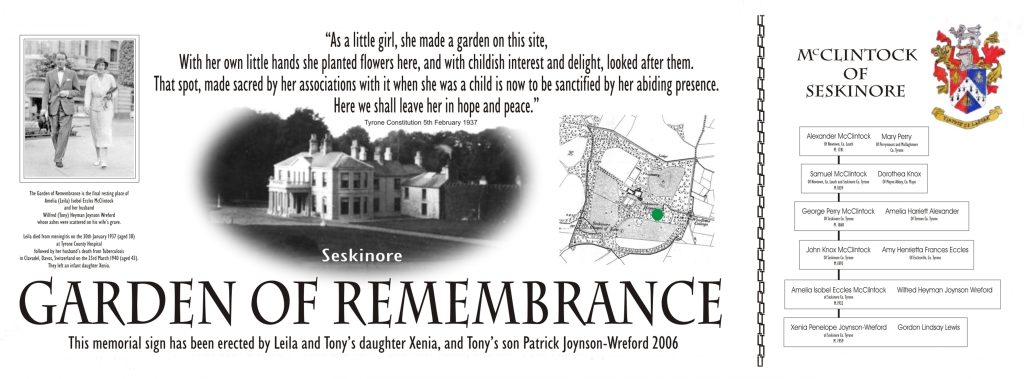
A memorial sign now stood at the entrance, simply and quietly telling the story of:
- Tony Joynson-Wreford
- and Leila McClintock
and their connection to Seskinore.
At its centre, the interlaced initials:
“L & T”
gave the memorial a quiet dignity.
The gate, newly installed in galvanised aluminium, stood firm and understated in the filtered woodland light.
With a sign, which read:
“Please Knock.”
A simple phrase — but one carrying deep personal resonance.
As a child, Leila had created a small private garden of her own near Seskinore House and placed at its entrance a sign bearing those same words. Following her death in 1937, that childhood garden became her final resting place.
The survival of the phrase within the restored garden formed a quiet link between childhood memory, loss, and remembrance across generations.
The Chapel of Ease
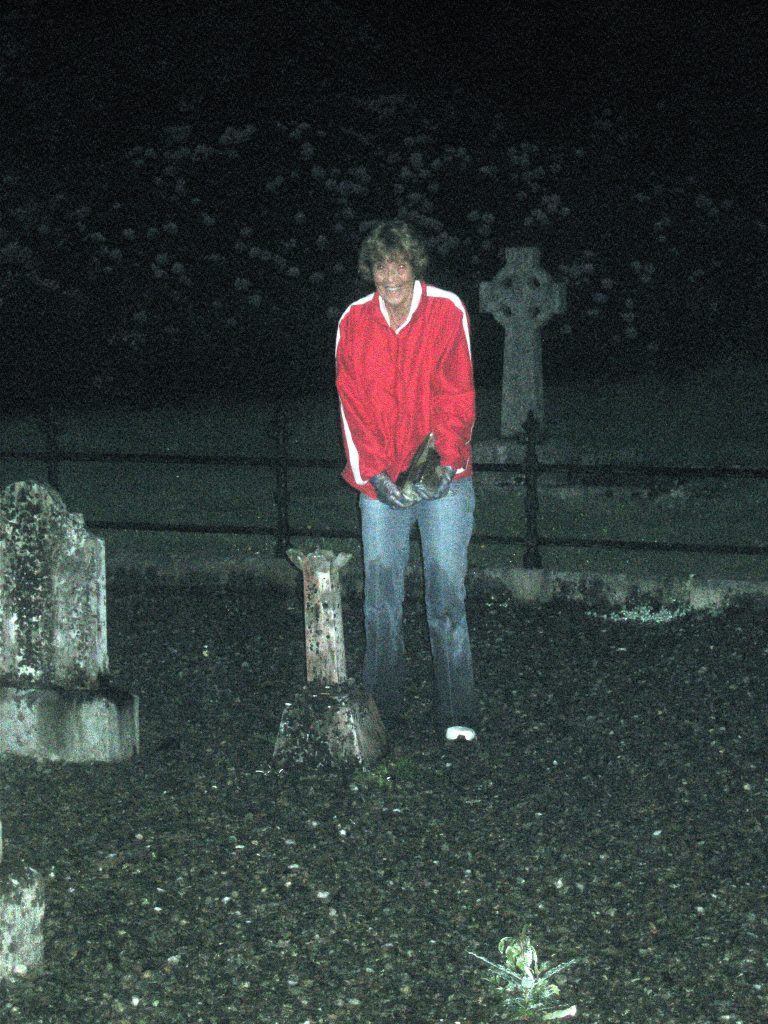
That evening after dinner, Xenia and I went back quietly to the Chapel of Ease. The light was fading quickly, but armed with brushes and cloths we began carefully cleaning the McClintock memorials.nd cloths, we began carefully cleaning the McClintock memorials.
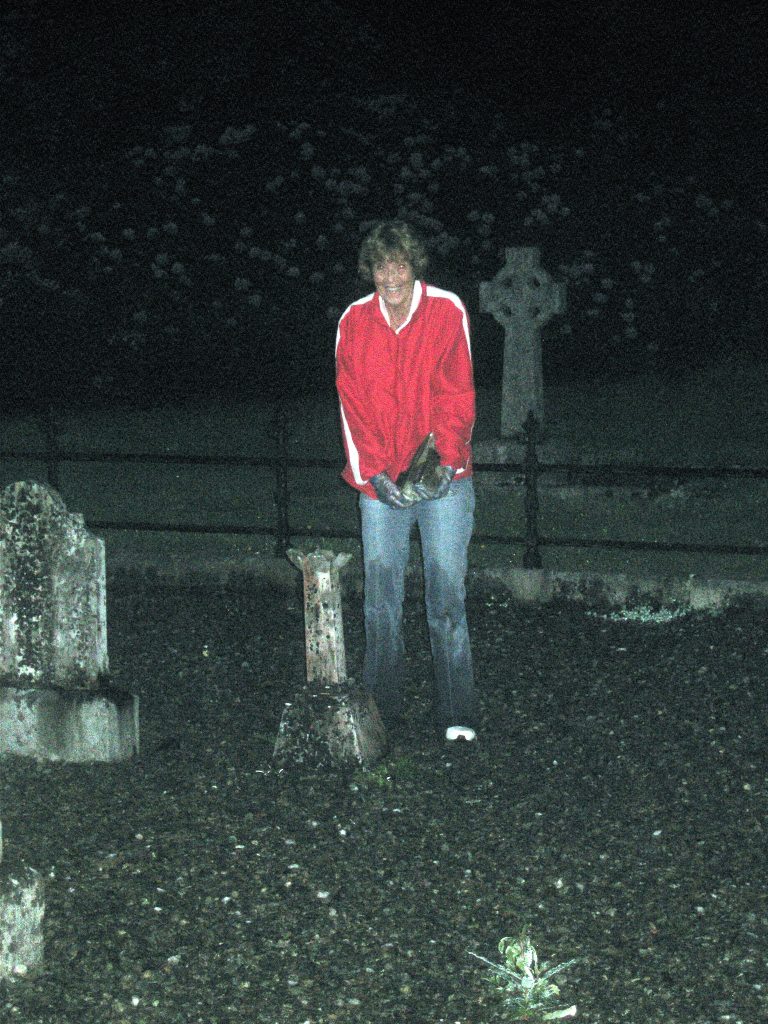
The stonework, dulled by time and weather, slowly revealed names and dates that had long faded into shadow.
It was slow and careful work, and before long we lost ourselves in the stillness of the place.
As darkness gathered around us, our hands moved in quiet rhythm, the sound of cloth against stone mingling with the occasional call of a night bird from the trees beyond.
By the time we stopped, it was well into the night, though neither of us had noticed the pSlowly, as the dirt and weather staining lifted, names and dates that had long disappeared began to emerge again from the stone. It was gentle, unhurried work, and before long we had completely lost track of time.
The chapel and churchyard were incredibly still, apart from the sound of the brushes against the stone and the occasional call of a bird somewhere in the trees beyond. As darkness gradually settled around us, we simply kept going, both of us absorbed in what we were doing.
By the time we finally stopped, it was well past dark — though neither of us had really noticed. It felt important somehow, helping to uncover and preserve those fading traces of the family history in a place that meant so much to Xenia.
Recognition and Recording
Later that evening, we received an unexpected telephone call from:
Marion Molloy at PRONI
She explained that BBC Northern Ireland had expressed a strong interest in Xenia’s story and hoped to record part of it for:
BBC Northern Ireland had expressed interest in Xenia’s story and hoped to record part of it for Family Focus, presented by Sarah Travers.
Xenia was deeply touched by the interest and gladly agreed.
Time, however, was limited. With our return to Scotland approaching, there was insufficient time to complete filming during that visit.
Instead, arrangements were made to record part of the programme at PRONI before our departure, with the intention of returning to Seskinore a short time later to continue filming on location.
We already had plans to visit PRONI to meet Marion and other members of staff who had played important roles in uncovering and reconstructing the history of the Seskinore estate.
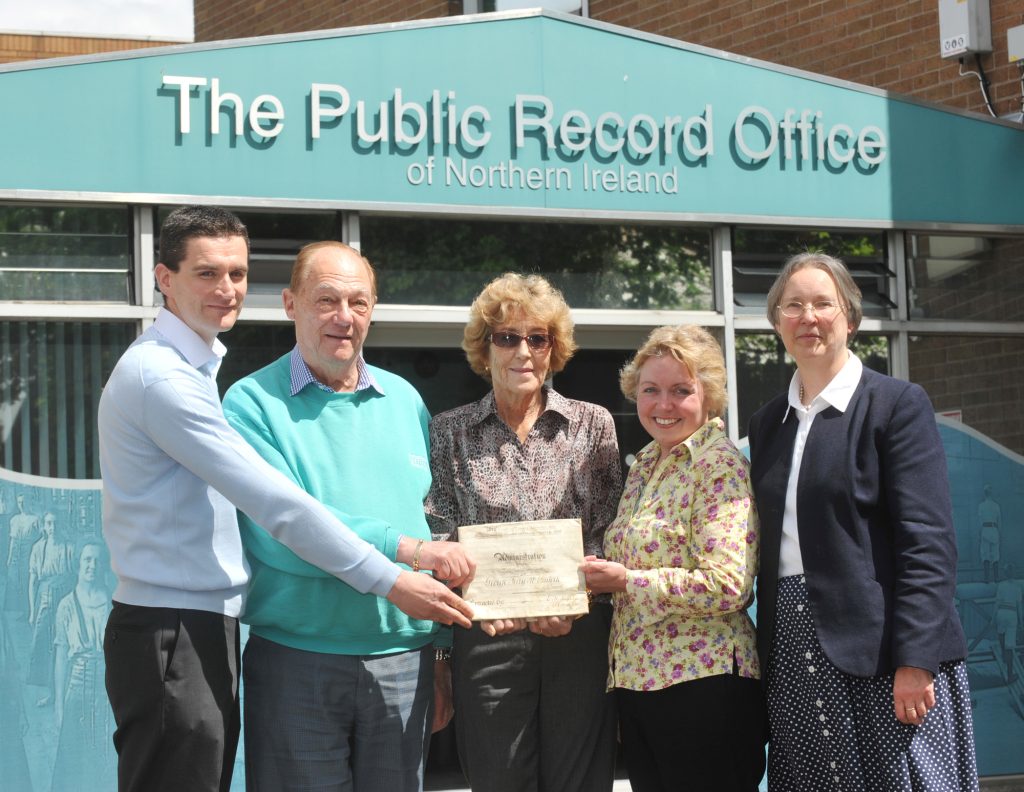
Family Connections Restored
Following our time at Seskinore, plans were already being made for a further journey.
Xenia’s son,
Michael Lewis
was due to arrive within days, and together they intended to travel through England and Northern Ireland, revisiting places closely connected with the history of the McClintock and Joynson-Wreford families.
Before leaving, Xenia asked whether I would join them on part of the journey.
I was delighted to accept.
As arrangements continued, I contacted:
Sir David Stewart, 7th Baronet of Athenree
with whom I had previously been corresponding.
David responded warmly and enthusiastically, expressing a genuine wish to reconnect with Xenia in person.
When I explained that Xenia and Michael had already travelled several hours beyond Somerset, he was visibly disappointed at the possibility that the opportunity might be missed.
But when I telephoned Xenia and relayed David’s invitation, she did not hesitate.
Despite the considerable detour, she and Michael turned the car around and headed back.
David shared a close family connection with Xenia. His mother:
Molly Peacocke
had been a cousin of Xenia’s mother, Leila McClintock.
Following the breakdown of her marriage to George Peacocke, Molly had returned to:
Seskinore House
with her children, including David, where the family lived for several years.
After the death of her uncle:
Colonel John Knox McClintock
the family later moved to Omagh, though their association with Seskinore remained strong.
Molly continued the family’s connection with estate traditions, becoming associated with the Seskinore Harriers and maintaining the hounds after leaving the house itself.
The meeting between:
- Xenia
- Michael
- David
- and his wife Bridget Stewart
became one of the most meaningful moments of the entire visit.
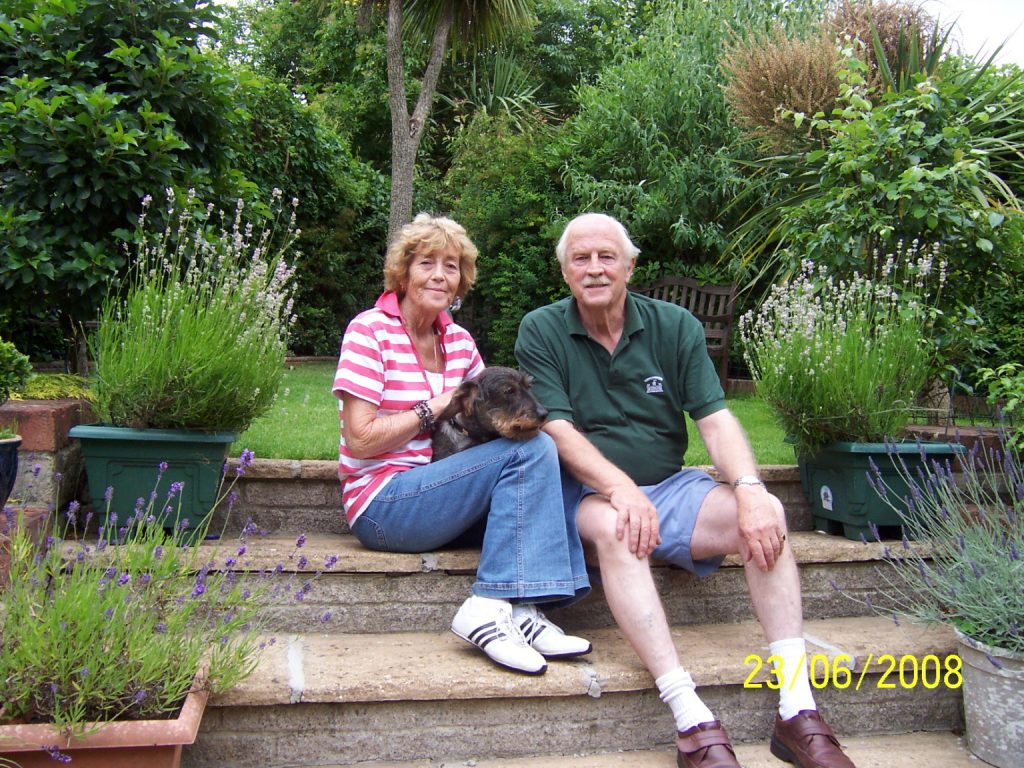
David and Bridget welcomed them warmly into their home and shared an extraordinary collection of family material preserved over many years:
- scrapbooks
- letters
- photographs
- and personal memorabilia
many of which Xenia had never previously seen.
David possessed a remarkable memory for family stories and recollections.
Through his conversations, figures who had long existed only as names within family history regained personality, humour, and presence.
In those quiet hours surrounded by photographs, papers, and shared memory, the past no longer felt distant or abstract.
It became something living —
deeply rooted in family, place, and continuity across generations.
Significance
The return to Seskinore in 2008 marked a deepening of the connection first re-established in 2005.
This was no longer simply a rediscovery of place.
It became a restoration:
- of memory
- of relationships
- and of continuity
In quiet moments — cleaning memorials, walking through the garden, sharing photographs and family stories — the history of Seskinore no longer felt distant.
It was lived again.