The following newspaper report records the death of Major George Peacocke, husband of Elinor (“Nell”) McClintock and father of Rosemary Peacocke, whose later marriage connected the Peacocke family to the Stewart baronets of Athenree.
The account provides a stark illustration of the personal and financial difficulties faced by former officers in the years following the First World War.
Newspaper Report (1923)
AN OFFICER’S SUICIDE. Major’s Disagreement With War Office. BENTLEY TRAGEDY.
Inquiries into the antecedents of Major Peacock, who shot himself on the roadside at Bentley, near Beverley, on Wednesday, show that he came from Omagh, County Tyrone, Ireland, where his wife and daughter reside.
He served in a West Indian regiment from 1899 to 1909, when he retired. He was called up for the late war, but was unable to proceed abroad owing to ill health, and was attached to the Humber Garrison as land agent.
He was later transferred to the Northern Command, but remained stationed at Hull, a condition of the transfer being that he should receive military pay and allowances and not civilian pay.
Instead, however, of receiving military pay, was given civilian pay. He could not get a satisfactory reason for this for several years, and then he discovered he was being credited at Cox’s bank with military pay in addition to the civilian pay he was receiving.
Later the War Office demanded the return of the military pay, which he refused to do, but offered to return the civilian pay after deducting allowances. The War Office, however, would not give way, and in 1921 the matter was placed in the hands of the Treasury solicitor.
In the early part of this year Peacock found that for the past two years he had only been receiving half retired pay, and he wrote the War Office asking for a readjustment, but received no reply.
Peacock a few days ago came to the end of his resources. He said he could not live on the amount he was receiving, and left a letter stating that his end would call attention to his grievance.
The jury returned a verdict that Peacock shot himself while temporarily insane.
Context and Family Connection
Major George Peacocke was married to:
Elinor (“Nell”) Harriett Woodrop McClintock, of the McClintock family of Seskinore
They had one daughter:
Rosemary Elinor Dorothy Peacocke
Following the breakdown of the marriage, Nell McClintock returned to Seskinore House, where Rosemary was raised within the McClintock family circle.
In 1929, Rosemary married:
Sir Hugh Charlie Godfray Stewart, 6th Baronet of Athenree
This document therefore forms part of the background to the Peacocke–McClintock–Stewart connection.
Historical Context
The report reflects wider post-war conditions:
financial hardship among former officers
disputes over military pensions and pay
difficulties in reintegration into civilian life
Such cases were not uncommon in the years following the First World War and illustrate the human consequences of administrative and economic pressures.
Note on Sources
This report is reproduced from a contemporary newspaper account (1923). As with all such sources, it reflects the language, assumptions, and reporting style of its time.
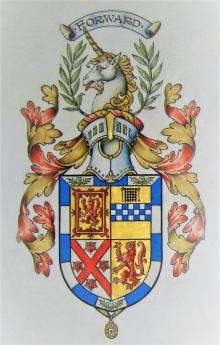
The following extract records the matriculation of arms of Sir Hugh Houghton Stewart, 4th Baronet of Athenree, as entered in the Public Register of All Arms and Bearings in Scotland in 1935.
This document is of particular importance, as it sets out in formal genealogical sequence the descent of the Stewart family from Captain Andrew Stewart of Gortigil through successive generations to the baronetcy. It also confirms the family’s long-standing use of armorial bearings and their recognition within the heraldic authority of the Lord Lyon.
Extract of Matriculation (1935)
Sir Hugh Houghton Stewart of Athenree, Baronet… having by Petition… represented that he was… the eldest son of the late Sir John Marcus Stewart, 3rd Baronet… and that the said Sir John Marcus Stewart… was the eldest son of Sir Hugh Stewart, 2nd Baronet… and that the said Sir Hugh Stewart… was the eldest son of Sir John Stewart… created 1st Baronet of Athenree… and that the said Sir John Stewart… was the eldest son of the Reverend Hugh Stewart, Rector of Termon… and that the said Reverend Hugh Stewart… was the only surviving son of John Stewart of Gortigil… and that the said John Stewart… was the eldest surviving son of Hugh Stewart of Gortigil… and that the said Hugh Stewart… was the second son… of Captain Andrew Stewart of Gortigil… who… accompanied Andrew Stewart, 3rd Lord Ochiltree & 1st Lord Castlestewart, from Scotland…
…the family of Stewart of Gortigil & Athenree has borne Arms from a period anterior to the year 1672… confirmed & amplified when registered in the office of Arms in Ireland on the Twenty Eighth day of November 1808…
…the Lord Lyon King of Arms… granted warrant… to matriculate… the following Ensigns Armorial…
Description of the Arms
The matriculated arms are described as:
Quarterly:
1st: Or, a lion rampant within a double tressure flory counter-flory Gules (Scotland)
2nd: Or, a fess chequy Azure and Argent, in chief a portcullis Sable (Stewart)
3rd: Argent, a saltire between four roses Gules, barbed Vert (Lennox)
4th: Or, a lion rampant Gules (Fife)
Bordure:
Compony Argent and Azure, charged with three thistles proper
Crest:
A unicorn’s head couped Argent, armed and crined Or, between two olive branches
Motto:
Forward
The arms combine elements associated with the royal and noble Stewart lineages of Scotland, including references to Stewart, Lennox, and associated heraldic traditions.
Heraldic and Genealogical Significance
This matriculation serves several important purposes:
It formally records the lineal descent of the Stewart family of Athenree
It confirms the family’s right to bear arms within Scottish heraldic jurisdiction
It connects the Tyrone-based family to the broader Scottish Stewart tradition
It reinforces the family’s claim to long-standing gentry and armigerous status
The document is particularly valuable as it preserves, in official form, the genealogical sequence already known from other sources.
Context within the Stewart Family History
The matriculation was made in 1935, during the lifetime of:
Sir Hugh Houghton Stewart, 4th Baronet (1858–1942)
By this time:
The family had long been established in County Tyrone
Ballygawley Park had been sold (1918) and later destroyed (1922)
The family’s principal residence had shifted to Loughmacrory Lodge
The matriculation therefore represents a moment of formal recognition of lineage and identity, at a time when the traditional estate system was already in decline.
Provenance
This extract is reproduced from the official record of the Public Register of All Arms and Bearings in Scotland, by permission of:
Sir David John Christopher Stewart, 7th Baronet of Athenree
Conclusion
The matriculation of arms of Sir Hugh Houghton Stewart provides both a heraldic and genealogical summary of the Stewart family of Athenree. It confirms their descent from the early seventeenth-century settlement in Tyrone and situates the family within the wider tradition of the Scottish Stewarts.
As a document, it complements the narrative and genealogical material presented elsewhere on this site, offering a formal and authoritative statement of lineage, identity, and continuity.
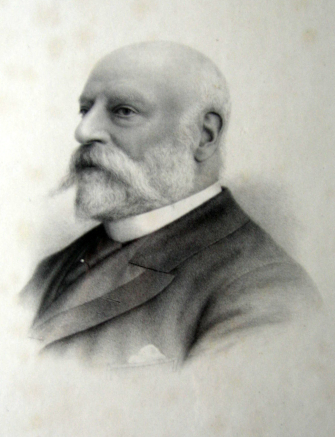
b. 19th of November 1830, d. 26th of February 1905
Sir John Marcus Stewart, 3rd Baronet (1830–1905), of Ballygawley Park and Loughmacrory Lodge, was a central figure in the later history of the Stewart family of Athenree. Soldier, landowner, and public servant, he represents the Victorian and Edwardian phase of the Tyrone landed class—active in county administration, military service, and social life.
His death in 1905 was widely reported and provides a valuable contemporary account of his character, responsibilities, and position within County Tyrone society.
Early Life and Family
Sir John Marcus Stewart was born on 19 November 1830, the eldest son of:
Sir Hugh Stewart, 2nd Baronet, and
Julia Gage, daughter of Marcus M’Causland Gage of Bellarena, County Londonderry
He succeeded to the baronetcy in 1854, upon the death of his father.
He married, on 1 December 1856:
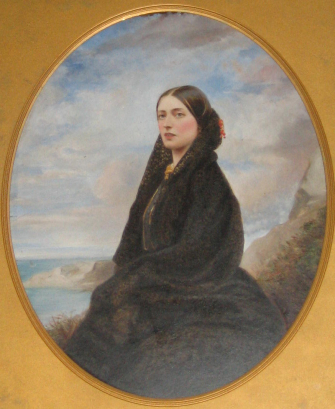
Annie Coote Houghton,
Annie Coote Stewart nee Houghton. d. 12th of October 1913
daughter and coheiress of George Powell Houghton of Kilmannock, County Wexford.
They had a large family, including his successor:
Sir Hugh Houghton Stewart, 4th Baronet
Military Service
Sir John pursued a military career in early life.
He served as a Lieutenant in the 6th Inniskilling Dragoons, and saw active service during the Crimean War. Although invalided home for a time, he later returned to duty before leaving the army upon succeeding to the family estates.
Public Office and County Life
On inheriting the baronetcy and estates, Sir John assumed a prominent role in the administration and social life of County Tyrone.
He served as:
High Sheriff of County Tyrone (1858)
Justice of the Peace (JP)
Deputy Lieutenant (DL)
He was also:
A long-serving member of the Grand Jury
A governor of the County Infirmary and Asylum at Omagh
A participant in the Diocesan Synod of the Church of Ireland
In addition, he acted as Gentleman Usher to the Lord Lieutenant of Ireland during the viceregal periods of the Duke of Abercorn.
Character and Reputation
His obituary provides a vivid account of his standing in the county:
“He was a most generous and considerate landlord… regarded by his tenantry with feelings of the deepest respect and affection.”
“There was no man in County Tyrone held in greater or more general esteem… one of the few men who never made an enemy.”
These descriptions reflect the idealised image of the late nineteenth-century landlord—personally engaged, paternal, and socially embedded within the community.
Residences
During his lifetime, Sir John maintained several residences, reflecting both inherited property and the shifting pattern of estate occupation:
Ballygawley Park (principal family seat in the earlier period)
Loughmacrory Lodge
Carrickmore Hall
Fincoul Lodge
By the early twentieth century, Ballygawley Park was no longer his principal residence, and the family’s focus had begun to shift toward Loughmacrory and Carrickmore.
Death and Obituary (1905)
Sir John Marcus Stewart died on 26 February 1905, following a short illness.
A detailed obituary noted:
“Notwithstanding his advanced years, Sir John had a robust constitution… until a few weeks ago…”
“He passed peacefully… to the inexpressible grief of his wife and family, and the sorrow of all who knew him.”
The account emphasised both his public service and personal character, highlighting his:
generosity as a landlord
commitment to local institutions
strong identification with the Church of Ireland
active role in county affairs
He was also described as:
a Conservative in politics
a member of the Loyal Orange Institution
connected with the Masonic Order, serving as Provincial Grand Master for Tyrone and Fermanagh
Contemporary Obituary (1905)
The following obituary appeared in the Tyrone Constitution on 3 March 1905, following the death of Sir John Marcus Stewart, 3rd Baronet.
We deeply regret to announce the death of this well-known and highly-esteemed gentleman, which took place on the 26th ult., after a brief illness. The sad news will come as a painful surprise to most of his friends, for notwithstanding his advanced years, Sir John had a robust constitution, and enjoyed wonderfully good health until a few weeks ago, when he was seized with an illness which caused much anxiety to the members of his family, though it was not then anticipated that it would have a fatal termination.
Last week he was brought to Belfast to undergo treatment at the private hospital in Fitzroy Avenue, where he had the advantage of the best medical skill and most efficient nursing. An operation was deemed necessary, and this was successfully performed on the 22nd ult. by Surgeon Kirk, Professor Sinclair, and Dr. Robert Reid, of Whiteabbey. It was confidently believed that a speedy recovery would follow, but unhappily, in spite of all that professional skill could accomplish, this hope was not realised, for the patient never regained strength and, becoming gradually worse, passed peacefully away on Sunday last, to the inexpressible grief of his wife and family, and the sorrow of all who knew him.
The late Sir John Marcus Stewart, Bart., of Athenree, County Tyrone, was born on the 19th November 1830, so that he was in his seventy-fifth year. He was the eldest son of the second baronet, Sir Hugh Stewart, and Julia, daughter of the late Mr Marcus M’Causland Gage, County Derry. He was educated at Rugby, and after leaving that famous school adopted the profession of arms, joining as lieutenant the 6th Inniskilling Dragoons, in which regiment he saw active service during the Crimean War.
He was invalided home for a time, but returned to the scene of hostilities, and there remained until the death of his father in 1856 led to his withdrawal from the Army prior to the conclusion of that historic campaign.
On succeeding to the baronetcy, which was created in 1803, and to the ownership of the extensive estates in Tyrone and other counties, Sir John threw himself with characteristic energy into the duties which devolved upon him in his new position.
He was a most generous and considerate landlord, who was regarded by his tenantry with feelings of the deepest respect and affection, for they found in him one who was ever ready to give them a courteous and attentive hearing, and who in diverse ways proved that he had their welfare at heart.
His genial and kindly disposition endeared him indeed to all who were brought into contact with him, and there was no man in County Tyrone held in greater or more general esteem. He had the gift of making and retaining friends, and was probably one of the few men who never made an enemy.
He took an active part in the affairs of the county, which has sustained a severe loss by his lamented death. He was one of the oldest members—if not the oldest member—of the Grand Jury, and for many years rendered valuable service as a governor of the county asylum and also of the infirmary in Omagh.
He was a justice of the peace and deputy-lieutenant of the county, and had filled with marked ability the important office of High Sheriff. During the years in which the first Duke of Abercorn held the Vice-royalty—1866–68 and 1874–76—Sir John acted as Gentleman Usher to the Lord Lieutenant, and in this capacity had official duties to discharge in connection with one of the visits of His Majesty the King—then Prince of Wales—to Dublin.
In politics he was an ardent Conservative, and he was a pronounced Churchman, being closely identified with the work of the Church of Ireland as a member of the Diocesan Synod and otherwise. He was a liberal supporter of many good causes, and a practical sympathiser with philanthropic and benevolent organisations.
He was a member of the Loyal Orange Institution, and was also connected with the Masonic Order, being Provincial Grand Master for Tyrone and Fermanagh.
His residences were Ballygawley Park, Ballygawley; Carrickmore Hall, Carrickmore; and Finn Coul Lodge, County Tyrone.
Sir John married in 1856 Annie Coote, daughter and coheiress of the late Mr George Powell Houghton, of Kilmannock House, County Wexford, and had a family of nine sons and three daughters. Lady Stewart, the daughters, and six of the sons survived him.
The eldest son, Lieutenant-Colonel Hugh Houghton Stewart, who succeeded to the title and estates, and who was born in 1858, saw active service during the South African War, and like his father filled the office of High Sheriff of County Tyrone.
Context and Significance
Sir John Marcus Stewart stands at a transitional point in the history of the Stewart family:
He inherited the estates at their greatest extent
He maintained the traditional role of the landed gentleman and county leader
His lifetime preceded the final decline and sale of Ballygawley Park
Under his successor, the economic and structural pressures on landed estates would become more pronounced, ultimately leading to the sale and destruction of Ballygawley Park in the early twentieth century.
Conclusion
The life of Sir John Marcus Stewart illustrates the role of the landed gentry in nineteenth-century County Tyrone—combining estate management, military service, and public duty.
His obituary preserves not only the details of his career, but also the values and expectations of the society in which he lived. Through him, the Stewart family appears at its most established and influential, just before the changes that would reshape both the family and the wider landed world of Tyrone.
Ballygawley Park, County Tyrone, was for much of the nineteenth century the principal seat of the Stewart baronets of Athenree. Developed from earlier lands associated with the Plantation period, the estate became one of the principal landed properties in the Ballygawley district before entering a long period of decline that culminated in its sale, partial demolition, and destruction by fire in the early twentieth century.
The history of Ballygawley Park reflects the wider story of the Irish landed estate system: expansion during the eighteenth and nineteenth centuries, financial pressure and restructuring during the Victorian era, and eventual fragmentation after the First World War.
Early History of Ballygawley
At the time of the Plantation of Ulster, Ballygawley was known by several earlier names, including:
Moyenner
Ballegalin
Cavanballygallin
In the early seventeenth century, Captain William Turvin received a grant of lands at Ballygawley from King James I. Turvin failed to fulfil the conditions of plantation, and the property subsequently passed into the hands of:
Sir Gerald Lowther
the Hamilton family
later the Beresford family
and eventually the Stewart family
A contemporary survey by Sir Josias Pynnar recorded the early Plantation settlement and defensive structures at Ballygawley.
By the nineteenth century, the estate had become associated with the Stewart family of Athenree.
Stewart Ownership and Development
Acquisition by the Stewart Family
The property known as Greenhill, near Ballygawley, was acquired by:
Sir John Stewart, 1st Baronet of Athenree c.1810–11.
The estate had previously been occupied by:
Thomas Harvey Esq.
who later settled in Newry, County Down.
Sir Hugh Stewart and the Creation of Ballygawley Park
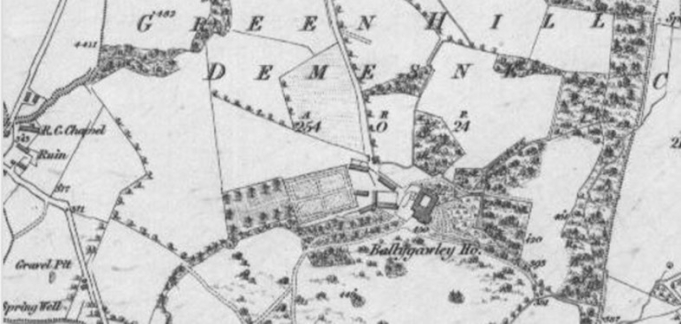
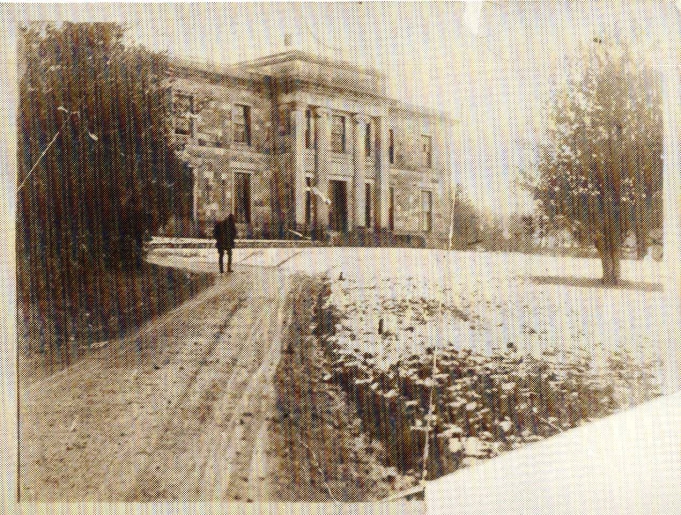
Sir Hugh Stewart, 2nd Baronet (1792–1854) greatly developed the property and transformed Greenhill into:
Ballygawley Park
Ballygawley park
A substantial mansion house was constructed c.1825–33 to designs attributed to:
John Hargrave of Cork
using locally quarried freestone.
At the same time, the Stewart family also maintained another residence at:
Loughmacrory Lodge
Financial Pressure and Estate Sale
Sale Advertisement (1854)
In September 1854, the Ballygawley estate, amounting to approximately 5,440 acres, was advertised for sale.
The advertisement described:
Ballygawley House and offices as being in excellent modern condition
a substantial rental income
and the estate as one of the most desirable properties in County Tyrone
The sale included:
the house
demesne
townlands
and extensive agricultural lands
Death of Sir Hugh Stewart
Sir Hugh Stewart, 2nd Baronet, died on:
19 November 1854
shortly after the estate sale process had begun.
Incumbered Estates Court Records (1855)
A record preserved at:
PRONI — D4183/23/6 dated 18 January 1855
details the Stewart estate in County Tyrone.
The document refers to:
“The rental and particulars of sale of lands for the estate of Sir Hugh Stewart and John Marcus Stewart in County Tyrone…”
The townlands listed include:
Gortigal
Aghalarg
Gortatray
Edergole
Kiltamnagh
Stroancarbadagh
Tullycunny
Rakeeragh
Creevanmore
Drudgeon
Blacksessogue
Lisanelly
Altcloghfin
Martray
Coolagerry
Killyneery
Armalughey
Cravenny Scotch
The record further notes that:
“Included are maps of the properties for sale.”
These records illustrate the financial pressures affecting the estate during the mid-nineteenth century and form part of the wider restructuring of Irish landed property during this period.
Sir John Marcus Stewart and Continued Development
Following the death of:
Sir Hugh Stewart, 2nd Baronet, on 19 November 1854,
the estate and baronetcy passed to his eldest surviving son:
Sir John Marcus Stewart, 3rd Baronet
(1830–1905)
Sir John Marcus Stewart continued the development and management of the Ballygawley estate during the later nineteenth century.
Estate Improvements (1871)
In 1871, substantial building works were undertaken at Ballygawley Park.
A notice published in the Belfast News-Letter announced proposals for:
the erection of a farmstead
alterations and additions to stables and offices
and the construction of three dwelling houses at Ballygawley
The notice stated:
NOTICE TO BUILDERS
“PROPOSALS WILL BE RECEIVED FOR the erection of a FARMSTEAD, together with Alterations and Additions to the STABLE, OFFICES, and other Works at BALLYGAWLEY PARK, County Tyrone, the seat of Sir John Marcus Stewart, Bart.”
“Also, for the erection of THREE DWELLING HOUSES at BALLYGAWLEY…”
“According to Plans and Specifications to be seen at the Offices of FITZGIBBON LOUCH, Esq., C.E., Architect, 45 Donegall Place, Belfast…”
“The lowest or any Tender will not necessarily be accepted.”
— Belfast News-Letter, 9 May 1871
The works demonstrate that, despite the financial pressures affecting many landed estates during the nineteenth century, Ballygawley Park continued to receive substantial investment under Sir John Marcus Stewart.
The involvement of a Belfast architect and the scale of the improvements suggest that the estate remained an important and active landed property during this period.
Ballygawley in 1904
A detailed article published in the Fermanagh Herald in January 1904 by John Dorrian provides a vivid contemporary account of Ballygawley during the later Stewart period.
Dorrian reflected both on the long history of Ballygawley and on the decline in population and prosperity that had occurred during the nineteenth century.
He observed that:
“Some years ago [the town was] close upon 1,000; and to-day we number, all told, little more than one-fourth of that.”
The article traced the history of the district from the Plantation period through the ownership of:
Lowther
Hamilton
Beresford
and Stewart families
Dorrian also recorded that by 1904:
“Sir John does not now reside at Ballygawley Park though there is a caretaker at the place, and his permanent residence is at Carrickmore Hall…”
This is significant, as it demonstrates that Ballygawley Park had already ceased to function as the principal Stewart residence before the death of Sir John Marcus Stewart in 1905.
The Final Occupation of Ballygawley Park
The 1901 and 1911 Irish census returns show that Ballygawley Park was maintained largely through resident caretakers during its later years.
The caretaker and gardener recorded at the property was:
Joseph Somerville
In 1911 he was additionally described as:
“Pensioner from Regiment 27th Inniskilling Fusiliers.”
The household recorded in 1911 included:
Joseph Somerville
Bridget Somerville
Susan Somerville
Mary Ellen Somerville
Bridget Somerville
Joseph Somerville (junior)
Elizabeth Somerville
Bernard McCavana (boarder)
These records provide a rare glimpse into the final inhabited phase of the estate before its disposal and destruction.
Sale, Fire and Final Destruction
Disposal of Ballygawley Park (1918)
In 1918:
Sir Hugh Houghton Stewart, 4th Baronet
disposed of Ballygawley Park to:
Mr Hugh M’Laurin, J.P., of Messrs M’Laurin Bros., Belfast,
for:
£6,000
The purchaser never occupied the mansion house.
Demolition and Removal of Materials
By 1920, advertisements appeared inviting tenders for the removal of building materials from the mansion.
The notice referred to the large quantities of:
cut stone
slate
lead
and teak wood
used in the construction of the house.
The buildings were to be removed by January 1921.
Dispute Following the Sale
Although Sir Hugh Stewart had disposed of the estate in 1918, a dispute subsequently arose regarding auctioneers’ fees and expenses connected with the transaction.
The matter continued unresolved for several years and was only formally settled in February 1922.
A report in the Northern Whig recorded proceedings before the King’s Bench in Dublin involving:
John and William M’Cann, auctioneers, Aughnacloy
and Brigadier-General Sir Hugh Houghton Stewart, Bart.
The action concerned commission and expenses arising from the sale of Ballygawley Park.
The report stated that:
“The defendant undertook to pay £120 in full discharge of plaintiffs’ claim…”
The proceedings demonstrate that financial and legal matters connected with the disposal of the estate remained unsettled even after the property had passed from Stewart ownership.
Destruction by Fire (1922)
On:
17 February 1922
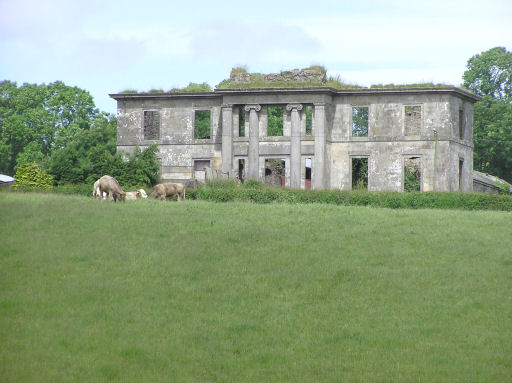
the mansion at Ballygawley Park was destroyed by fire.
A report in the Belfast News-Letter described the event under the headline:
“Tyrone Incendiarism — Mansion Gutted Near Ballygawley”
The newspaper reported:
“A fine old mansion at Greenhill… was maliciously set on fire yesterday morning and reduced to ashes.”
The building was described as:
unfurnished
unoccupied
and standing within its own demesne about a mile from Ballygawley.
The article noted that the property:
“was formerly the seat of the Stewarts, Co. Tyrone, and was sold in 1918… for £6,000.”
Rumours of Crown Occupation
At the time of the fire, rumours had circulated that Crown forces or the RIC might take over the building for use as barracks.
The newspaper stated that police had recently inspected the property:
“with a view to that purpose.”
It was widely believed locally that the fire was connected to these rumours and that the destruction of the house prevented any possible military occupation.
Although responsibility was commonly attributed to the IRA, no formal public claim appears to have been made.
Circumstances of the Fire
Contemporary reports described:
quantities of hay soaked in petrol placed throughout the house
petrol tins discovered within the building
and the rapid spread of the flames before dawn.
Local Specials and RIC officers who attended the scene were unable to save the building.
Ballygawley Park
Compensation Claim and Local Suspicion
Only days after the fire, a claim for:
£20,000
was lodged in connection with the destruction of the mansion.
The speed and scale of the claim attracted local comment and speculation, particularly as the property had reportedly been purchased for only £6,000 a few years earlier.
While no evidence emerged publicly to contradict the official interpretation of the fire as malicious destruction, rumours persisted locally that there may have been more to the circumstances surrounding the destruction of Ballygawley Park.
Final Disposal
Following the fire, the remains of the mansion and demesne were sold.
The destruction of Ballygawley Park marked the final end of the estate as a major landed seat of the Stewart family in County Tyrone.