The Perry family of Mullaghmore, Perrymount and the Origins of the Seskinore Estate
Overview
Mullaghmore, historically recorded as Moyloughmore, Mullorkmore or Mullaghmore, formed the earliest established seat of the Perry family in County Tyrone. Later known as Perrymount, it became the foundation from which the Perry estate developed and from which the later Seskinore estate emerged.
The Perrys are said to have been of Welsh descent. The first identifiable member of the family connected with the district was Thomas Perry (d. c.1662), whose son, James Perry of Ranelly, acquired lands in the Barony of Omagh in 1662.
Through subsequent inheritance, marriage, purchase and settlement, the Perry lands at Mullaghmore, Ranelly and Seskinore eventually passed to the McClintock family of Newtown, County Louth, creating the estate later known as McClintock of Seskinore.
The 1662 Grants
The foundation of the Perry estate dates from two important transactions in 1662.
On 20 June 1662, Sir William Usher conveyed the lands of Ranelly to James Perry, son of Thomas Perry. A memorandum attached to the deed records delivery of seizin to James Perry on 4 July 1662, and later refers to an arrangement involving his son George Perry.
Shortly afterwards, on 26 June 1662, Sir Audley Mervyn granted to the same James Perry a fee farm of the lands described as Moyloughmore, Mullorkmore or Mullaghmore.
These transactions established the Perry family as substantial landholders in the district and provided the foundation for the later Perrymount estate.
Perrymount and Mullaghmore
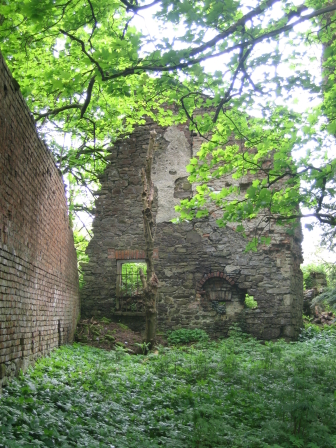
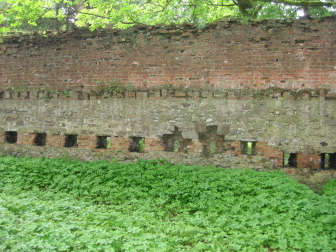

James Perry established his seat at Moyloughmore, which became known as Perrymount. The estate was also historically associated with Mullaghmore House, now in ruins.
Although little is known about James Perry personally, including the name of his wife, records identify three sons:
- Francis Perry, of Tityreagh, near Omagh, who married Elizabeth Lowry and died without issue.
- Samuel Perry, who married firstly Catherine Lowry and secondly Isobel Graham.
- George Perry, of Moyloughmore, from whom the principal Perrymount line continued.
The Perry Line at Perrymount
George Perry of Moyloughmore
b. c.1700 – d. c.1774
He married Angel Sinclair, daughter of Rev. James Sinclair of Holyhill, near Strabane.
Their issue included:
- Samuel Perry, of Perrymount and Mullaghmore.
- George Perry, who married a daughter of Crawford of Cooley, County Tyrone.
- Margaret Perry, who married her first cousin Captain Edward Perry.
- Letitia Perry, who married a Johnston.
- Adam Perry, who married a Dick.
Samuel Perry of Perrymount and Mullaghmore
b. c.1730 – d. 1774
He married a daughter of the Olphert family of Ballyconnell House, County Donegal.
His issue included:
- George Perry, later of Perrymount and Moyloughmore.
- Mary Perry, who married Alexander McClintock of Newtown, County Louth, in December 1781.
This marriage later became the crucial link through which the Perry estate passed into the McClintock family.
The 1774 Mullaghmore Sale Notice
Following the death of Samuel Perry, a notice appeared in the Londonderry Journal on 4 March 1774, advertising the sale of household furniture, farming utensils and stock at Mullaghmore.
The notice also offered the house, offices and demesne to be let during the minority of the heir, then aged about ten.
It described Mullaghmore as:
“The house is large and in good order with stables coach-house and other offices, fit for the accommodation of a gentleman or farmer.”
The notice also referred to:
- saddle and draught horses
- milch cows and other cattle
- farming utensils
- a demesne of arable and meadow ground
- quickset hedges
- turf bog
- hay and oats
This is one of the most valuable surviving descriptions of the Perry seat at Mullaghmore during the eighteenth century.
George Perry, the Burges Connection, and Residence at Armagh
During the late eighteenth and early nineteenth centuries, records relating to the Perry estate frequently describe George Perry of Perrymount as residing in Armagh rather than at Mullaghmore or Seskinore.
This apparent shift in residence is closely connected with the Burges family, into which George Perry had married.
Marriage into the Burges Family
George Perry (1762–1824), of Perrymount and Mullaghmore, married Mary Burges, daughter of John Burges and niece of Sir John Smith Burgess [sic], Baronet.
Through this marriage, the Perry family became connected with an established landed and professional family whose interests extended beyond County Tyrone into County Armagh and England.
The alliance linked the Perrys with the Burges family of Parkanaur and Armagh, expanding the wider social and geographical network associated with the estate.
Residence in Armagh
Lease records and estate documents from the late eighteenth and early nineteenth centuries frequently refer to George Perry as being “of Armagh.”
Evidence suggests that George Perry occupied property in or near Armagh through his connection with the Burges family while continuing to retain ownership and control of the Mullaghmore and Seskinore estate.
Two leases dated 1791 confirm that George Perry held both a house and lands near Armagh from his brother-in-law, John Henry Burges of Parkanaur.
Between approximately 1805 and 1811, records relating to the Perry estate consistently describe him as residing at Armagh rather than at Perrymount.
This did not represent an abandonment of the estate, but rather reflected a pattern common among landed families of the period, whereby estates were managed through agents, leases, and local arrangements while proprietors maintained residences elsewhere.
Estate Management During His Absence
During George Perry’s residence in Armagh, management of the estate at Mullaghmore and Seskinore appears to have continued through leases and local supervision.
Contemporary records indicate that portions of the estate were let to tenants, while individuals associated with the Perry and related families may have occupied or supervised Perrymount during periods of his absence.
This arrangement reflects the increasingly dispersed nature of many landed families during the late Georgian period, when marriage alliances, professional obligations, and social connections frequently drew proprietors beyond their principal estates.
The Burges Family of Parkanaur
The Burges family, originally associated with England and Wales, became established in Ireland during the late seventeenth century.
John Henry Burges (c.1768–1822), of Parkanaur and Woodpark, County Armagh, served as High Sheriff of County Armagh in 1802.
His son, John Ynyr Burges (1798–1889), later served as High Sheriff of County Tyrone in 1829 and maintained the family seat at Parkanaur.
The family also possessed substantial interests in Essex and connections with the East India Company through Ynyr Burges, Paymaster to the Company in the eighteenth century.
Through the marriage of Mary Burges to George Perry, the Burges family became directly connected to the history of Mullaghmore and Seskinore.
Significance
The Burges connection provides important context for understanding the administration and social world of the Perry estate during the late eighteenth and early nineteenth centuries.
It explains:
- why George Perry frequently appears in records as “of Armagh,”
- how the estate was managed during this period,
- and how marriage alliances connected the Perrys to a wider network of landed families across Ireland and Britain.
The relationship also illustrates the increasingly interconnected character of landed society during the final phase of Perry ownership before the estate passed into the McClintock family through inheritance.
Atkinson’s Description of Seskinore and Mullaghmore
A valuable nineteenth-century description of Seskinore Lodge and Mullaghmore appears in A. Atkinson’s Ireland in the Nineteenth Century.
Atkinson described Seskinore Lodge as the seat of Mrs Perry, widow of George Perry, and noted that it formed part of the same estate as Mullaghmore and the village of Seskinore.
He described the lodge as:
“A neat and fashionable lodge, a tastefully planted lawn, and about sixty Irish acres of a farm…”
He also observed that the older family residence had been at Mullaghmore, known during Perry occupation as Perrymount.
This confirms the transition from the older Perry seat at Mullaghmore to the newer residence at Seskinore.
Seskinore, Drumconnolly and Tullyrush
The ownership of Seskinore, Drumconnolly and Tullyrush has sometimes caused confusion.
On 3 July 1724, Henry Mervyn granted the lands of Seskinore, Drumconnolly and Tullyrush to Alexander McClintock.
It has sometimes been suggested that these lands passed by inheritance from Alexander McClintock of Drumcar to his relatives. However, later evidence suggests otherwise.
A notice in the Londonderry Journal in 1783 offered the lands of Drumconnolly and Tullyrush for sale by private contract. Later leases show George Perry of Perrymount acting as lessor of portions of Seskinore and Tullyrush.
These records strongly suggest that the lands passed into Perry ownership after the death of Alexander McClintock in 1775, possibly through a sale by his executors.
Expansion of the Estate
The Perry estate continued to expand during the early nineteenth century.
On 18 November 1802, George Perry purchased the lands of:
- Tullyheron
- Tullytemple
- Rarone
from trustees under the will of James Hamilton, for £3,600.
This purchase formed part of the wider consolidation of the estate around Mullaghmore and Seskinore.
Further acquisitions followed, helping to create the substantial estate later inherited by the McClintocks.
Transfer to the McClintock Family
The key transfer came through the marriage of:
Mary Perry
daughter of Samuel Perry of Perrymount
to:
Alexander McClintock of Newtown, County Louth
in December 1781.
Their son:
Samuel McClintock
1790–1852
became heir to his uncle George Perry.
Following the death of Mrs Perry, widow of George Perry, the estate passed to Samuel McClintock.
A report in the Tyrone Constitution on 18 April 1845 described his arrival at Seskinore and the enthusiastic reception given by the tenantry. The report stated that the Seskinore property had been left to him by his uncle, the late George Perry.
This contemporary account is important because it confirms the Perry route of inheritance and makes no reference to descent from Alexander McClintock of Drumcar.
The 1846 Estate Map
After taking possession, Samuel McClintock commissioned a full estate map in 1846.
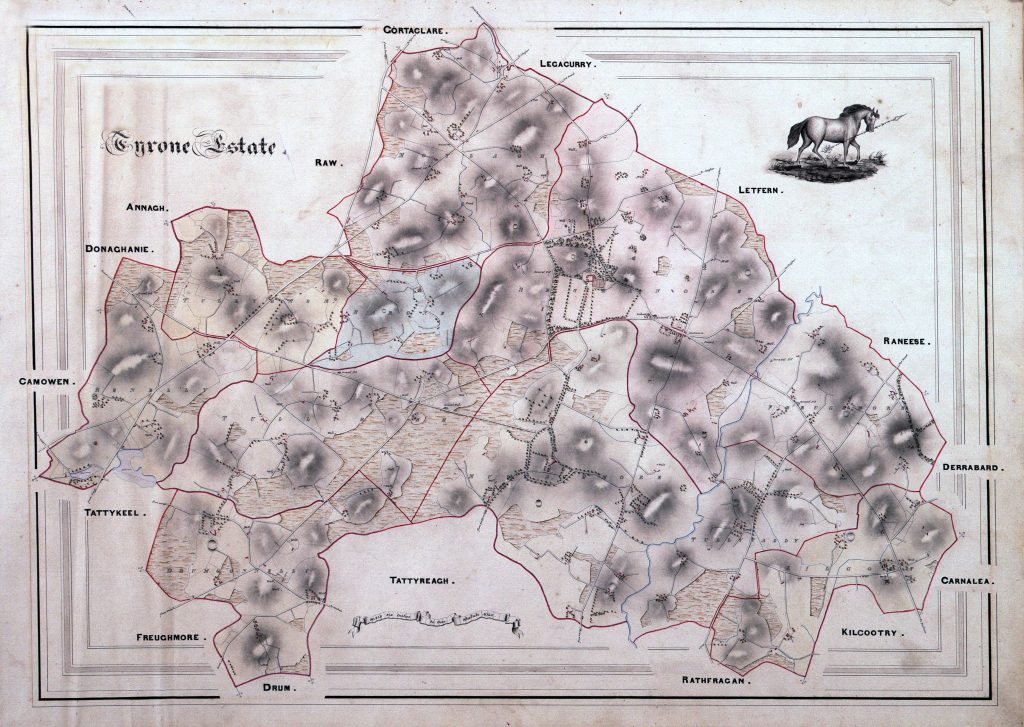
This map, preserved at PRONI, provides the first comprehensive survey of the Perry–McClintock estate and marks the estate’s transition into the McClintock period.
Suggested caption:
Map of Mullaghmore. The Estate of Samuel McClintock Esq., situate in the County of Tyrone. PRONI D568. Reproduced with kind permission of the Deputy Keeper of the Records, Public Record Office of Northern Ireland.
Chancery Confirmation, 1854
The legal position of the estate was later confirmed by an order of the Court of Chancery in Ireland dated 17 June 1854.
This declared that George Perry McClintock was seized of an estate tail in the lands inherited through the Perry line.
The estate included:
- Drumconnolly
- Tullyrush
- Tullyheron
- Tullytemple
- Rarone
- Upper Mullaghmore
- Lower Mullaghmore
- the mansion house and 10 acres
- Moylagh
- Ranelly and the mill at Ranelly
- Seskinore
- Freughmore
- Tullyvally
- Kilgort
- Camowen
- Knockadreenan
Together these lands amounted to approximately 4,553 acres.
Significance
Mullaghmore, later known as Perrymount, represents the original seat of the Perry family in Tyrone and the foundation from which the later Seskinore estate developed.
The history of the estate illustrates a wider pattern in Irish landed society:
- seventeenth-century land acquisition
- eighteenth-century consolidation
- movement from an older seat to a newer demesne residence
- inheritance through the female line
- and eventual transfer into another landed family
Through Mary Perry’s marriage to Alexander McClintock, and through the will of George Perry, the Perry estate passed into the McClintock family, shaping the later history of Seskinore for more than a century.
Related Pages
- Abstract of Title for the Seskinore Estate
- Perry–McClintock Line of Seskinore
- McClintock of Seskinore
- Mullaghmore (Perrymount): The Perry Estate
- The 1774 Mullaghmore Sale Notice
- The McClintock Family of Trinta and Seskinore
- Seskinore Estate
- The Lowry Family of Ahenis and Pomeroy
- The Burges Family of Parkanaur and Armagh
- Perry–McClintock Ownership
- Perry–McClintock Ownership Timeline
- 1940 Conveyance to The Ministry of Agriculture
- Origins & Inheritance