Inheritance, Restriction, and the Future of the Eccles Estate
John Stuart Eccles of Ecclesville

John Stuart Eccles succeeded to the Ecclesville estate on the death of his father, Charles Eccles, in 1869.
He married, in 1871:
- Frances Caroline Browne, daughter of Thomas Richardson Browne of Aughentaine Castle, County Tyrone.
The marriage further strengthened ties between two prominent Tyrone landed families.
Issue
John Stuart Eccles and Frances Caroline Browne had four children:
- Charles Raymond Eccles (1872–1872), died in infancy
- Amy Henrietta Frances Eccles (1874–1942)
- Rose Isabel Eccles (b. 1876)
- Anna Theodosia Hester Eccles (“Dosie”) (b. 1878)
With the death of their only son in infancy, no direct male heir survived.
The 1873 Will and Entail
By his will dated 1 October 1873, John Stuart Eccles settled the Ecclesville estate under a strict entail in tail male.
This meant:
- The estate could pass only through male descendants
- Female heirs could not inherit in fee simple
- Daughters could hold only limited or life interests
This legal structure, common among landed families, was designed to preserve estates intact across generations, but often created difficulties where no male heir existed.
Death and Guardianship (1886–1887)
John Stuart Eccles died on 24 April 1886.
His widow, Frances Caroline Eccles, died shortly afterwards on 12 February 1887.
Their children—Amy, Rose, and Anna—were thus left orphaned.

Guardianship and administration of the estate were entrusted to:
- Dr Edward Charles Thompson of Omagh
- Together with appointed trustees and family connections
Dr Thompson was both:
- A relative through the Blake family of Castle Grove
- And later brother-in-law to John Knox McClintock
His role placed him at the centre of both family and estate affairs during a critical transitional period.
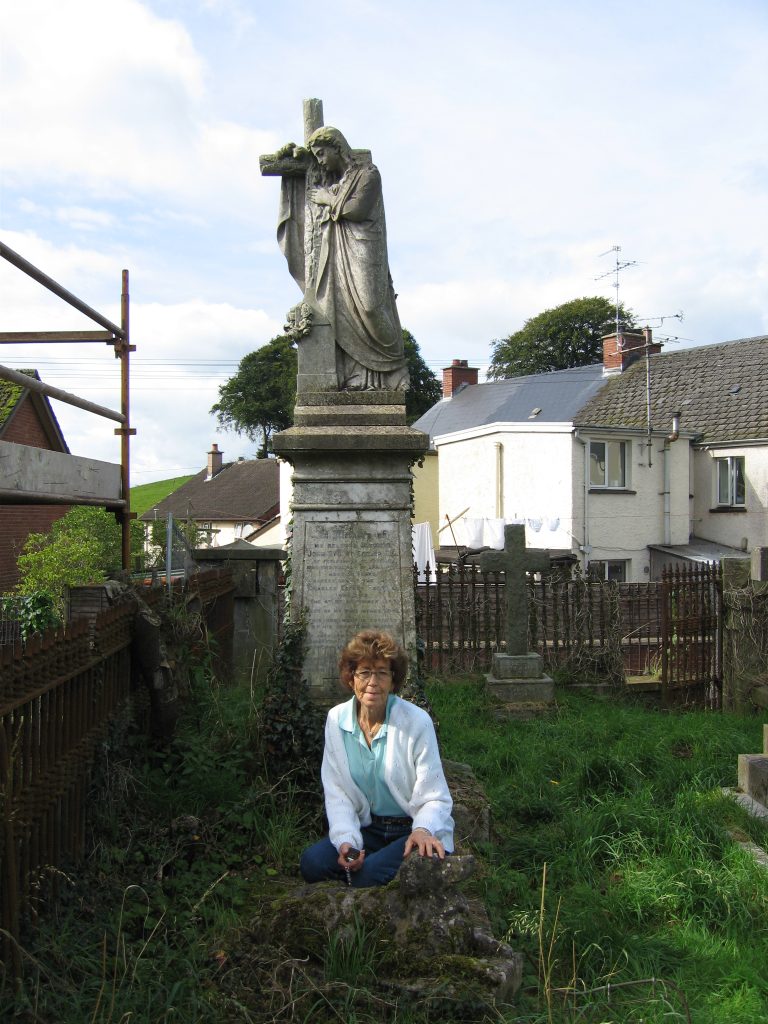
Amy Eccles as Life Tenant
Under the terms of the will:
- Amy Eccles, as eldest surviving daughter, became
life tenant and beneficial heir
However:
- She was not absolute owner
- Her rights were limited to her lifetime
- The estate remained legally bound by the entail
This distinction shaped the entire future of Ecclesville.
The Problem of Succession
Because no male heir existed:
- The estate could not pass directly to Amy’s descendants
- Its future depended on identifying the next eligible male heir under the entail
This created uncertainty regarding:
- Long-term ownership
- Marriage strategy
- Estate management
The 1903 Legal Clarification
In January 1903, John Knox McClintock, husband of Amy Eccles, sought legal clarification regarding the succession of the Ecclesville estate.
The response confirmed:
- Amy held the estate for life only
- In the absence of a son, succession would pass:
- First to her sister Rose (for life)
- Then to her sister Anna (for life)
- Then to the nearest male heir in the extended family
It further confirmed that:
- Amy’s daughter would receive only £3,000 provision
This formalised the strict operation of the entail and confirmed that the estate would ultimately pass outside Amy’s immediate line.
Letter on the Ecclesville Entail (1903)
(Reproduced in Full)
Ecclesville Estate
Omagh, County Tyrone
13th January 1903
Dear Sir,
In reply to your letter of the 10th inst.,
The Ecclesville Estate goes as follows:
If Mrs. McClintock (Amy Eccles) dies without a son, the estate goes to Miss Eccles (Rose), if alive, for her life.
If she dies without a son, it will then go to Mrs. Stoney (Dosie), if alive, for life.
If she dies without a son, it will go to the eldest son (if any) of the late Charles Edward Eccles.
If he has died without a son, it will go to Robert Gilbert Eccles (grand-uncle), if alive, for his life, and after his death, to his eldest son.
Failing all this, it will go in thirds to the daughters of Mrs. McClintock, Miss Eccles, and Mrs. Stoney.
If Miss Eccles should die without children, then one half to the daughters of Mrs. McClintock, and one half to the daughters of Mrs. Stoney.
Under the settlement of the Ecclesville Estate executed upon your marriage, in case Mrs. McClintock dies without a son, your daughter will only receive £3,000 out of the entire estate.
Seskinore Estate
Upon your death, the estate goes to your daughter, provided there is no son.
Yours faithfully,
King Houston
To:
Major J. K. McClintock
Seskinore
Editorial Note
This letter provides a contemporary summary of the operation of the Ecclesville entail and illustrates the severe restriction placed on female inheritance. It confirms that, in the absence of a male heir, the estate would pass through successive male lines before any division among daughters, and that the daughter of Amy McClintock would receive only a limited monetary portion rather than the estate itself.
Consequences of the Entail
The entail had several long-term consequences:
1. Restriction of Ownership
Amy could not dispose of or fully control the estate as an absolute owner.
2. Influence on Marriage
The marriage of Amy Eccles to John Knox McClintock (1893) must be understood within the context of:
- Estate preservation
- Existing family connections
- Geographic proximity
3. Eventual Transfer of the Estate
The estate was destined to pass:
- Through the male line of the family
- Ultimately to Anthony Charles Stuart Delmege, grandson of Amy’s sister Rose
Wider Context: Changing Ireland
The limitations imposed by the entail coincided with broader structural change:
- The Irish Land Acts enabled tenant purchase
- Large estates were progressively broken up
- Traditional landlordism declined
During Amy’s lifetime:
- Most of the Ecclesville estate was sold
- Only the demesne remained
Historical Significance
The Ecclesville entail illustrates a critical feature of Anglo-Irish landed society:
- The tension between preservation of estates and changing social realities
In this case:
- The absence of a male heir
- The rigidity of the legal structure
- The impact of land reform
combined to bring about the gradual dissolution of the estate.
John Stuart Eccles’s will, intended to secure the future of Ecclesville, ultimately ensured that it would pass beyond his direct descendants.
See Also
- Amy Henrietta Frances Eccles McClintock
- Dr Edward Charles Thompson
- The Eccles Family of Ecclesville
- The McClintock Family of Seskinore
- The Break-Up of the Ecclesville Estate
- Marriage Settlement of John Knox McClintock & Amy Henrietta Eccles
- The Manor of Fentonagh (Castleleigh)
- The Delmege Inheritance: Ecclesville Estate and Cricklade Manor
- Disentailing of the Ecclesville Estate (1944)