Olive Vivian Trainor (1893–1980)
A life of independence, controversy, and reinvention
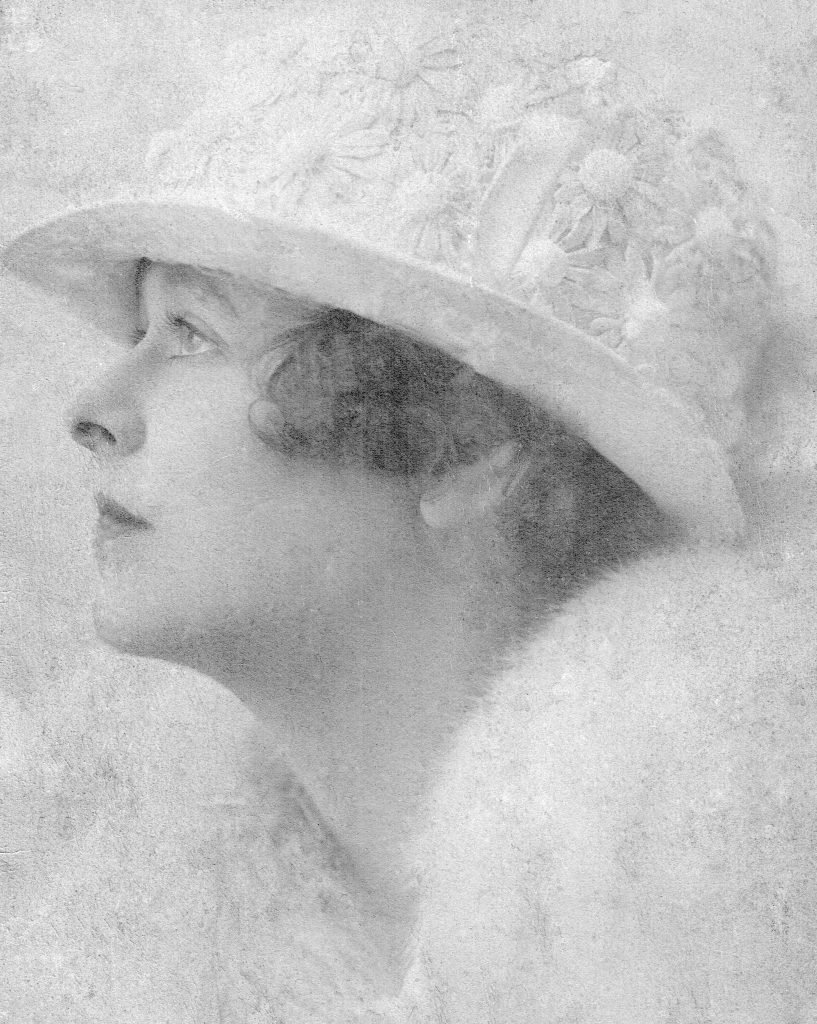
Olive Vivian Trainor was a complex and unconventional figure whose life spanned England, Europe, and Africa during a period of profound social change.
Marked by independence, instability, and repeated reinvention, her life intersected with high society, divorce courts, early aviation, and colonial enterprise. Through her son, Anthony Patrick Joynson-Wreford, she also forms part of the final chapter in the story of the Seskinore estate.
Early Life and Family
Olive Vivian Trainor was born on 22 September 1893 at Teddington, Middlesex, into a family of mixed Irish and English background.
Her father, Patrick Edward Trainor, was originally from Tullyframe, County Down, the son of Thomas Trainor, a publican. He later was associated with the “Walmer Shooting Case” (see contemporary report). Her mother, Marianne (Marion) Shum, was the daughter of Charles Francis Shum of Prestwick Lodge, Northumberland, and Harriet Fenwick (see Shum Family).
The marriage was evidently unhappy. In 1908, Marion filed for divorce, citing physical and mental abuse.
Olive was the youngest of six children:
- Irene Mary (b. 1885)
- Constance Evelyn (b. 1887)
- Phyllys Marion (1888-1972)
- Cecil Dorothy Francis (b. 1890)
- Devaney Claude Edward (b. 1892)
- Olive Vivian Trainor (1893–1980)
Within the family, Olive was affectionately known as “Baby.”
Character and Personality
Olive was described as tall and slim, with auburn hair and a carefully placed beauty spot on her right cheek. She carried herself with an air of authority, reflecting both her upbringing and a strong, independent temperament.
From an early stage, she appears to have resisted convention. Accounts suggest a lively, social, and sometimes wilful personality—traits that would shape much of her later life.
Marriage and Early Adult Life
On 3 December 1915, at the age of 22 and already pregnant, Olive married Henry Keddey Fletcher, aged 25, whose family owned the ship repair firm Fletcher Son and Fearnall Ltd at Union Docks, Limehouse.
They had two daughters:
- Patricia (Pat) Marion Collingwood Fletcher (b. 1916)
- Barbara Pamela Fletcher (b. 1917)
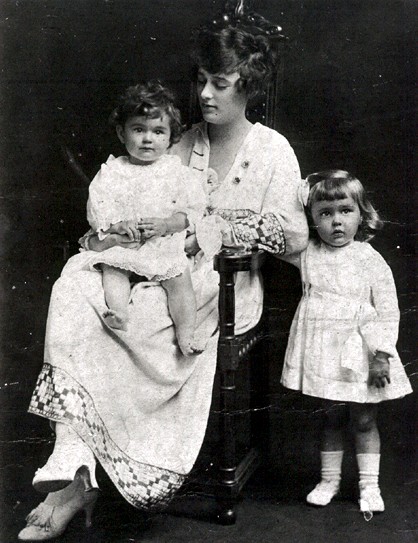
The marriage was troubled from an early stage. Olive maintained a highly social lifestyle, frequently travelling to London, dining out, and entertaining guests. By 1920, the couple had separated.
Legal proceedings followed, including petitions concerning custody and marital rights. In 1923, Henry Keddey Fletcher successfully petitioned for divorce, citing adultery. Divorce proceedings reveal a deeply troubled marriage, with allegations of extravagance, independence, and behaviour considered unconventional for the period.
Olive lost custody of her daughters, though she appears to have maintained some contact with them in later years.
Relationship with Tony Joynson–Wreford
In the early 1920s, Olive became involved with Captain Wilfred Heyman Joynson–Wreford.
The relationship led to the breakdown of both of their marriages. Tony’s divorce was finalised in February 1926, and the couple married shortly afterwards, on 10 March 1926, at the British Consulate in Paris.
This period marked a dramatic shift in Olive’s life, placing her within a world shaped by aviation, travel, and financial uncertainty.
A Life on the Edge: Aviation and Uncertainty
During this period, Olive was closely connected to Tony’s aviation ventures.
A photograph taken at Baldonnel Aerodrome on 8th September 1927 shows her, heavily pregnant, standing beside Tony and the aircraft “Princess Xenia“, an ambitious attempt to fly from Ireland to America.
The principal financier of the venture was William Bateman Leeds, who named the aircraft in honour of his Russian wife, Princess Xenia Georgievna.
The name would later take on a more personal significance. Some years afterwards, Tony named his daughter Xenia Penelope Joynson-Wreford, echoing the same distinctive name associated with the aircraft—an association that links this episode in his life with the later history of Seskinore and its final heir.

The venture ultimately failed, and subsequent aviation tragedies—including the loss of Captain Hinchcliffe and Elsie Mackay—added to the strain already affecting the marriage.
Pregnancy and the Birth of Pat (1928)
In late 1927, Olive travelled in France while pregnant.
In January 1928, Olive was Intending to return to England for the birth, she became ill in Paris after eating oysters and went into premature labour. On 10 January 1928, she gave birth to a son at a hotel on the Rue de Bassano.
The child, Anthony Patrick Joynson–Wreford (“Pat”), would later play a central role in the rediscovery of the Seskinore estate.
Breakdown of the Marriage
The months following Pat’s birth saw the rapid collapse of the relationship.
Surviving letters from the divorce proceedings (National Archives, J 77/2594/652) provide a rare and direct insight into the breakdown.
Writing from Carter’s Hotel, Albemarle Street, Tony urged Olive to agree to a divorce:
“I have come to the conclusion that it is hopeless for you & I to try & continue as we are now… I ask you again now to divorce me… when love has ceased to exist it is useless to continue.”
He emphasised what he described as incompatibility rather than infidelity:
“There is no question of any other woman… it is merely incompatibility of temperament.”
At the same time, he acknowledged her situation and the child:
“The child I promise you will be looked after… I will definitely give you enough to live on.”
A second letter, written shortly afterwards, reinforced his position:
“You must admit that married life as far as we are concerned is rather hopeless… I feel I want to be entirely alone.”
These letters reveal a relationship under considerable strain, shaped by financial difficulty, emotional distance, and fundamentally incompatible expectations.
Departure and the Transatlantic Attempt
By late 1928, Olive made a decisive break.
Taking her infant son with her, she left England and travelled to America, intending to begin a new life.
On arrival in New York, she was refused entry due to the absence of an immigration visa. Unable to disembark and lacking the funds to return, she and her son were diverted to Bermuda, where they remained until permission was granted to continue.
This episode reflects a defining aspect of Olive’s character: determination, resilience, and a willingness to take significant risks in pursuit of independence.
Reinvention: London and South Africa
Following her return to England in the late 1930s, Olive sought to establish herself independently.
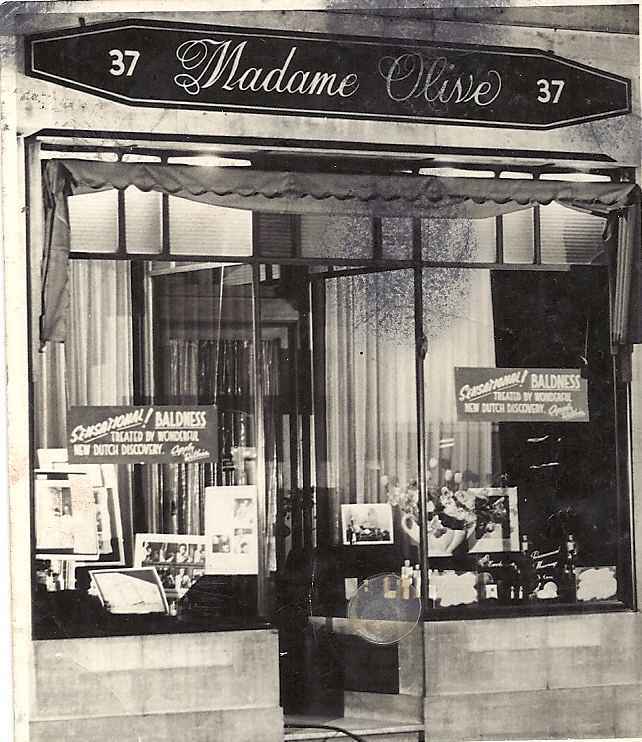
Using a lump sum settlement from her first marriage, she opened a salon in Knightsbridge under the name “Madame Olive.” The business included beauty treatments, perfumes, and even a “cure” for baldness, alongside a marriage bureau.
The venture struggled financially, and she later moved to South Africa, where she found greater success with the marriage bureau business, expanding it across Natal, Durban, and Rhodesia.
Her son Pat later joined her there before pursuing a successful career in broadcasting.
Later Life and Return to England
It appears that Olive never saw her daughters again in person. However, she seems to have followed their lives from a distance. Among the contents of her personal photograph album are two later images: one showing Patricia at her marriage to Edward Asa Thomas in 1940, and another of Barbara with her infant daughter, Dawn, taken in 1943.
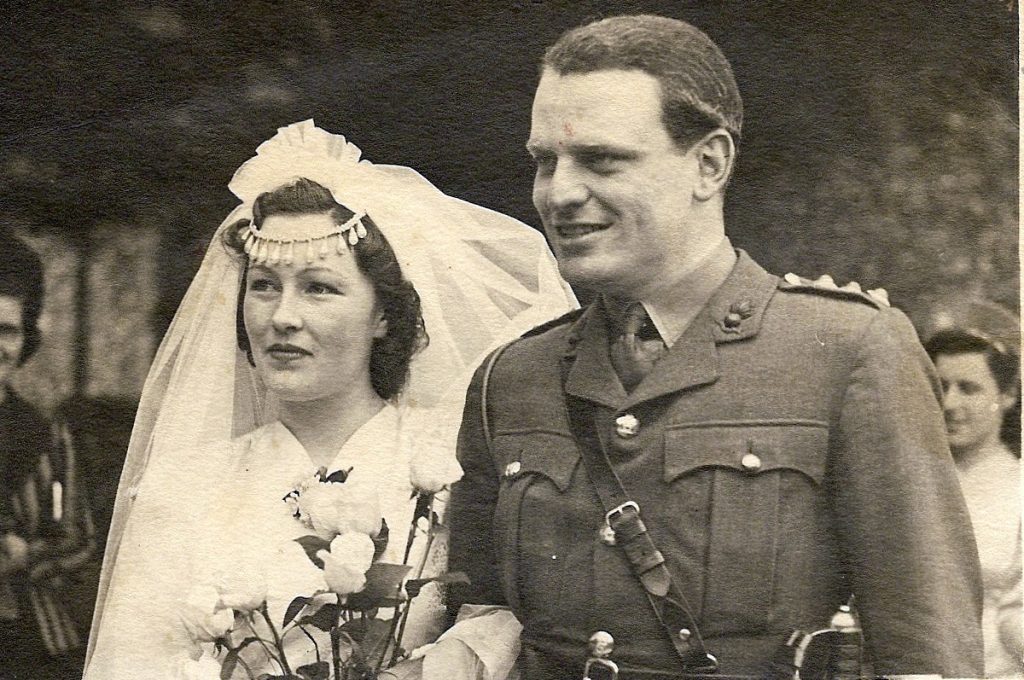
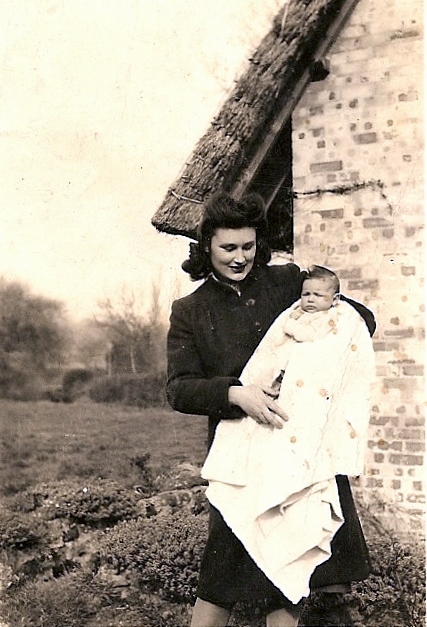
Photographs preserved in Olive’s personal album suggest she maintained a distant awareness of her daughters’ lives.
Olive returned to England in 1938, as the threat of war in Europe began to grow.
Shortly after her return to London, she met Major George Stephenson. Although she had no desire to marry again, she agreed to change her name by deed poll to Olive Stephenson. Together, they established a home on the Thames at Church Island, Staines.
In her later years, Olive settled in Glasgow, where she lived near her son.
She died on 21 August 1980, aged 86.
Legacy
Olive Vivian Trainor’s life was marked by movement, instability, and continual reinvention.
She experienced:
- social prominence
- personal loss
- financial uncertainty
- and repeated attempts to rebuild
Her story stands in contrast to the traditional narrative of inherited stability associated with landed families.
Instead, it reflects a twentieth-century reality in which identity was shaped not by inheritance, but by adaptation.
Through her son Pat, and ultimately through Xenia Joynson–Wreford, her story became part of the final chapter in the history of the Seskinore estate.
- Captain Wilfred (Tony) Heyman Joynson–Wreford
- Anthony Patrick (“Pat”) Joynson-Wreford
- Penelope Xenia Joynson-Wreford
- Seskinore Estate
- Letters Relating to the Breakdown of the Marriage (1928)
- Genealogical Notes on the Shum Family
- The Shum Family
- The Trainor Family
- The Storey family
- Will of George Shum-Storey (1846) – Summary