The Shum Family
Introduction
The Shum family formed part of a wider network of professional and landed families connected to the Trainor and McClintock lines.
Through marriage, inheritance, and the adoption of the name Shum-Storey, the family became established within the English landed class, linking commercial wealth derived from India with property and social position in Northumberland.
Origins of the Family
The early line of the family can be traced through:
George Shum and Mary Wheatley
→ George Shum and Ann Sammler
From this lineage emerged George Shum (born 8 May 1775), whose marriage would establish the later Shum-Storey family and its association with landed property.
The Storey Inheritance and Arcot Hall
The origins of the Shum-Storey family’s position in Northumberland lie in the estate of Cramlington.
The manor of Cramlington was granted to Nicholas de Granville in or before 1135. Through successive generations, it passed by marriage into the Heselrigge and later the Lawson family, remaining in their ownership until 1791.
Arcot Hall and the Indian Connection
The origins of Arcot Hall at Cramlington are closely connected to British India and the career of Robert Storey.
Robert Storey trained as a medical student before emigrating to India at an early age. There he became Physician to the Nabob of Arcot and is understood to have been present during the period associated with the Battle of Arcot. Through his service in India, he accumulated considerable wealth.
On his return to England, Storey purchased land at Cramlington from Sir John Lawson in 1791, establishing himself as a landed proprietor in Northumberland. He died on 21 August 1822 at the age of 90.
The connection between India and Cramlington was preserved in the naming of the estate. The later house, Arcot Hall, derived its name from Arcot in India, reflecting the source of the family’s fortune and status.
In 1795, George Shum (born 1775), who had also been associated with the East India Company, married Ann Storey, daughter of Robert Storey. Following this marriage, and in accordance with Storey family wishes, he assumed the additional surname Storey, becoming George Shum-Storey.
Shortly afterwards, in 1802, George Shum-Storey built Arcot Hall on the estate, establishing the family residence that would define the Shum-Storey line in Northumberland.
Marriage and the Creation of the Shum-Storey Name
The connection with the Shum family arose through the marriage of George Shum, who had also made his fortune in India, to Ann Storey, daughter of Robert Storey.
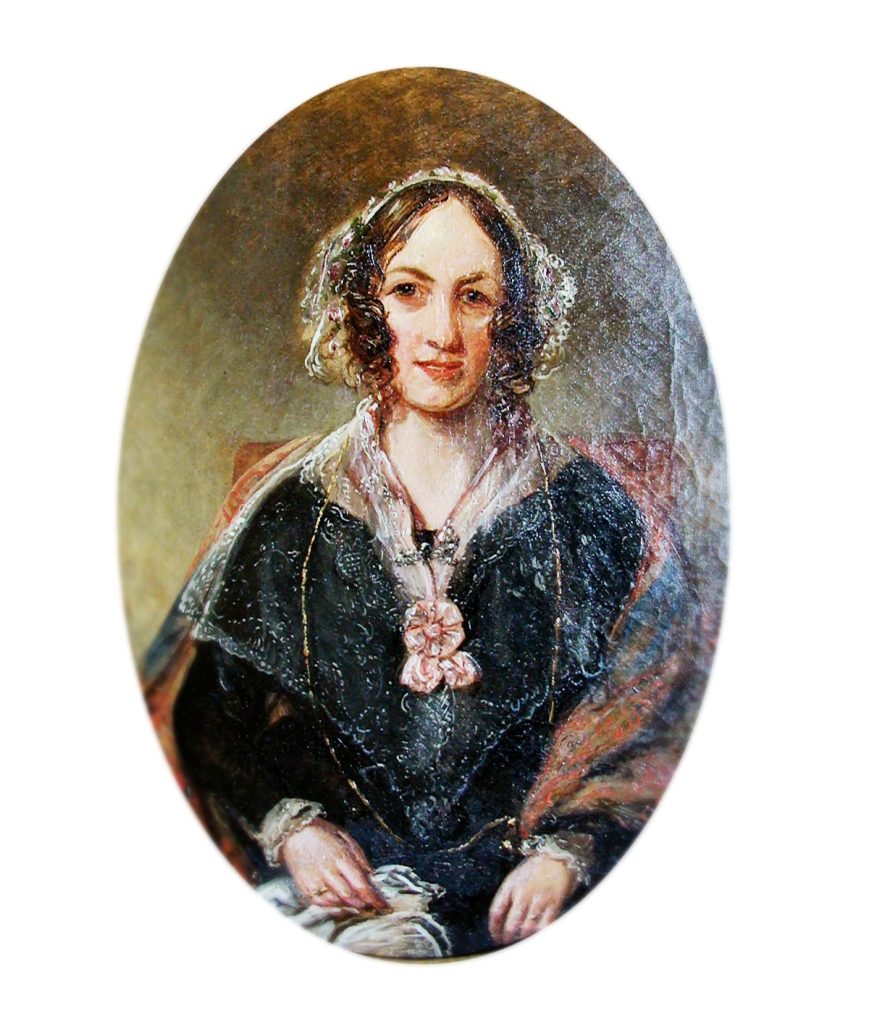
In accordance with his father-in-law’s wishes, George Shum assumed the additional surname Storey, becoming George Shum-Storey.
This marked the beginning of the Shum-Storey line.
Arcot Hall
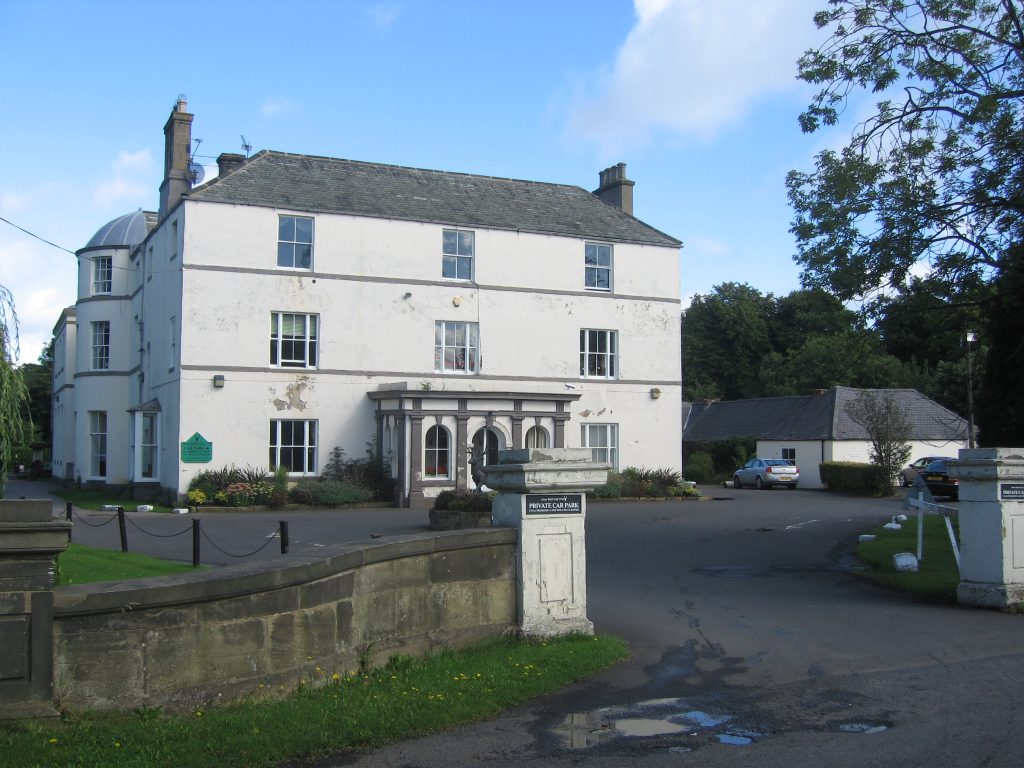
In 1803, George Shum-Storey built Arcot Hall as the family residence.
Although contemporary accounts suggest that the house was not architecturally elaborate, it was designed as a substantial and comfortable family home, with rooms of generous proportion and refined interior decoration.
Features of the house included:
- elegant reception rooms
- a decorative frieze in the dining room
- what appears to have been a small private chapel
Local tradition also records the presence of a resident “Gray Lady,” said to have been seen by household staff.
Estate and Landscape
The estate at Arcot reflected both its rural setting and its economic foundations.
Evidence from early plans indicates the presence of small coal workings on the estate, including drift mines and shafts. A seam of coal was deliberately left beneath the house to prevent subsidence—an unusual but practical precaution.
Unlike many houses of similar scale, Arcot Hall was constructed without cellars.
The Church of St Nicholas, Cramlington
The Shum-Storey and Storey families were closely associated with the parish church of St Nicholas, Cramlington, rebuilt between 1865 and 1868.
Their presence is recorded through:
- memorial tablets
- stained glass windows
- family burials
A tablet within the church confirms George Shum’s adoption of the name Shum-Storey.
Other commemorations include:
- windows referring to Robert Storey’s time in India
- memorials to members of the Shum-Storey family
- the family burial plot in the south-east corner of the churchyard
A monument within the church commemorates George Henry Shum-Storey, who died in Malta in 1869.
The Shum–Storey Family
George Shum (1775–1846) married Ann Storey, eldest daughter of Dr Robert Storey.
Following this marriage, he assumed the additional surname Storey, becoming George Shum-Storey.
Their children included:
- Margaret (d. 1874, Southampton)
- Henry (1804–1861), who married Emma Cooper of Brighton
- Marianne (b. 1805), unmarried
- James (1806–1877), of Kirby-le-Soken, Essex
- Emily (1807–1842)
- John (1809–1845), Captain, 26th Regiment
- Eleanor Henriette (1810–1903)
- Robert (1812–1885), solicitor
- Charles Francis Shum (1817–1903)
Charles Francis Shum (1817–1903)
Charles Francis Shum married Harriet Fenwick, daughter of Christopher Fenwick of Strand House, Northumberland.
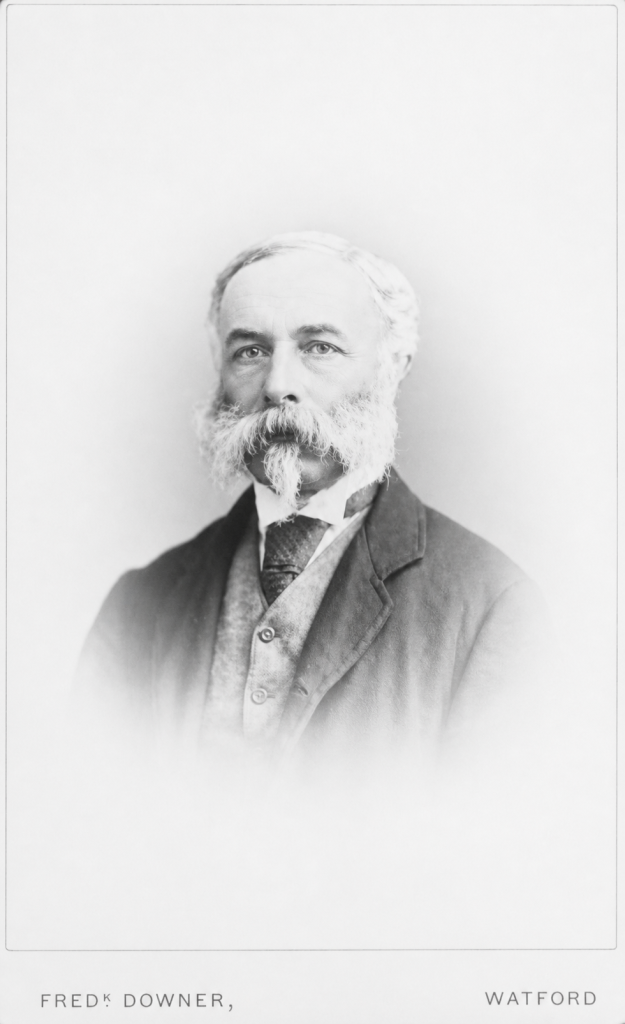
Charles Francis Shum

Harriette Fenwick
Their children included:
- Anne Collingwood
- Gertrude Clennel
- Margaret Emily
- Emily
- Arthur Robert
- Elinor (Eleanor) Harrietta
- Marianne Elizabeth Shum
Connection to the Trainor Family
Marianne Elizabeth Shum married Patrick Edward Trainor, linking the Shum-Storey family to the Trainor line.
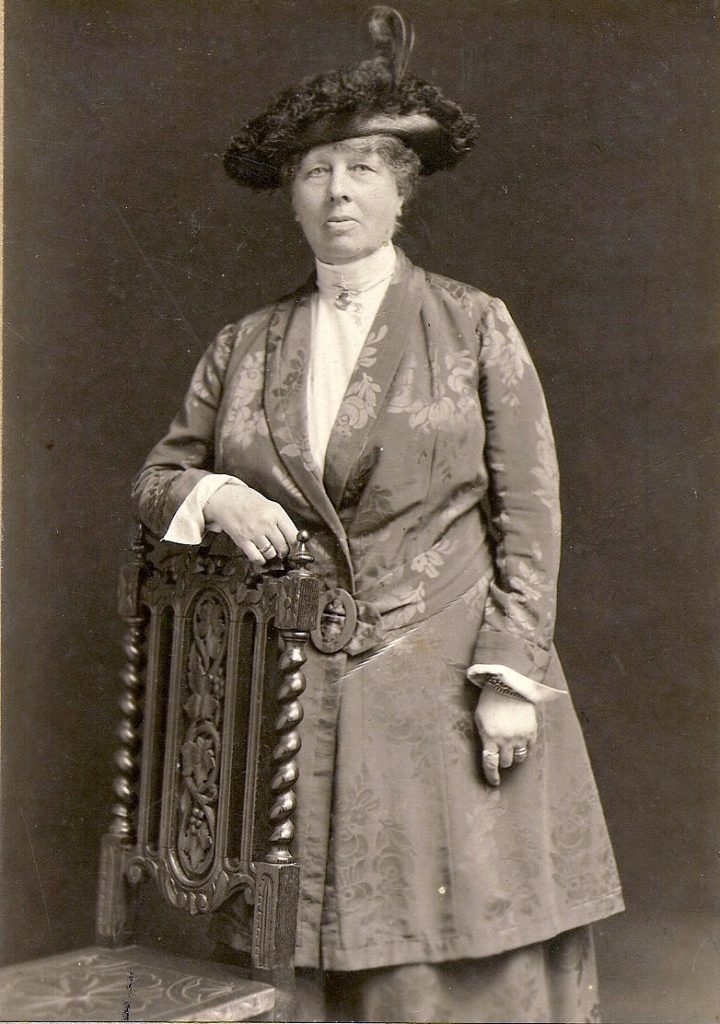
Marianne Elizabeth Shum
Their children included:
- Irene Mary (b. 1885)
- Constance Evelyn (b. 1887)
- Phyllys Marion (1888-1972)
- Cecil Dorothy Francis (b. 1890)
- Devaney Claude Edward (b. 1892)
- Olive Vivian Trainor (1893–1980)
Through this line, the Shum family forms part of the maternal ancestry of Olive Vivian Trainor.
Significance
The Shum family reflects a network of:
- commercial wealth derived from India
- professional careers, including law and the clergy
- military service
- integration into the English landed class
Through marriage and inheritance, the family became part of a wider network that would later connect to the Trainor and McClintock lines.
These connections provide important context for the background and upbringing of Olive Vivian Trainor.
See Also
- Olive Vivian Trainor
- Trainor Family
- The Storey Family
- Arcot Hall
- Genealogical Notes on the Shum Family
- Will of George Shum Storey (1846)