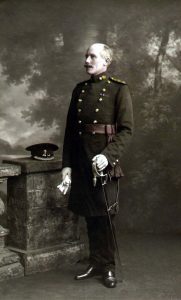
Colonel John Knox McClintock (1864–1936) of Seskinore
Colonel John (“Jack”) Knox McClintock, CBE, JP, DL, of Seskinore, County Tyrone, represented the final generation of direct McClintock ownership of the Seskinore estate before its eventual passage into the Joynson–Wreford family.
He inherited the estate following the death of his father:
Colonel George Perry McClintock
of Seskinore,
who died on 26 December 1887.
Although not originally intended as heir, Jack succeeded as:
eldest surviving son in tail male
following the earlier death of his elder brother:
Beresford George Perry McClintock (“Birdy”)
who died in 1870 aged nine.
Family Background
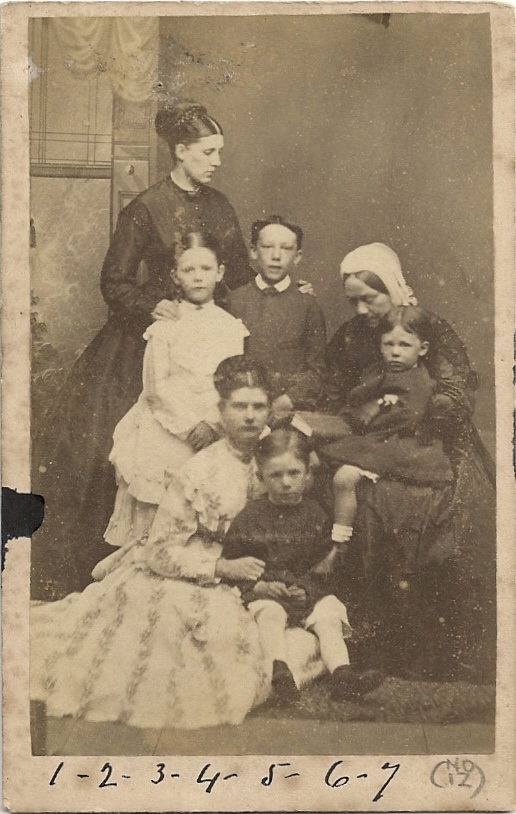
John Knox McClintock was born on:
8 February 1864
the second surviving son of:
Colonel George Perry McClintock
of Seskinore
and:
Amelia Harriett Alexander,
daughter of the Rev. Samuel Alexander, Rector of Termon.
His name preserved the important Knox connection within the family through his grandmother:
Dorothea Knox,
wife of Samuel McClintock of Seskinore.
Through this maternal inheritance, the McClintocks remained connected to the wider Knox network of:
- Prehen
- Moyne Abbey
- Castle Lacken
- and Aughentaine.
Education and Military Career
Jack was educated at:
- Cheltenham College
- Oxford Military College
He pursued a distinguished military career and became closely associated with the:
Royal Inniskilling Fusiliers
and the Tyrone militia tradition.
He:
- commanded the 4th Battalion Royal Inniskilling Fusiliers (Royal Tyrone Fusiliers Militia) from 1881–1887
- held honorary rank as Captain from 1900
- later commanded the 3rd Inniskilling Fusiliers from 1909–1919
- was promoted Brevet-Colonel in 1917
- served during the Great War (1914–1918)
- and was mentioned in despatches.
He was appointed:
Commander of the Order of the British Empire (CBE)
in 1921.
Public Service and Ulster Affairs
Colonel McClintock occupied a prominent position in Tyrone public life.
He served as:
- High Sheriff of County Tyrone (1891)
- Justice of the Peace
- Deputy Lieutenant
He also acted as:
- Aide-de-Camp to the Duke of Abercorn during his tenure as Governor of Northern Ireland.
Following his military retirement, he became heavily involved in the organisation of the:
Ulster Special Constabulary
in County Tyrone and served as:
County Commandant.
He additionally served as:
- Vice-Chairman of Tyrone County Council.

Marriage to Amy Eccles (1893)
On: 27 April 1893
at:
St Stephen’s Church, Dublin,
Jack married:
Amy Henrietta Frances Eccles,
eldest daughter and co-heiress of:
John Stuart Eccles, DL,
of Ecclesville, Fintona,
and:
Frances Caroline Browne
of Aughentaine Castle.
This marriage united two major Tyrone landed estates:
- Seskinore
- Ecclesville
whose lands partly adjoined one another.
At the time:
- the Ecclesville estate comprised approximately 9,227 acres
- while the McClintock estate comprised approximately 4,553 acres.
The marriage further strengthened the long-standing network linking:
- McClintock
- Eccles
- Browne
- Knox
- and de Montmorency families.
Marriage Settlement and Entails
Immediately prior to the marriage:
- a disentailing deed was executed on 24 April 1893
- followed by a marriage settlement dated 26 April 1893.
The settlement provided that:
should there be no male heir of the marriage — nor of any subsequent marriage of Colonel McClintock — the Seskinore estate could pass to a daughter.
This was highly significant because the estate had previously descended strictly in:
- tail male.
The Ecclesville estate, however, remained separately entailed under the will of:
John Stewart (or Stuart) Eccles (1873)
meaning that:
- Amy held only a life interest
- and in the absence of a son, succession would pass through the male descendants of her sisters.
This distinction later proved decisive in the eventual inheritance of Ecclesville.
The Seskinore Hunt
Colonel McClintock was deeply associated with hunting and country life in Tyrone.
In 1886 he succeeded his father as:
Master of the Tyrone Hunt,
which under his leadership became known as:
The Seskinore Hunt.
He remained Master until 1904, when:
Mr King Houston of Omagh
succeeded him.
The hunt was suspended during the First World War in 1915 but revived in 1922, with Colonel McClintock once again serving as Master until his death.
The hunt formed an important part of:
- social life
- estate culture
- and landed identity in west Tyrone.
Leila McClintock
On:
21 July 1898
Amy gave birth in Dublin to the couple’s only child:
Amelia Isobel Eccles McClintock
known universally as:
“Leila”.
Leila appears to have enjoyed a happy childhood at Seskinore and became closely associated with:
- the house
- the gardens
- and rural life on the estate.
A family anecdote recalled that as a child she created a private garden near the house and placed at its entrance a sign reading:
“Please Knock”
reflecting both humour and independence of character.
As the only child of the marriage, Leila later became central to the final succession of the Seskinore estate.
Final Years and Death
Colonel McClintock continued to reside at Seskinore throughout the interwar years and remained one of the best-known landed figures in County Tyrone.
He died on:
28 November 1936
bringing to an end the final substantial period of direct McClintock ownership at Seskinore.
Through his daughter Leila, the estate later passed into the:
Joynson–Wreford family.
Historical Significance
Colonel John Knox McClintock occupies an important place in the history of Seskinore because he represents:
- the final male McClintock heir in possession
- the union of the Seskinore and Ecclesville connections
- the continuation of Tyrone landed society into the twentieth century
- and the transition from traditional landed estate culture into the modern era.
His life reflects:
- military service
- public duty
- estate management
- hunting culture
- and the final decades of the Irish landed gentry before the disappearance of many of the great houses and estates.