
Foxhunting formed an important part of social and sporting life at Seskinore during the 19th and early 20th centuries. The Seskinore Hunt, closely associated with the McClintock family, reflects both the character of the estate and its place within the wider network of landed society in County Tyrone.
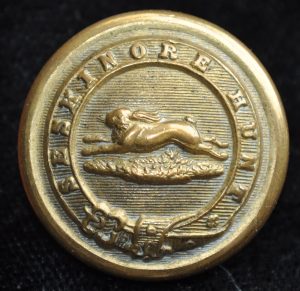
Livery of Seskinore Hunt: Distinctive Collar:- Green Velvet; Hunt Buttons, (Hare Galloping); Evening;- Dark Green Coat, Green Velvet Collar, Crimson Waistcoat; Evening Buttons, (Hare, full face).
Foundation of the Hunt
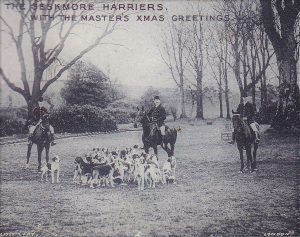
The origins of the hunt can be traced to 1860, when Lieutenant-Colonel George Perry McClintock established what was then known as the Tyrone Hunt.
From its foundation, the hunt was centred on Seskinore and the surrounding countryside, making use of the varied landscape of farmland, woodland, and open country which provided ideal conditions for hunting.
George Perry McClintock served as Master of the Hunt from its establishment until 1886, firmly embedding the tradition within the life of the estate.
Transition to the Seskinore Hunt
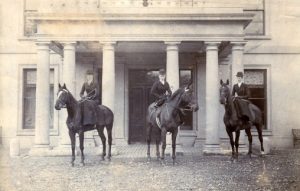
In 1886, the hunt passed to his second son, Colonel John Knox McClintock, who succeeded as Master.
Under his direction, the hunt was reorganised and became known as the Seskinore Harriers, reflecting both its local identity and its continued association with the estate.
This transition marks the point at which the hunt became most closely identified with Seskinore itself.
A Social and Sporting Institution
The Seskinore Hunt was more than a sporting activity—it was a central feature of social life in the area.
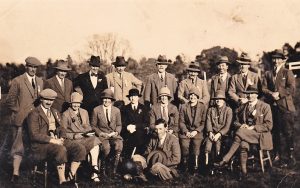
Hunt meetings brought together:
- Local landowners
- Tenants
- Members of neighbouring families
These gatherings reinforced the role of Seskinore as a focal point within the community, linking estate life with the wider social structure of County Tyrone.
Duration and Decline
The hunt continued as an active and regular institution into the early 20th century and remained a feature of local life until the early 1950s.
Its decline mirrored the wider changes affecting the estate:
- The break-up of landownership
- The end of resident family control
- Changing rural and social conditions
With these shifts, the conditions that had supported organised hunting gradually disappeared.
Legacy
Despite its decline, the tradition did not entirely disappear.
In 1974, the organisation was revived in a new form as the Seskinore Pony Club, continuing the equestrian heritage of the area in a more modern and accessible way.
This continuity provides a link between the historic estate and the present day, preserving an important aspect of local tradition.
Significance
The Seskinore Hunt illustrates an important dimension of estate life.
It represents:
- The role of the McClintock family in local society
- The interaction between estate and community
- The continuity of equestrian tradition across generations
As such, it forms part of the broader story of Seskinore as both a residence and a centre of local life.
👉 See also:
Leave a Reply