Category: Estates

  • Ballygawley Park: Sale, Fire and Demolition

    Overview

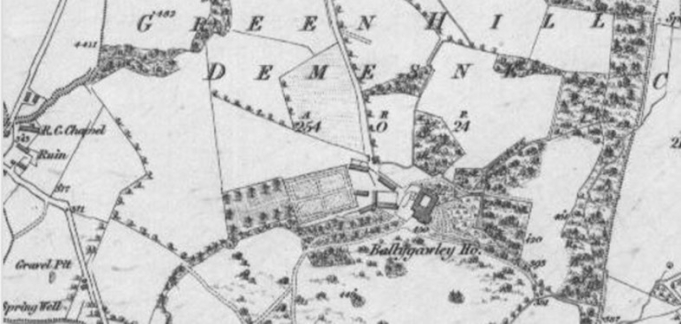
    © Crown Copyright and Database Right (2015) | Ordnance Survey of Northern Ireland.

    Ballygawley Park: Sale, Fire and Demolition

    Overview

    Ballygawley Park, County Tyrone, was for much of the nineteenth century the principal seat of the Stewart baronets of Athenree. Developed from earlier lands associated with the Plantation period, the estate became one of the principal landed properties in the Ballygawley district before entering a long period of decline that culminated in its sale, partial demolition, and destruction by fire in the early twentieth century.

    The history of Ballygawley Park reflects the wider story of the Irish landed estate system: expansion during the eighteenth and nineteenth centuries, financial pressure and restructuring during the Victorian era, and eventual fragmentation after the First World War.


    Early History of Ballygawley

    At the time of the Plantation of Ulster, Ballygawley was known by several earlier names, including:

    • Moyenner
    • Ballegalin
    • Cavanballygallin

    In the early seventeenth century, Captain William Turvin received a grant of lands at Ballygawley from King James I. Turvin failed to fulfil the conditions of plantation, and the property subsequently passed into the hands of:

    • Sir Gerald Lowther
    • the Hamilton family
    • later the Beresford family
    • and eventually the Stewart family

    A contemporary survey by Sir Josias Pynnar recorded the early Plantation settlement and defensive structures at Ballygawley.

    By the nineteenth century, the estate had become associated with the Stewart family of Athenree.


    Stewart Ownership and Development

    Acquisition by the Stewart Family

    The property known as Greenhill, near Ballygawley, was acquired by:

    Sir John Stewart, 1st Baronet of Athenree
    c.1810–11.

    The estate had previously been occupied by:

    Thomas Harvey Esq.

    who later settled in Newry, County Down.


    Sir Hugh Stewart and the Creation of Ballygawley Park

    Sir Hugh Stewart, 2nd Baronet (1792–1854)
    greatly developed the property and transformed Greenhill into:

    Ballygawley Park
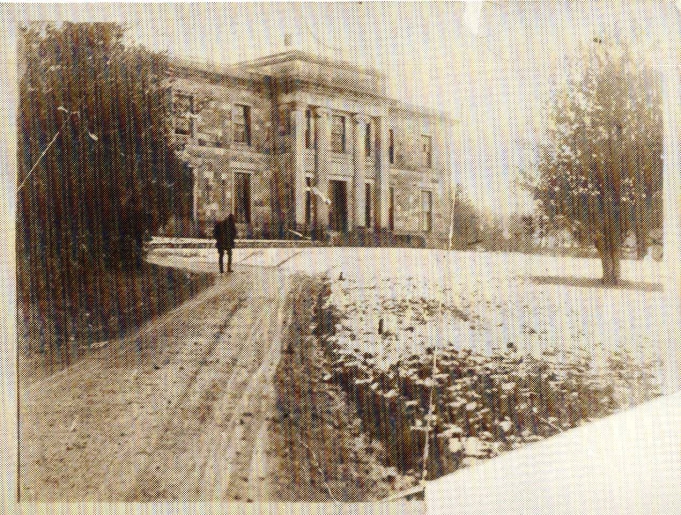
    Ballygawley park

    A substantial mansion house was constructed c.1825–33 to designs attributed to:

    John Hargrave of Cork

    using locally quarried freestone.

    At the same time, the Stewart family also maintained another residence at:

    • Loughmacrory Lodge

    Financial Pressure and Estate Sale

    Sale Advertisement (1854)

    In September 1854, the Ballygawley estate, amounting to approximately 5,440 acres, was advertised for sale.

    The advertisement described:

    • Ballygawley House and offices as being in excellent modern condition
    • a substantial rental income
    • and the estate as one of the most desirable properties in County Tyrone

    The sale included:

    • the house
    • demesne
    • townlands
    • and extensive agricultural lands

    Death of Sir Hugh Stewart

    Sir Hugh Stewart, 2nd Baronet, died on:

    19 November 1854

    shortly after the estate sale process had begun.


    Incumbered Estates Court Records (1855)

    A record preserved at:

    PRONI — D4183/23/6
    dated 18 January 1855

    details the Stewart estate in County Tyrone.

    The document refers to:

    “The rental and particulars of sale of lands for the estate of Sir Hugh Stewart and John Marcus Stewart in County Tyrone…”

    The townlands listed include:

    • Gortigal
    • Aghalarg
    • Gortatray
    • Edergole
    • Kiltamnagh
    • Stroancarbadagh
    • Tullycunny
    • Rakeeragh
    • Creevanmore
    • Drudgeon
    • Blacksessogue
    • Lisanelly
    • Altcloghfin
    • Martray
    • Coolagerry
    • Killyneery
    • Armalughey
    • Cravenny Scotch

    The record further notes that:

    “Included are maps of the properties for sale.”

    These records illustrate the financial pressures affecting the estate during the mid-nineteenth century and form part of the wider restructuring of Irish landed property during this period.


    Sir John Marcus Stewart and Continued Development

    Following the death of:

    Sir Hugh Stewart, 2nd Baronet,
    on 19 November 1854,

    the estate and baronetcy passed to his eldest surviving son:

    Sir John Marcus Stewart, 3rd Baronet

    (1830–1905)

    Sir John Marcus Stewart continued the development and management of the Ballygawley estate during the later nineteenth century.


    Estate Improvements (1871)

    In 1871, substantial building works were undertaken at Ballygawley Park.

    A notice published in the Belfast News-Letter announced proposals for:

    • the erection of a farmstead
    • alterations and additions to stables and offices
    • and the construction of three dwelling houses at Ballygawley

    The notice stated:

    NOTICE TO BUILDERS

    “PROPOSALS WILL BE RECEIVED FOR the erection of a FARMSTEAD, together with Alterations and Additions to the STABLE, OFFICES, and other Works at BALLYGAWLEY PARK, County Tyrone, the seat of Sir John Marcus Stewart, Bart.”

    “Also, for the erection of THREE DWELLING HOUSES at BALLYGAWLEY…”

    “According to Plans and Specifications to be seen at the Offices of FITZGIBBON LOUCH, Esq., C.E., Architect, 45 Donegall Place, Belfast…”

    “The lowest or any Tender will not necessarily be accepted.”

    Belfast News-Letter, 9 May 1871

    The works demonstrate that, despite the financial pressures affecting many landed estates during the nineteenth century, Ballygawley Park continued to receive substantial investment under Sir John Marcus Stewart.

    The involvement of a Belfast architect and the scale of the improvements suggest that the estate remained an important and active landed property during this period.


    Ballygawley in 1904

    A detailed article published in the Fermanagh Herald in January 1904 by John Dorrian provides a vivid contemporary account of Ballygawley during the later Stewart period.

    Dorrian reflected both on the long history of Ballygawley and on the decline in population and prosperity that had occurred during the nineteenth century.

    He observed that:

    “Some years ago [the town was] close upon 1,000; and to-day we number, all told, little more than one-fourth of that.”

    The article traced the history of the district from the Plantation period through the ownership of:

    • Lowther
    • Hamilton
    • Beresford
    • and Stewart families

    Dorrian also recorded that by 1904:

    “Sir John does not now reside at Ballygawley Park though there is a caretaker at the place, and his permanent residence is at Carrickmore Hall…”

    This is significant, as it demonstrates that Ballygawley Park had already ceased to function as the principal Stewart residence before the death of Sir John Marcus Stewart in 1905.


    The Final Occupation of Ballygawley Park

    The 1901 and 1911 Irish census returns show that Ballygawley Park was maintained largely through resident caretakers during its later years.

    The caretaker and gardener recorded at the property was:

    Joseph Somerville

    In 1911 he was additionally described as:

    “Pensioner from Regiment 27th Inniskilling Fusiliers.”

    The household recorded in 1911 included:

    • Joseph Somerville
    • Bridget Somerville
    • Susan Somerville
    • Mary Ellen Somerville
    • Bridget Somerville
    • Joseph Somerville (junior)
    • Elizabeth Somerville
    • Bernard McCavana (boarder)

    These records provide a rare glimpse into the final inhabited phase of the estate before its disposal and destruction.


    Sale, Fire and Final Destruction

    Disposal of Ballygawley Park (1918)

    In 1918:

    Sir Hugh Houghton Stewart, 4th Baronet

    disposed of Ballygawley Park to:

    Mr Hugh M’Laurin, J.P.,
    of Messrs M’Laurin Bros., Belfast,

    for:

    £6,000

    The purchaser never occupied the mansion house.


    Demolition and Removal of Materials

    By 1920, advertisements appeared inviting tenders for the removal of building materials from the mansion.

    The notice referred to the large quantities of:

    • cut stone
    • slate
    • lead
    • and teak wood

    used in the construction of the house.

    The buildings were to be removed by January 1921.


    Dispute Following the Sale

    Although Sir Hugh Stewart had disposed of the estate in 1918, a dispute subsequently arose regarding auctioneers’ fees and expenses connected with the transaction.

    The matter continued unresolved for several years and was only formally settled in February 1922.

    A report in the Northern Whig recorded proceedings before the King’s Bench in Dublin involving:

    • John and William M’Cann, auctioneers, Aughnacloy
    • and Brigadier-General Sir Hugh Houghton Stewart, Bart.

    The action concerned commission and expenses arising from the sale of Ballygawley Park.

    The report stated that:

    “The defendant undertook to pay £120 in full discharge of plaintiffs’ claim…”

    The proceedings demonstrate that financial and legal matters connected with the disposal of the estate remained unsettled even after the property had passed from Stewart ownership.


    Destruction by Fire (1922)

    On:

    17 February 1922

    the mansion at Ballygawley Park was destroyed by fire.

    A report in the Belfast News-Letter described the event under the headline:

    “Tyrone Incendiarism — Mansion Gutted Near Ballygawley”

    The newspaper reported:

    “A fine old mansion at Greenhill… was maliciously set on fire yesterday morning and reduced to ashes.”

    The building was described as:

    • unfurnished
    • unoccupied
    • and standing within its own demesne about a mile from Ballygawley.

    The article noted that the property:

    “was formerly the seat of the Stewarts, Co. Tyrone, and was sold in 1918… for £6,000.”


    Rumours of Crown Occupation

    At the time of the fire, rumours had circulated that Crown forces or the RIC might take over the building for use as barracks.

    The newspaper stated that police had recently inspected the property:

    “with a view to that purpose.”

    It was widely believed locally that the fire was connected to these rumours and that the destruction of the house prevented any possible military occupation.

    Although responsibility was commonly attributed to the IRA, no formal public claim appears to have been made.


    Circumstances of the Fire

    Contemporary reports described:

    • quantities of hay soaked in petrol placed throughout the house
    • petrol tins discovered within the building
    • and the rapid spread of the flames before dawn.

    Local Specials and RIC officers who attended the scene were unable to save the building.
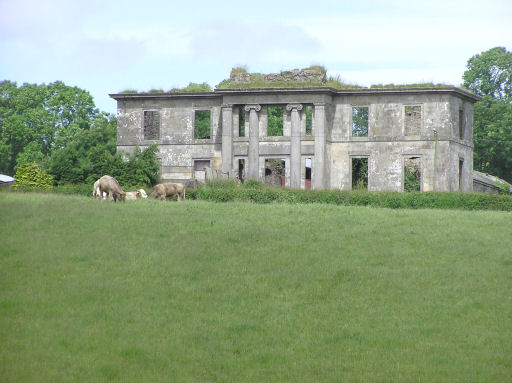
    Ballygawley Park

    Compensation Claim and Local Suspicion

    Only days after the fire, a claim for:

    £20,000

    was lodged in connection with the destruction of the mansion.

    The speed and scale of the claim attracted local comment and speculation, particularly as the property had reportedly been purchased for only £6,000 a few years earlier.

    While no evidence emerged publicly to contradict the official interpretation of the fire as malicious destruction, rumours persisted locally that there may have been more to the circumstances surrounding the destruction of Ballygawley Park.


    Final Disposal

    Following the fire, the remains of the mansion and demesne were sold.

    The destruction of Ballygawley Park marked the final end of the estate as a major landed seat of the Stewart family in County Tyrone.


    See Also:


  • The Break-Up of the Ecclesville Estate

    From Landed Estate to Fragmented Ownership (c.1886–1913)

    Introduction

    The break-up of the Ecclesville estate was not the result of a single event, but a gradual process shaped by inheritance law, family circumstance, and national land reform.

    Between the death of John Stuart Eccles in 1886 and the submission of the estate to the Irish Land Commission in 1913, Ecclesville passed from a unified landed estate into fragmented ownership.


    The Estate at Its Height

    By the mid-nineteenth century, Ecclesville was a substantial and well-defined landed estate in County Tyrone.

    It comprised:

    • Extensive agricultural lands across multiple townlands
    • The demesne centred on Ecclesville House
    • Mills, market interests, and local economic infrastructure

    Under John Stewart (or Stuart) Eccles, the estate represented a typical example of a mature Irish landed property.


    The Impact of the Entail (1873)

    In 1873, John Stewart (or Stuart) Eccles placed the estate under an entail in tail male.

    While intended to preserve the estate intact, this had unintended consequences:

    • No surviving male heir existed at his death in 1886
    • His daughter, Amy Eccles, became life tenant only
    • The estate could not be freely managed or restructured

    This legal rigidity left the estate poorly positioned to respond to the major changes that followed.


    The Irish Land Acts and Structural Change

    From the late nineteenth century, the Irish Land Acts fundamentally altered land ownership across Ireland.

    At Ecclesville:

    • Tenants were enabled to purchase their holdings
    • Land was sold in stages through the Land Commission
    • The landlord–tenant system steadily declined

    These changes did not occur suddenly, but over a period of years, gradually dismantling the estate.


    Progressive Sale of the Estate

    Between c.1886 and 1913:

    • Large portions of the estate were sold to occupying tenants
    • Estate income declined as rental structures disappeared
    • The geographical unity of the estate was lost

    By the early twentieth century:

    The Ecclesville estate, as a single territorial entity, had effectively ceased to exist.


    The Position by 1913

    In 1913, the estate was formally recorded in a Land Commission title (Abstract of Title).

    At this stage:

    • Most of the former estate lands had passed into tenant ownership
    • Only the house and its immediate demesne remained intact

    Crucially:

    The demesne followed a separate path from the wider estate

    • It was retained as a private residential holding
    • It later passed into the ownership of the Browne-Lecky family

    Separation of Estate and Demesne

    By the early twentieth century, Ecclesville had divided into two distinct realities:

    The Former Estate

    • Sold and redistributed under the Land Acts
    • No longer a unified property

    Ecclesville House and Demesne

    • Retained intact
    • Functioning as a private residence
    • Independent of the former estate structure

    This distinction is essential to understanding the later history of Ecclesville.


    Consequences of the Break-Up

    The break-up of the estate resulted in:

    • The end of landlord control over the surrounding lands
    • The disappearance of the estate as an economic unit
    • The transformation of tenants into owner-occupiers
    • The reduction of Ecclesville to a country house with limited lands

    Although the house survived, its original context had fundamentally changed.


    Relationship to the Entail and Disentailing

    The break-up of the estate occurred independently of the legal structure of the entail.

    • The physical estate was dismantled between c.1886 and 1913
    • The legal structure of the entail remained in force until 1944

    These were separate processes:

    • The Land Acts reshaped ownership in practice
    • The disentailing later resolved the legal framework

    Historical Significance

    The break-up of the Ecclesville estate reflects a wider transformation in Irish history:

    • The decline of the landed gentry
    • The redistribution of land to tenants
    • The dismantling of traditional estate structures

    In the case of Ecclesville, this process was shaped both by national reform and by the constraints imposed by inheritance law.


    Conclusion

    By the early twentieth century, Ecclesville had ceased to exist as a traditional landed estate.

    What remained was:

    • A reduced demesne centred on the house
    • A network of former estate lands now held by tenants

    The break-up of Ecclesville was therefore not an abrupt collapse, but a gradual transition from estate to fragmented ownership — a process completed long before the final legal disentailing of 1944.


    See Also

  • Ecclesville in 1830 (Full Text – Atkinson)

    Original Description from A. Atkinson

    ECCLESVILLE AND FINTONA.

    When we visited Ecclesville in 1830, it was then the seat of the late lamented John Dickson Eccles, Esq. proprietor of the Fintona estate, and a country gentleman of sterling worth, though of plain and unassuming manners.

    The demesne embraces about 250 acres of this property, lightly and ornamentally planted; but from its comparatively low position, it commands no prospect of the surrounding country; a fact in its topographic history, which need not be much lamented, since that country exhibits but little of the picturesque, and all that is necessary to a decent domestic landscape, may be found within the confines of Ecclesville demesne.

    The house, which stands at a short distance from the public road, at the bottom of a valley formed by gently sloping hills, is a plain but noble edifice (the expressive type of the founder’s honest mind, where the rich streams of benevolence, flowing through a retired valley to that invisible ocean, where they are now centred for ever, felt too deeply their own intrinsic worth, to court that sweet- smelling cowslip of popular applause, ‘which to-day is, and to-morrow is cast into the oven,’) and to this has been added all those plain and useful appendages of a family residence, which are necessary to decent rank and to substantial comfort.

    Fintona, a market and post town on this estate (which has several shops, and does some business in the corn trade) may be regarded as the capital of the property. It stands on a public road a little elevated above the valley of Ecclesville, of which it commands an imperfect view; and although the appearance of this town is not remarkably attractive, we understand a good deal of business is done there; to which the policy of granting to improving tenants, leases in perpetuity, of houses and plots for building, must largely contribute; while a similar indulgence to persons of neither property nor talent, would mar the improvement of the town, and inflict a needless wound upon the interests of the landlord. To this admirable plan of giving the tenant a perpetual interest in his town holding, we would recommend (in every possible case) the addition of a few acres of land for the accommodation of his town establishment. This land, being held at a moderate rent on a lease of lives or years, would have a favourable influence on the interests of the whole estate, as the value of farms approximating with it would advance in an exact ratio with the wealth and population of the neighbouring town; and we hope this also is the policy of the Eccles family.

    The valley of Ecclesville is separated from the town of Fintona by a water called the Casheron river, which passes through the Fintona estate. On this a corn mill has been erected for the accommodation of the tenantry, and a site for another mill with a fall of from seven to ten feet is said to exist upon the same river, and of course presents to some enterprising man of business, an inducement to form a bleaching or manufacturing establishment at that place. If the successors of the late Mr. Eccles follow his example, we have no doubt they will be found ready to give all due encouragement to this and every other instrument of employment to the poor that may be found to exist in their immediate neighbourhood; for from all that we could learn of the character of that lamented gentleman, as a landlord, a magistrate, and a man, his sudden removal by death, while we were travelling in his native county, was felt to be a public loss; and as such was very justly and generally deplored, by the poor and by the public.

    ‘Ireland in the Nineteenth Century, and Seventh of England’s Dominion: Enriched with Copious Descriptions of the Resources of the Soil, and Seats and Scenery of the North West District’

    By A. Atkinson. Esq.

  • Dinner to Charles Eccles (1834)

    Loyalty, Tenantry, and the Living Estate


    Introduction

    On 14 May 1834, the tenants of the Ecclesville estate gathered at Sherard’s Hotel to honour their landlord, Charles Eccles.

    This was no ordinary dinner.

    It was a public expression of loyalty, respect, and shared identity between landlord and tenantry—captured in a contemporary report published in the Londonderry Sentinel.

    What survives is a rare and vivid glimpse into the social fabric of a working estate, decades before the upheavals of land reform.


    Full Contemporary Report 

    DINNER TO CHARLES ECCLES, ESQ.

    (From a Correspondent.)

    Londonderry Sentinel – Saturday 31 May 1834

    On Wednesday, the 14th inst., a number of the tenantry of the Ecclesville estate entertained their esteemed landlord, Charles Eccles, Esq., at Sherard’s Hotel. At six o’clock about sat down to a plentiful dinner, served up in a style highly creditable to Mrs. Sherard—the wines were excellent, and the “mountain dew” could not excelled. The chair was taken Charles Robert Lucas, Esq., supported by James Hamilton, Esq., who acted croupier. the cloth being removed the following toasts were given:—

    “The King, God bless him, may still be found to reign in the hearts of his people.”—(Drank with the usual honour.)

    The chairman now desired the company fill their glasses. He said, as they had met for a particular purpose, he would not occupy their time by going through the list of toasts generally drank at public dinners, nor would be detain them by pronouncing a panegyric the gentleman whose health he was about to propose; was well known to them all, and would, therefore, without further comment, give “Charles Eccles, Esq., may he follow the example of his late father.”— (Loud and long continued cheering.)

    Mr. Eccles returned thanks in an animated speech, of which the following is a faint outline.—He said that the marks they had given of the warmth of their friendship, not only on this but on former occasion, had made an indelible impression on his heart, and imparted home a charm which no other place could possess. When I look, said he, around me, and see myself surrounded by such a numerous and respectable body of friends and neighbours, and including many of own tenantry, I feel a glow of lofty and laudable ambition animate my bosom, for who, let me ask, would not be proud of having such a spirited and truly independent tenantry. However, when I reflect that these flattering tokens of your esteem have not been earned by me, but by one of whom it would not be my place to speak here, a feeling of gratitude awakens in my breast emotions I cannot find words to express. (Applause.) l am now come to reside among you and, being young and inexperienced in the world, what a gratifying prospect it is for me to find that I have the open and honest-hearted friends of my lamented father to assist me by their kind advice. (Applause.) The old maxim, “live and let live,” has long been the motto of the family to which I have the honour to belong, and on this principle I shall also endeavour to act. The town of Fintona has improved rapidly within the last few years—to encourage this spirit, and promote the welfare of my tenantry at large, is a duty which I trust you will find me using every possible effort to perform, so that the bond of union which has hitherto existed between landlord and tenant on the lands I possess may pass out of my hands in the same unbroken, mutual, and indissoluble chain. Mr. Eccles sat down amid loud and reiterated cheers.


    A Living Example of Estate Society

    Taken together, the dinner reveals:

    • A landlord aware of expectation
    • Tenants willing to publicly honour him
    • A shared belief in reciprocal obligation

    This was not yet a system in decline.

    It was still:

    Working, visible, and believed in


    Editorial Note

    This page is based on a contemporary report published in the Londonderry Sentinel, 31 May 1834.

    Selected excerpts have been lightly modernised for clarity, while preserving the meaning and tone of the original report.

  • The Seskinore Community and Local Memory

    During the 2005 visit to Seskinore, one of the most powerful aspects of the experience was the connection with the local community.

    Members of the Seskinore Community Group gathered to welcome Xenia and her family, recognising the significance of her return to the estate.


    Shared Memory

    In the courtyard and village, stories began to emerge—memories passed down or retained from earlier generations.

    One man recalled seeing Xenia’s grandfather walking hand-in-hand with her toward the stables.

    Another remembered the celebrations of the Coronation in 1937, when Xenia had arrived in her father’s blue SS Jaguar, while local boys admired the car and its Union flag.

    These recollections brought the past vividly to life.


    Personal Connections

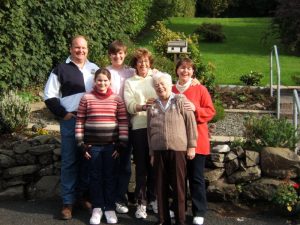
    Xenia and family with Cecilia McHugh

    The visit also led to meetings with individuals who had preserved aspects of the estate’s history.

    Cecilia McHugh, who had worked at Seskinore as a young girl, remembered Tony Joynson-Wreford with great affection:

    “A lovely man, a kinder man you could not wish to meet.”

    Such memories added depth to the historical record, offering personal insight into individuals who might otherwise be known only through documents.


    Eccles Connections

    The visit extended beyond Seskinore to Ecclesville and Donacavey Church, where memorials to the Eccles family were viewed.

    A particularly striking moment came with the discovery of a portrait of Charles Eccles, an ancestor of Xenia. Despite its age and condition, the resemblance to her own family was unmistakable.

    The portrait was later gifted to Xenia, restoring a tangible link to her heritage.


    Significance

    The involvement of the local community demonstrated that the story of Seskinore had not been forgotten.

    It existed not only in records and archives, but in memory, tradition, and lived experience.

    Xenia’s return allowed these strands—family history and community memory—to come together once again.


    See also:

  • Life at Seskinore in the 19th Century

    During the 19th century, Seskinore developed into a well-established estate and residence, reflecting both the social position of the McClintock family and the wider structure of landed life in County Tyrone.

    As the principal seat of the estate, the house and its surrounding demesne formed the centre of both domestic and agricultural activity.


    The Demesne and Landscape

    The Seskinore demesne was carefully laid out and managed, combining ornamental and practical elements.

    The grounds included:

    • Lawns and planted areas surrounding the house
    • Enclosed fields used for grazing and cultivation
    • Woodland and boundary features shaping the estate

    This arrangement was typical of a working estate, where the landscape served both aesthetic and economic purposes.


    Seskinore Lodge and the Estate Setting

    A contemporary description of the estate survives in the work of A. Atkinson, writing in the early 19th century:

    “Seskinore Lodge, the seat of Mrs. Perry… comprehends a neat and fashionable lodge, a tastefully planted lawn, and about sixty Irish acres of a farm…”

    He further noted the character of the surrounding landscape:

    “…the prospect from the lodge is exclusively confined to the little beauties of the home view; in which the rose, the sweet William, and the sweet brier, seem to vie…”

    This account provides a valuable glimpse into the appearance and atmosphere of the estate during this period.


    Agriculture and Estate Management

    The estate was actively managed, with land used for:

    • Flax and corn production
    • Grazing livestock
    • Turf cutting from nearby boglands

    Farming formed a central part of estate life, both for the family and for the tenants who worked the land.

    Leases from the late 18th and early 19th centuries show a structured system of tenancy, with land divided into holdings and rented to local farmers.


    Tenants and Community

    The estate supported a community of tenants and workers whose lives were closely connected to Seskinore.

    These included:

    • Tenant farmers
    • Estate workers
    • Domestic staff within the house

    The relationship between landlord and tenant was a defining feature of estate life, shaping both economic and social structures within the area.


    Social Life and Activity

    In addition to its agricultural role, Seskinore functioned as a centre of social activity.

    Events such as:

    • Hunting (through the Seskinore Hunt)
    • Visits and gatherings
    • Estate-related occasions

    brought together members of the local community and neighbouring families.

    The presence of the McClintock family at the estate reinforced its role as a focal point within the region.


    A Changing Estate

    By the later 19th century, Seskinore had reached its height as a functioning estate.

    However, the conditions that supported this way of life were beginning to change. Economic pressures, shifts in landownership, and broader social developments would, in time, alter the structure of the estate and its role within the community.


    Significance

    Life at Seskinore in the 19th century represents the estate at its most complete:

    • A residence
    • A working agricultural unit
    • A social centre

    Understanding this period is essential to appreciating both the earlier development of the estate and its later decline.


    👉 See also:

  • The Seskinore Hunt

    Foxhunting formed an important part of social and sporting life at Seskinore during the 19th and early 20th centuries. The Seskinore Hunt, closely associated with the McClintock family, reflects both the character of the estate and its place within the wider network of landed society in County Tyrone.

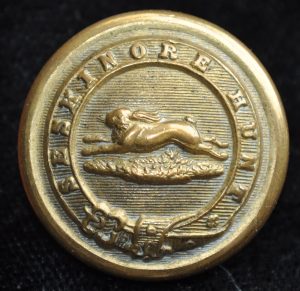
    Button for Seskinore Hunt

    Livery of Seskinore Hunt: Distinctive Collar:- Green Velvet; Hunt Buttons, (Hare Galloping); Evening;- Dark Green Coat, Green Velvet Collar, Crimson Waistcoat; Evening Buttons, (Hare, full face).


    Foundation of the Hunt

    The origins of the hunt can be traced to 1860, when Lieutenant-Colonel George Perry McClintock established what was then known as the Tyrone Hunt.

    From its foundation, the hunt was centred on Seskinore and the surrounding countryside, making use of the varied landscape of farmland, woodland, and open country which provided ideal conditions for hunting.

    George Perry McClintock served as Master of the Hunt from its establishment until 1886, firmly embedding the tradition within the life of the estate.


    Transition to the Seskinore Hunt

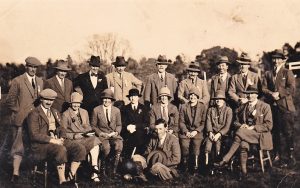
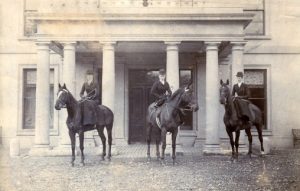
    Members of the Seskinore Hunt Club c.1930’s

    In 1886, the hunt passed to his second son, Colonel John Knox McClintock, who succeeded as Master.

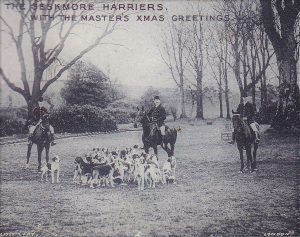
    Under his direction, the hunt was reorganised and became known as the Seskinore Harriers, reflecting both its local identity and its continued association with the estate.

    This transition marks the point at which the hunt became most closely identified with Seskinore itself.


    A Social and Sporting Institution

    The Seskinore Hunt was more than a sporting activity—it was a central feature of social life in the area.

    Amy (née Eccles) McClintock with two of her McClintock sisters-in-law.

    Hunt meetings brought together:

    • Local landowners
    • Tenants
    • Members of neighbouring families

    These gatherings reinforced the role of Seskinore as a focal point within the community, linking estate life with the wider social structure of County Tyrone.


    Duration and Decline

    The hunt continued as an active and regular institution into the early 20th century and remained a feature of local life until the early 1950s.

    Its decline mirrored the wider changes affecting the estate:

    • The break-up of landownership
    • The end of resident family control
    • Changing rural and social conditions

    With these shifts, the conditions that had supported organised hunting gradually disappeared.


    Legacy

    Despite its decline, the tradition did not entirely disappear.

    In 1974, the organisation was revived in a new form as the Seskinore Pony Club, continuing the equestrian heritage of the area in a more modern and accessible way.

    This continuity provides a link between the historic estate and the present day, preserving an important aspect of local tradition.


    Significance

    The Seskinore Hunt illustrates an important dimension of estate life.

    It represents:

    • The role of the McClintock family in local society
    • The interaction between estate and community
    • The continuity of equestrian tradition across generations

    As such, it forms part of the broader story of Seskinore as both a residence and a centre of local life.


    👉 See also:


  • The Garden of Remembrance at Seskinore

    The Garden of Remembrance at Seskinore occupies a unique place in the history of the estate. Unlike the house, the lands, and much of the demesne, it was neither abandoned nor lost, but preserved as a place of personal and historical continuity.
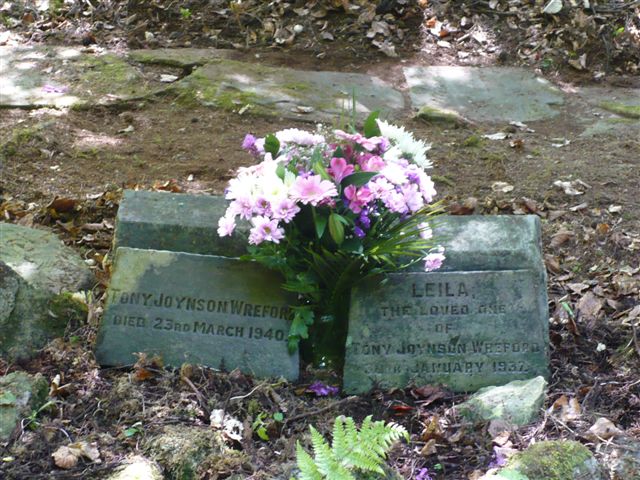
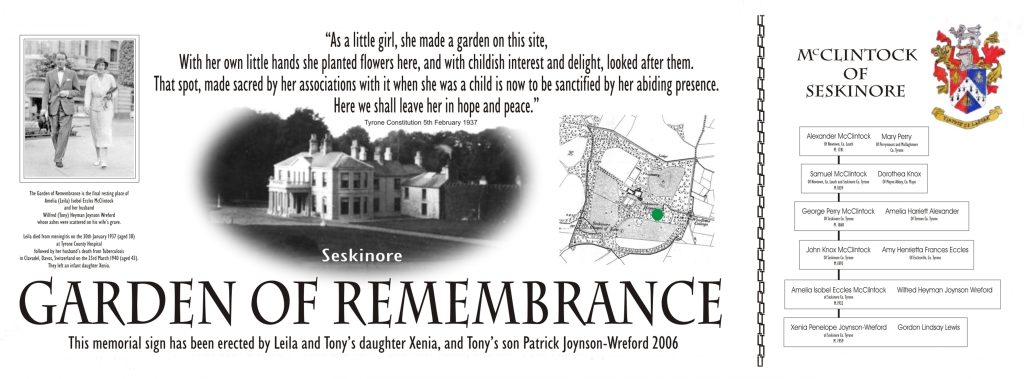
    Origins

    The garden originated in the childhood of Amelia (Leila) Isobel Eccles McClintock.

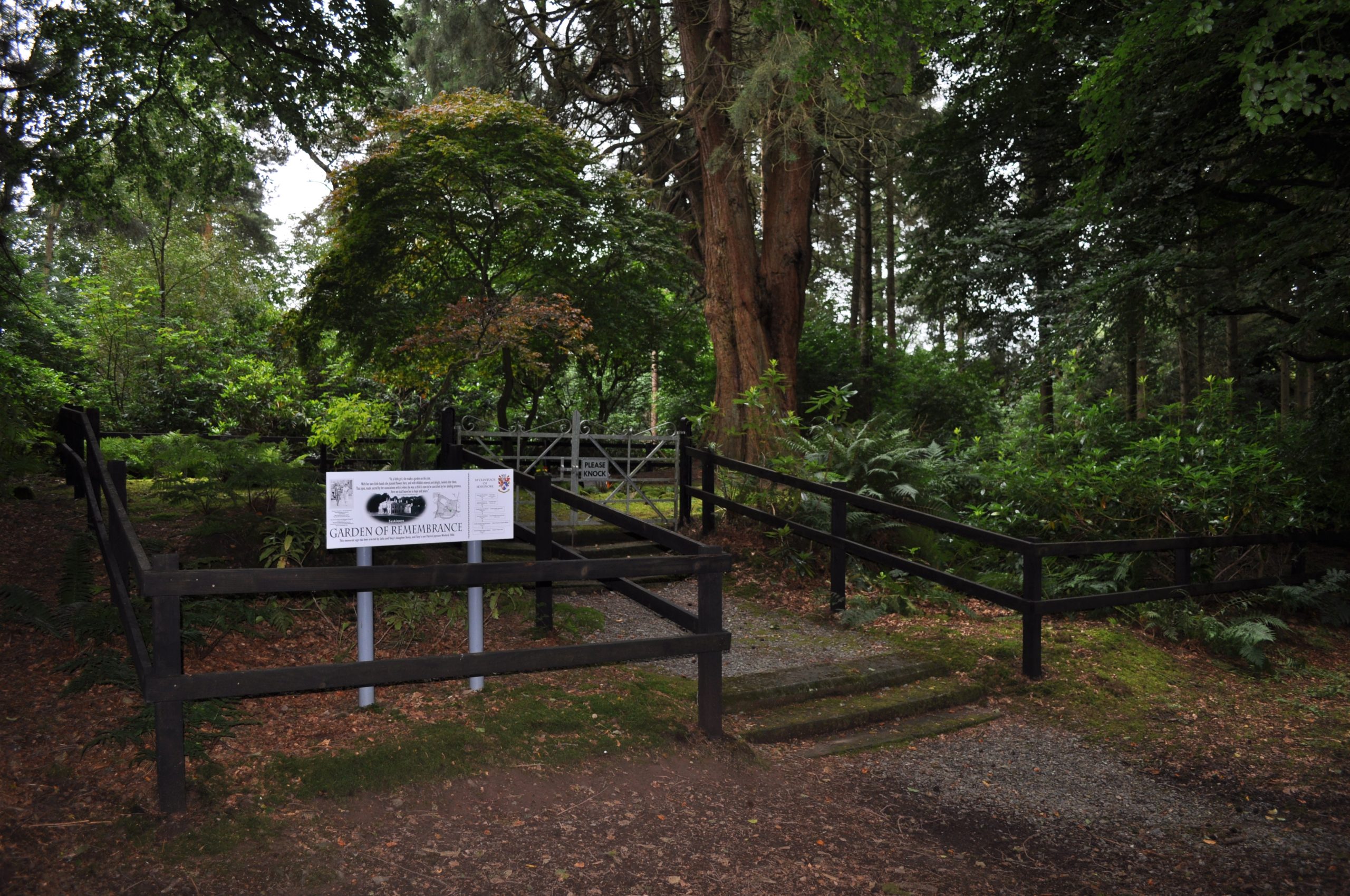
    As a young girl, she created a small garden of her own near the house, setting it apart as a private space. At its entrance, she placed a sign bearing the words:

    “Please Knock.”

    This simple detail reflects both the character of the child and the sense of ownership she felt over the space.


    A Place of Burial

    Following her death in January 1937, this same garden was chosen as her place of burial.

    Rather than being interred in the formal family burial ground, she was laid to rest in the space she had created herself—a decision that gave the garden a deeply personal significance.

    At the time of her burial, the connection between her childhood and her final resting place was noted in the words spoken there:

    “As a little girl, she made a garden on this site…
    That spot, made sacred by her associations with it when she was a child is now to be sanctified by her abiding presence.”


    Tony Joynson–Wreford

    Following Leila’s death, her husband, Captain Wilfred Heyman Joynson–Wreford, formed a strong and lasting attachment to the garden.

    Each evening, he would walk to the garden and sit beside her grave, often remaining there for extended periods. His daily visits became part of the life of the estate during its final years as a family residence.

    In his will, he made specific provision for the preservation of the garden, stating that access should be retained for members of both his own family and the McClintock family, and that the garden should be maintained in perpetuity.

    He further expressed the wish that his ashes should be scattered there.


    Preservation Through Change

    The importance of the garden was recognised even as the estate itself was being broken up.

    When Seskinore House and surrounding lands were sold in 1941, the Garden of Remembrance was specifically excluded from the sale. Rights of access were retained, ensuring that it would remain connected to the family despite the transfer of ownership.

    This decision set the garden apart from the wider fate of the estate.


    Final Resting Place

    Following Tony’s death in Switzerland in 1940, his ashes were eventually returned to Seskinore.

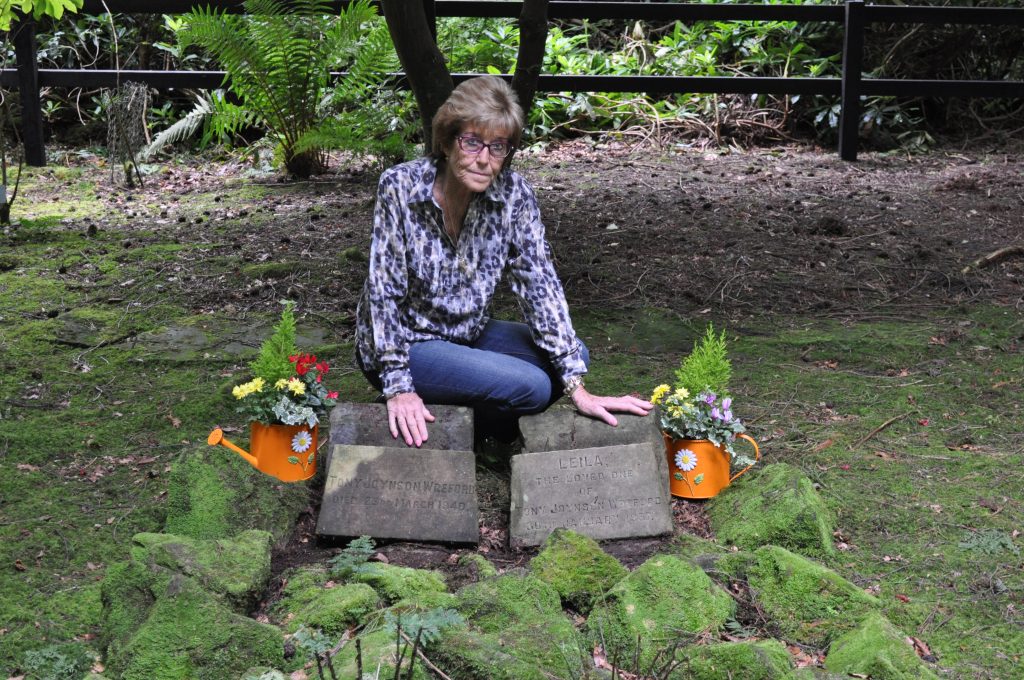
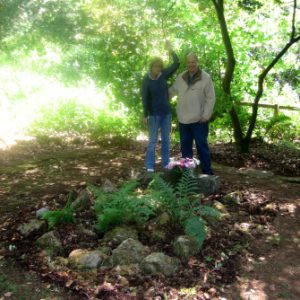
    After the end of the Second World War, they were interred beside Leila in the garden. A simple memorial stone was placed alongside hers, marking their final resting place together.


    The Garden Today

    Although the house at Seskinore was demolished in 1952, the Garden of Remembrance survived.

    It remains one of the most significant surviving elements of the estate:

    • A place of burial
    • A link between generations
    • A physical reminder of the personal history of the family

    Unlike many features of the estate, which have been lost or altered, the garden continues to preserve its original purpose.


    Restoration and Remembrance

    In later years, the Garden of Remembrance continued to hold deep significance for those connected with the history of Seskinore.

    On:

    28 October 2006

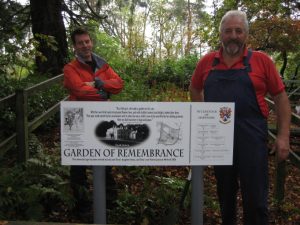
    a commemorative sign was erected within the garden to mark the resting place of:

    • Leila McClintock
    • and Captain Tony Joynson-Wreford

    The intention was not only to identify the secluded burial place hidden within the woodland, but also to preserve the memory of those associated with it for future visitors to the estate.

    The project brought together members of the extended family, including:

    Anthony Patrick (“Pat”) Joynson-Wreford

    and

    Penelope (“Xenia”) Joynson-Wreford

    who jointly agreed to fund the sign as a lasting memorial.

    The plaque was designed by my friend Jim Kelly who created a simple and understated design centred upon an interlaced chain of the initials:

    “L & T”

    symbolising the bond between Leila and Tony Joynson-Wreford.

    The memorial also included:

    • a short account of their lives
    • and a small ancestry diagram placing them within the wider history of the Seskinore family.

    The installation of the sign became a significant moment in the continuing rediscovery and preservation of Seskinore.

    On a cool autumn day, family members travelled to the garden carrying cement, tools, brushes, and materials needed for the work. Among those present were my mum, dad, and Peter, all of whom assisted in the installation.

    My dad carefully prepared the ground and dug the post holes, and before long the sign stood securely in place among the trees surrounding the graves.

    Quietly positioned within the woodland, it became more than a marker alone. It stood as:

    • a memorial
    • a gesture of remembrance
    • and a continuation of the connection between the family and Seskinore itself.

    In a landscape where so much has disappeared, the Garden of Remembrance remains one of the few surviving places where the personal history of the estate can still be directly felt.


    Return to Seskinore (2008)

    On:

    2 June 2008

    Xenia Joynson-Wreford, Pat Joynson-Wreford, and I returned together to Seskinore, staying for several days at nearby Greenmount Lodge.

    By this time, Pat’s health had begun to decline following a stroke in 2006, and considerable care was taken throughout the journey to ensure that he could comfortably revisit the places so closely connected with his family history.

    During the visit we met with:

    • Lisa Morgan
    • and Roisin Anagnostides

    with whom I had worked for several years in identifying and helping secure the registration of surviving residual properties associated with the Seskinore estate.

    The work had become more than a legal or administrative exercise. It formed part of a wider effort to reconstruct and preserve the fragmented remains of the estate and its history.

    Later that day we travelled to:

    The Garden of Remembrance

    bringing the car as near as possible to allow Pat to make the short walk through the woodland.

    The forest retained its familiar stillness, and as we approached the garden both Pat and Xenia paused quietly, taking in the scene before them.

    The memorial sign erected in 2006 now stood firmly in place among the trees. Its understated design, centred upon the interlaced initials:

    “L & T”

    continued to mark the memory of:

    • Leila McClintock
    • and Tony Joynson-Wreford

    and their enduring connection with Seskinore.

    Nearby stood the renewed garden gate, reconstructed in galvanised aluminium to withstand the passage of time while preserving the character of the original entrance.

    For both Pat and Xenia, the return to the garden represented more than a visit alone. It formed part of a renewed connection with a place deeply bound to family memory, loss, and continuity across generations.


    Final Visit (2012)

    In the summer of:

    2012

    Xenia Joynson-Wreford returned once more to Seskinore, accompanied by family members during what would become her final visit to the estate and to the Garden of Remembrance.

    By this stage, the rediscovery and restoration of Seskinore’s surviving history had already been largely achieved. The remaining visits carried a quieter character — less concerned with research or recovery, and more with reflection, memory, and personal connection.

    During this final return, Xenia again visited:

    The Garden of Remembrance

    where the graves of:

    Leila McClintock
    and Captain Tony Joynson-Wreford

    remained sheltered beneath the trees of the old demesne woodland.

    The garden, preserved through decades of change and loss, continued to represent one of the most personal surviving links to the family’s history at Seskinore.

    A photograph taken during this final visit captures Xenia within the landscape so closely connected to her family story — a final return to a place which, after many years of separation, had once again become part of her life.


    Significance

    The Garden of Remembrance stands apart within the history of Seskinore.

    It represents:

    • Continuity in the midst of change
    • The personal dimension of estate history
    • The enduring connection between place and memory

    While the estate itself has been transformed, the garden remains a focal point through which its history can still be understood.


    See also:

  • The 1893 Marriage Settlement and the Future of the Estate

    The marriage of Colonel John Knox McClintock and Amy Henrietta Frances Eccles in April 1893 was accompanied by a formal legal settlement that had lasting implications for the future of the Seskinore estate.

    At the time, many landed estates were governed by strict entails, which restricted inheritance to male heirs. These legal structures were designed to preserve estates intact across generations but could also create difficulties where no direct male successor existed.


    The Disentailing Deed

    Shortly before the marriage, a disentailing deed was executed.

    This legal instrument allowed the existing entail governing the Seskinore estate to be broken and replaced with new terms. Such actions were not uncommon in the late 19th century, as families sought greater flexibility in managing inheritance.


    Terms of the Settlement

    The subsequent marriage settlement introduced a crucial change:

    The estate could now pass to a daughter in the absence of a male heir.

    This represented a significant departure from earlier restrictions and ensured that the estate would remain within the immediate family, even if no sons were born.


    Long-Term Consequences

    At the time of the marriage, the implications of this change may not have been fully apparent.

    However, the couple had only one child:

    Amelia (Leila) Isobel Eccles McClintock

    As a result, the estate ultimately passed through her.

    This shift in inheritance would later prove decisive, particularly following her early death in 1937 and the subsequent transfer of the estate into the Joynson–Wreford line.


    Significance

    The 1893 settlement represents a turning point in the history of the estate.

    It:

    • Altered the traditional line of succession
    • Enabled inheritance through the female line
    • Shaped the final phase of ownership

    Without this change, the later history of Seskinore—and its eventual transmission—would likely have been very different.


    See also:

  • Leases and Tenantry at Seskinore (18th–19th Century)

    The structure of the Seskinore estate can be further understood through surviving lease records, which provide insight into landholding, tenancy, and estate management during the late eighteenth and early nineteenth centuries.

    These documents illustrate how the Perry family, and later the McClintock family, administered the estate through a network of tenants.


    Lease Records

    A number of leases recorded in PRONI provide details of landholding at Seskinore and surrounding townlands.

    On 30 November 1785, a lease was granted by George Perry of Perrymount to Alexander Moore of Seskinore:

    • 24 acres (Irish Plantation Measure)
    • Term: one life or 31 years from 1 November 1784
    • Rent: £21 13s. 6d. per annum


    On 29 June 1791, a further lease was granted to Edward Delany of Tullyrush:

    • 8 acres, 3 roods (Irish Plantation Measure)
    • Term: three lives or 31 years from 29 September 1790
    • Rent: £18 15s. per annum

    (PRONI references: D526/1/123, D526/1/119)


    Estate Management and Tenure

    These leases reflect a typical structure of estate management in which land was held by tenants under renewable lease agreements, often tied to lives or fixed terms.

    They demonstrate:

    • The subdivision of the estate into smaller holdings
    • The role of local tenants in agricultural production
    • The continued control of the estate by the Perry family as landlords


    Transition to McClintock Control

    Following the death of George Perry (1824) and the later transfer of the estate to Samuel McClintock, this system of leases and tenantry continued under the new ownership.

    The continuity of tenancy arrangements highlights the stability of the estate structure across the transfer from Perry to McClintock control.


    Significance

    These records are important for understanding:

    • The economic operation of the Seskinore estate
    • The relationship between landlord and tenant
    • The continuity of estate management across generations

    They provide a valuable complement to the broader narrative of ownership and inheritance.


    See Also: