Category: People

  • Sir John Marcus Stewart: Obituary and Public Life

    Overview

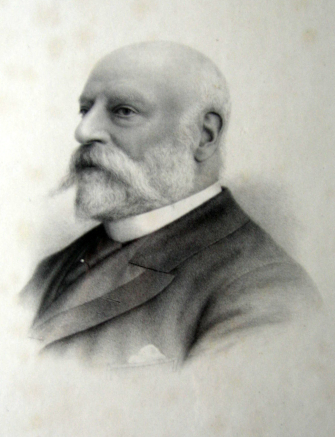
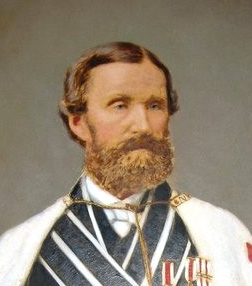
    Sir John Marcus Stewart, 3rd Bart.

    b. 19th of November 1830, d. 26th of February 1905

    Sir John Marcus Stewart, 3rd Baronet (1830–1905), of Ballygawley Park and Loughmacrory Lodge, was a central figure in the later history of the Stewart family of Athenree. Soldier, landowner, and public servant, he represents the Victorian and Edwardian phase of the Tyrone landed class—active in county administration, military service, and social life.

    His death in 1905 was widely reported and provides a valuable contemporary account of his character, responsibilities, and position within County Tyrone society.


    Early Life and Family

    Sir John Marcus Stewart was born on 19 November 1830, the eldest son of:

    • Sir Hugh Stewart, 2nd Baronet, and
    • Julia Gage, daughter of Marcus M’Causland Gage of Bellarena, County Londonderry

    He succeeded to the baronetcy in 1854, upon the death of his father.

    He married, on 1 December 1856:

    Annie Coote Houghton,
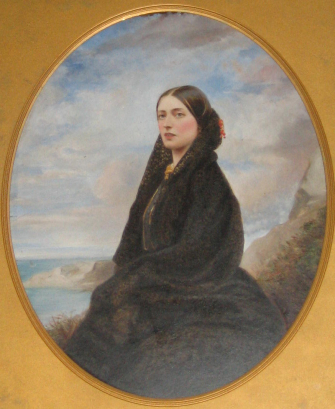
    Annie Coote Stewart nee Houghton.
    d. 12th of October 1913


    daughter and coheiress of George Powell Houghton of Kilmannock, County Wexford.

    They had a large family, including his successor:

    • Sir Hugh Houghton Stewart, 4th Baronet

    Military Service

    Sir John pursued a military career in early life.

    He served as a Lieutenant in the 6th Inniskilling Dragoons, and saw active service during the Crimean War. Although invalided home for a time, he later returned to duty before leaving the army upon succeeding to the family estates.


    Public Office and County Life

    On inheriting the baronetcy and estates, Sir John assumed a prominent role in the administration and social life of County Tyrone.

    He served as:

    • High Sheriff of County Tyrone (1858)
    • Justice of the Peace (JP)
    • Deputy Lieutenant (DL)

    He was also:

    • A long-serving member of the Grand Jury
    • A governor of the County Infirmary and Asylum at Omagh
    • A participant in the Diocesan Synod of the Church of Ireland

    In addition, he acted as Gentleman Usher to the Lord Lieutenant of Ireland during the viceregal periods of the Duke of Abercorn.


    Character and Reputation

    His obituary provides a vivid account of his standing in the county:

    “He was a most generous and considerate landlord… regarded by his tenantry with feelings of the deepest respect and affection.”

    “There was no man in County Tyrone held in greater or more general esteem… one of the few men who never made an enemy.”

    These descriptions reflect the idealised image of the late nineteenth-century landlord—personally engaged, paternal, and socially embedded within the community.


    Residences

    During his lifetime, Sir John maintained several residences, reflecting both inherited property and the shifting pattern of estate occupation:

    • Ballygawley Park (principal family seat in the earlier period)
    • Loughmacrory Lodge
    • Carrickmore Hall
    • Fincoul Lodge

    By the early twentieth century, Ballygawley Park was no longer his principal residence, and the family’s focus had begun to shift toward Loughmacrory and Carrickmore.


    Death and Obituary (1905)

    Sir John Marcus Stewart died on 26 February 1905, following a short illness.

    A detailed obituary noted:

    “Notwithstanding his advanced years, Sir John had a robust constitution… until a few weeks ago…”

    “He passed peacefully… to the inexpressible grief of his wife and family, and the sorrow of all who knew him.”

    The account emphasised both his public service and personal character, highlighting his:

    • generosity as a landlord
    • commitment to local institutions
    • strong identification with the Church of Ireland
    • active role in county affairs

    He was also described as:

    • a Conservative in politics
    • a member of the Loyal Orange Institution
    • connected with the Masonic Order, serving as Provincial Grand Master for Tyrone and Fermanagh

    Contemporary Obituary (1905)

    The following obituary appeared in the Tyrone Constitution on 3 March 1905, following the death of Sir John Marcus Stewart, 3rd Baronet.

    We deeply regret to announce the death of this well-known and highly-esteemed gentleman, which took place on the 26th ult., after a brief illness. The sad news will come as a painful surprise to most of his friends, for notwithstanding his advanced years, Sir John had a robust constitution, and enjoyed wonderfully good health until a few weeks ago, when he was seized with an illness which caused much anxiety to the members of his family, though it was not then anticipated that it would have a fatal termination.

    Last week he was brought to Belfast to undergo treatment at the private hospital in Fitzroy Avenue, where he had the advantage of the best medical skill and most efficient nursing. An operation was deemed necessary, and this was successfully performed on the 22nd ult. by Surgeon Kirk, Professor Sinclair, and Dr. Robert Reid, of Whiteabbey. It was confidently believed that a speedy recovery would follow, but unhappily, in spite of all that professional skill could accomplish, this hope was not realised, for the patient never regained strength and, becoming gradually worse, passed peacefully away on Sunday last, to the inexpressible grief of his wife and family, and the sorrow of all who knew him.

    The late Sir John Marcus Stewart, Bart., of Athenree, County Tyrone, was born on the 19th November 1830, so that he was in his seventy-fifth year. He was the eldest son of the second baronet, Sir Hugh Stewart, and Julia, daughter of the late Mr Marcus M’Causland Gage, County Derry. He was educated at Rugby, and after leaving that famous school adopted the profession of arms, joining as lieutenant the 6th Inniskilling Dragoons, in which regiment he saw active service during the Crimean War.

    He was invalided home for a time, but returned to the scene of hostilities, and there remained until the death of his father in 1856 led to his withdrawal from the Army prior to the conclusion of that historic campaign.

    On succeeding to the baronetcy, which was created in 1803, and to the ownership of the extensive estates in Tyrone and other counties, Sir John threw himself with characteristic energy into the duties which devolved upon him in his new position.

    He was a most generous and considerate landlord, who was regarded by his tenantry with feelings of the deepest respect and affection, for they found in him one who was ever ready to give them a courteous and attentive hearing, and who in diverse ways proved that he had their welfare at heart.

    His genial and kindly disposition endeared him indeed to all who were brought into contact with him, and there was no man in County Tyrone held in greater or more general esteem. He had the gift of making and retaining friends, and was probably one of the few men who never made an enemy.

    He took an active part in the affairs of the county, which has sustained a severe loss by his lamented death. He was one of the oldest members—if not the oldest member—of the Grand Jury, and for many years rendered valuable service as a governor of the county asylum and also of the infirmary in Omagh.

    He was a justice of the peace and deputy-lieutenant of the county, and had filled with marked ability the important office of High Sheriff. During the years in which the first Duke of Abercorn held the Vice-royalty—1866–68 and 1874–76—Sir John acted as Gentleman Usher to the Lord Lieutenant, and in this capacity had official duties to discharge in connection with one of the visits of His Majesty the King—then Prince of Wales—to Dublin.

    In politics he was an ardent Conservative, and he was a pronounced Churchman, being closely identified with the work of the Church of Ireland as a member of the Diocesan Synod and otherwise. He was a liberal supporter of many good causes, and a practical sympathiser with philanthropic and benevolent organisations.

    He was a member of the Loyal Orange Institution, and was also connected with the Masonic Order, being Provincial Grand Master for Tyrone and Fermanagh.

    His residences were Ballygawley Park, Ballygawley; Carrickmore Hall, Carrickmore; and Finn Coul Lodge, County Tyrone.

    Sir John married in 1856 Annie Coote, daughter and coheiress of the late Mr George Powell Houghton, of Kilmannock House, County Wexford, and had a family of nine sons and three daughters. Lady Stewart, the daughters, and six of the sons survived him.

    The eldest son, Lieutenant-Colonel Hugh Houghton Stewart, who succeeded to the title and estates, and who was born in 1858, saw active service during the South African War, and like his father filled the office of High Sheriff of County Tyrone.


    Context and Significance

    Sir John Marcus Stewart stands at a transitional point in the history of the Stewart family:

    • He inherited the estates at their greatest extent
    • He maintained the traditional role of the landed gentleman and county leader
    • His lifetime preceded the final decline and sale of Ballygawley Park

    Under his successor, the economic and structural pressures on landed estates would become more pronounced, ultimately leading to the sale and destruction of Ballygawley Park in the early twentieth century.


    Conclusion

    The life of Sir John Marcus Stewart illustrates the role of the landed gentry in nineteenth-century County Tyrone—combining estate management, military service, and public duty.

    His obituary preserves not only the details of his career, but also the values and expectations of the society in which he lived. Through him, the Stewart family appears at its most established and influential, just before the changes that would reshape both the family and the wider landed world of Tyrone.
    See Also

  • Genealogical Notes on the Shum Family

    Introduction

    The following notes relate to the genealogy of the Shum and Shum-Storey families, compiled from a range of sources including the College of Arms, parish registers, legal records, and contemporary publications.

    They provide supporting detail for the Shum family line connected to Marianne (Marion) Shum and her daughter, Olive Vivian Trainor.


    College of Arms Pedigree (1803)

    A pedigree was entered at the College of Arms in 1803 by George Shum (2nd), father of the later George Shum-Storey.

    This George Shum was born in 1751, the son of George Shum (1st) of Peckham, with whom the recorded pedigree begins.

    George Shum (1st) is stated to have come from Franckfort (Frankfurt) around 1726. He died on 20 November 1789, aged 71, and was buried at the German Church, Trinity Lane, London.

    His wife, Mary Wheatley, died on 25 April 1786 and was also buried there.

    Note: The recorded age at death in 1789 does not fully align with the church register.


    Gentleman’s Magazine Notices (1830–1868)

    Extracts from The Gentleman’s Magazine include the following references to the Shum family:

    • 1840 (Marriage)
      Henry, eldest son of George Shum Storey of Ham Common, Surrey, and Arcot, Northumberland, married Emma Cooper of Brighton. (Noted as first cousins)
    • 1842 (Death)
      Emily Shum, third daughter of George Shum Storey, died at Clifton aged 34
    • 1844 (Marriage)
      Charles Francis Shum, Lieutenant 37th Regiment, married Harriet Fenwick of Strand House, Northumberland
    • 1845 (Death)
      Captain John Shum, 26th Regiment, died in London
    • 1845 (Death)
      George Shum Storey of Arcot, Northumberland, died aged 70
    • 1854 (Death)
      Captain William Shum, formerly of the 3rd Dragoon Guards
    • 1857 (Death)
      Captain Henry Hamilton Shum, eldest son of Colonel Shum
    • 1860 (Marriage)
      Rev. Franck Shum married Sarah Jane Gundry
    • 1861 (Death)
      Henry Shum Storey died at Arcot Hall aged 59

    Legal Records

    Records from Crossman, Block & Keith (Solicitors) note:

    • Robert Shum admitted to the firm: June 1839
    • Left the firm: 1880
    • Died: 1885

    The Times (1805)

    A notice in The Times (2 March 1805) records:

    “On Thursday evening at his house in Bedford Square, universally lamented, George Shum, Esq., late Member of Parliament for the Borough of Honiton, aged 53 years.”


    Bedford Estate Records

    Records indicate that George and Ann Shum resided at:

    👉 29 Bedford Square, London (c.1805)

    This location corresponds with later references to Upper Gower Street, where subsequent family members lived.


    Parish Registers and Local Records

    Surrey parish records provide further detail:

    • 1795 (Baptism)
      Henrietta, daughter of George and Ann Shum
    • 1793 (Burial)
      Katherine, aged 3
    • 1801 (Burial)
      Julia Mary, aged 4 months

    These entries suggest residence at Bury Hill, Dorking, with Wotton parish serving as the primary place of burial.


    Additional Notes

    • Rev. Frederick Shum is recorded in the death index (1877), though age discrepancies exist
    • Several inconsistencies in dates and ages appear across sources, indicating the need for cautious interpretation

    Significance

    These records illustrate the development of the Shum and Shum-Storey family across:

    • London
    • Surrey
    • Northumberland

    They provide important genealogical context for the maternal ancestry of Olive Vivian Trainor and demonstrate connections to professional, military, and landed society.

    See Also:

  • Olive in South Africa: Business and Reinvention

    Introduction

    Following a period of instability in England and abroad, Olive Vivian Trainor entered a new phase of her life defined by enterprise and reinvention. Her move to South Africa marked a turning point, in which she established a degree of independence and financial stability through business.


    Return to England and New Beginnings

    Olive returned to England in 1938, as tensions in Europe increased prior to the outbreak of the Second World War.

    During this period, she formed a relationship with Major George Stephenson. Although she did not remarry, she adopted the name Olive Stephenson by deed poll.


    “Madame Olive” in Knightsbridge

    Using funds secured from her divorce settlement, Olive established a business at 37 Knightsbridge in London.

    Trading as “Madame Olive,” the enterprise included:

    • a beauty salon
    • the sale of perfumes and cosmetic products
    • a treatment marketed for hair loss
    • a marriage bureau known as “Wedding Bells”

    Despite her ambition, the business struggled to attract sustained clientele and proved financially difficult to maintain.


    Move to South Africa

    Seeking new opportunities, Olive relocated to South Africa, where she re-established her marriage bureau.

    In contrast to her experience in London, the venture proved successful. She expanded operations across:

    • Natal
    • Durban
    • and into Rhodesia

    This marked the most stable and commercially successful period of her life.


    Family and Changing Circumstances

    Her son later joined her in South Africa, initially working within her business before pursuing a career in retail, theatre, and eventually broadcasting.

    This period saw a gradual shift from instability toward a more settled existence.


    Later Years

    In 1968, her son moved to Scotland to work with Scottish Television. Olive followed, settling in Glasgow, where she remained for the rest of her life.

    She died on 21 August 1980, aged 86.


    Reinvention and Resilience

    Olive’s life in South Africa demonstrates a remarkable capacity for adaptation.

    After a series of personal and financial setbacks, she was able to:

    • establish a successful business
    • maintain independence
    • and support herself and her family in a new environment

    Significance

    This phase of her life highlights:

    • the possibilities for reinvention in the wider British Empire
    • the role of migration in shaping personal histories
    • and the resilience required to rebuild after social and financial disruption

    See also

  • Olive in London and Hollywood Ambitions (1910s–1928)

    Introduction

    The years between the First World War and the late 1920s represent a formative and unsettled period in the life of Olive Vivian Trainor. Marked by social independence, ambition, and controversy, this phase reveals a young woman navigating opportunity, expectation, and constraint in early twentieth-century society.


    Early Social Life and Stage Claims

    Olive later claimed to have worked as a dancer in London and to have performed alongside Jack Buchanan, a prominent figure of the West End stage during the First World War.

    Although no formal programmes or reviews survive to confirm this, several photographs preserved among her personal effects appear to be promotional in nature and suggest some level of theatrical involvement.

    If accurate, this experience would have placed her within the vibrant social and cultural life of wartime London.


    Marriage and Social Independence

    During her marriage to Henry Keddey Fletcher, Olive maintained an active social life centred on London.

    She travelled frequently, dined out, entertained guests, and moved within social circles that extended beyond the expectations of a conventional married life. This independence became a central issue in the breakdown of the marriage and later featured prominently in legal proceedings.


    Conflict with Convention

    Accounts from the early 1920s reflect a pattern of behaviour that challenged contemporary norms.

    Olive was described as:

    • socially active and independent
    • resistant to domestic constraint
    • frequently present in public and social settings

    In the context of the period, such behaviour attracted criticism and contributed to her portrayal in divorce proceedings.


    Association with Joynson-Wreford

    Following the collapse of her marriage, Olive became associated with Capt. Wilfred H. J. Joynson-Wreford.

    Their relationship formed part of the legal basis for divorce actions involving both parties, linking Olive’s personal life directly with the wider Joynson-Wreford family history.


    Departure for America (1928)

    In 1928, Olive left England with her young son, intending to begin a new life in the United States and, it seems, to pursue opportunities in the world of entertainment or society.

    The journey did not proceed as planned. Upon arrival in New York, she was refused entry due to the absence of an immigration visa.

    Unable to disembark, she was deported to Bermuda, where she remained until arrangements were made for her onward travel.


    Ambition and Uncertainty

    This episode reflects both the ambition and instability that characterised this period of Olive’s life.

    Her willingness to leave England and attempt a new beginning abroad suggests a determination to shape her own future, despite financial, legal, and social obstacles.


    Significance

    The London and early overseas years of Olive Vivian Trainor illustrate:

    • the expanding social opportunities available to women in the early twentieth century
    • the tensions between independence and social expectation
    • and the personal consequences of navigating these changing conditions

    This period laid the foundation for the later reinvention of her life abroad.


    See also

  • Charles Eccles (1813-1869): A Landlord Remembered

    Ecclesville, Fintona, and the Human Face of a Tyrone Estate


    Introduction

    In the long history of the Eccles family of Ecclesville, few figures stand out as clearly—or as warmly remembered—as Charles Eccles (1813–1869).

    A landlord in an age often defined by tension and inequality, he belonged to a generation whose authority rested not only on land, but on relationship. Contemporary accounts suggest that he was not merely respected, but genuinely beloved—a distinction rarely granted in the Ireland of the 19th century.

    His life offers a rare and revealing glimpse into a different model of estate society: one built on mutual obligation, local presence, and a deeply personal connection between landlord and tenant.


    Inheritance and Responsibility

    Born on 9 April 1813, Charles Eccles came of age at a pivotal moment in the history of the estate.

    He inherited not only land, but expectation.

    The Ecclesville estate, long established in Fintona, required careful management—its prosperity dependent on agriculture, tenancy, and local stability. From an early stage, Charles appears to have understood that his role extended beyond ownership. He was, in effect, the central figure in a small but complex rural world.

    In 1835, he served as High Sheriff of County Tyrone, affirming his position within both local and regional society.


    The 1834 Dinner: A Defining Moment

    The character of Charles Eccles is perhaps best captured in a remarkable contemporary account from the Londonderry Sentinel (31 May 1834), describing a dinner held in his honour by his tenants.

    This was no ordinary gathering.

    Tenants, neighbours, and local figures assembled in Sherard’s Hotel, Fintona, not out of obligation—but out of genuine regard.

    When Charles rose to respond, his words revealed both humility and intention:

    “When I look around me… and see myself surrounded by such a numerous and respectable body of friends and neighbours… I feel a glow of lofty and laudable ambition.”

    He acknowledged that the respect shown to him had not yet been earned:

    “These flattering tokens of your esteem have not been earned by me, but by one of whom it would not be my place to speak here…”

    In that moment, he positioned himself not as a distant proprietor, but as a successor to a legacy of responsibility.

    He concluded with a principle that would define his tenure:

    “The old maxim, ‘live and let live,’ has long been the motto of the family… and on this principle I shall endeavour to act.”

    This was more than rhetoric. It was a statement of estate philosophy.


    Landlord and Tenantry

    Throughout his life, Charles Eccles appears to have maintained a notably strong relationship with his tenants.

    Accounts of the Ecclesville estate emphasise:

    • Moderate rents
    • Long-term security through leases
    • Encouragement of improvement
    • Personal accessibility

    He was not an absentee landlord. He lived among his tenants, knew them, and was known by them.

    This relationship formed the foundation of his reputation.


    A Reputation Beyond Rank

    By the mid-19th century, Charles Eccles had become a central figure in the social life of Fintona and the surrounding district.

    His influence extended beyond the estate:

    • As a magistrate
    • As a landowner
    • As a local leader

    Yet what distinguished him was not power—but perception.

    Unlike many of his contemporaries, he was remembered not with resentment, but with affection.


    Death and Public Reaction (1869)

    Charles Eccles died on 4 November 1869, after a prolonged illness.

    The reaction was immediate and profound.

    Contemporary accounts describe a level of public grief rarely associated with landlords of the period:

    “We shall not say that Mr. Eccles was esteemed… he was more… he was beloved.”

    His death was described as:

    • public loss
    • Deeply felt by tenantry and neighbours alike
    • Comparable to the loss of a family member

    The language is striking—not formal, but emotional.

    It suggests that his relationship with the community had transcended the usual boundaries of class and status.


    The Estate He Left Behind

    At the time of his death, Ecclesville remained:

    • A functioning landed estate
    • A structured rural community
    • A centre of local economic life

    But the world in which Charles Eccles had operated was already beginning to change.

    Within a generation:

    • Land reform would dismantle the estate system
    • Ownership would pass from landlord to tenant
    • The social order he embodied would fade

    Historian’s Interpretation

    Charles Eccles represents a transitional figure in the history of the Irish landed class. His life illustrates a model of landlordism rooted in personal engagement, local responsibility, and a degree of mutual respect that was not universally present in 19th-century Ireland. The warmth of contemporary accounts suggests that his authority was accepted not simply because it existed, but because it was exercised with restraint and awareness. Yet his story also highlights the limits of such a system. Even at its most humane, landlordism remained structurally unequal—and ultimately unsustainable in the face of legal, economic, and social change. In this sense, Charles Eccles stands not only as an example of what the system could be at its best, but also as a reminder of why it could not endure.


    Legacy

    Today, little remains of The Ecclesville Estate itself.

    Yet the memory of Charles Eccles endures in:

    • Contemporary writings
    • Estate records
    • Local tradition

    He is remembered not simply as a landowner, but as a presence—one who shaped the lives of those around him in ways that were felt long after his death.


    Significance

    The life of Charles Eccles offers something rare:

    A portrait of landlordism not defined by conflict—but by connection.

    It is this distinction that ensures his place not only in the history of Ecclesville—but in the wider story of land, society, and change in Ireland.


    See Also

  • The Death of Rev. James Lowry Dickson (1843): Report and Retraction

    Introduction

    In June 1843, the death of the Rev. James Lowry Dickson, rector of Lavey, County Cavan, was reported in dramatic and disturbing terms in The Times.

    However, within a day, the newspaper issued a complete retraction, declaring the original account to be entirely fabricated.

    This episode provides a striking example of the circulation of misinformation in nineteenth-century print culture, and the speed with which even major newspapers could be misled.


    Initial Report (14 June 1843)

    (Reproduced in full)

    The Times
    London, Middlesex, England

    June 14, 1843

    TRAGICAL OCCURRENCE:- We regret to have to announce the death of the Rev. James Lowry DICKSON, rector of Lavey, county of Cavan, under the following melancholy circumstances:- It appears that on Wednesday last Mr. DICKSON, having returned home from Cavan, felt somewhat fatigued, and after dinner retired to bed. Mrs. DICKSON being out visiting at the time, there was no person in the house but the servant maid and a person named ECCLES, a relative of Mrs. DICKSON, who unfortunately is subject at intervals to fits of mental derangement. This person having entered the dining-room after Mr. DICKSON had retired, and having partaken copiously of a decanter of spirits, which he found on the sideboard, commenced smashing the glasses, &q., when the servant maid, although well aware of the danger she incurred by interfering, came to the door and forbade him to act in such a manner, whereupon he pursued her upstairs, whither she fled to one of the bed-rooms   for refuge. On reaching the lobby, the maniac darted into Mr. DICKSON’S room, who was then in a profound sleep – alas! a “sleep that was to know no waking” – and having seized a razor which lay upon the dressing-table, with one stroke of (ineligible) weapon completely cut the trachea, by which respiration was instantaneously suspended, and the vital spark extinguished. An inquest was held on the body on Thursday, where a verdict in accordance with the foregoing circumstances was returned.


    Retraction (15 June 1843)

    (Reproduced in full)

    The Times

    London, Middlesex, England

    June 15, 1843

    ATROCIOUS FABRICATION:- The following appeared in the Mail of last night:- “In the Mail of Monday we gave a circumstantial account of the murder of the Rev. James Lowry Dickson, rector of Lavy [sic], in the county of Cavan, alleged to have taken place by the hand of a maniac, while in a state of furious excitement, produced by intoxication. That statement and the finding of the inquest we gave on the reputed authority of a person who represented himself in his letter as the coroner of the county, and we inserted it without entertaining a doubt of its correctness: for we could not have imagined depravity or harshness to exist to invent so atrocious a story. The whole statement is a villainous fabrication: and fortunately, having preserved the original manuscript, which we have given to a near connexion of Mr. Dickson. by whom it will be forwarded to the country by the night’s post, we are not without hope that the miscreant will yet be detected. With the view of increasing the chances of such a discovery, we hereby offer a reward of 20/. to any person who will afford evidence substantially establishing the guilt of the writer.”


    Context and Interpretation

    The juxtaposition of these two reports is remarkable.

    The first presents a highly detailed and violent account of murder, involving an individual described as a relative named Eccles. The narrative is vivid and specific, giving it an appearance of authenticity.

    Yet within twenty-four hours, the same newspaper publicly discredited the entire account, describing it as a “villainous fabrication.”

    This incident illustrates:

    • The vulnerability of nineteenth-century newspapers to false reporting
    • The reliance on correspondence of uncertain origin
    • The rapid spread of sensational but unverified stories

    It also highlights the editorial responsibility taken, at least in this instance, to correct the public record.


    Significance

    Although the initial report was false, its inclusion of an individual named Eccles—identified as a relative—demonstrates how quickly established family names could become associated with sensational narratives, regardless of accuracy.

    For historians, the episode serves as a cautionary example:

    • Not all contemporary reports can be taken at face value
    • Even reputable sources require critical evaluation

  • The Death of Charles Eccles (1869): Contemporary Obituary

    Full Original Text from the Londonderry Sentinel


    Introduction

    On 4 November 1869, Charles Eccles of Ecclesville, one of the most respected landlords in County Tyrone, passed away after a prolonged illness.

    His death prompted an extraordinary outpouring of public grief, captured in a detailed obituary published in the Londonderry Sentinel.

    Presented here in full, this account offers a rare and powerful insight into how he was regarded by his contemporaries—not merely as a landowner, but as a man deeply admired and, in the words of the time, beloved.


    A Landlord Beloved

    “We shall not say that Mr. Eccles was esteemed in this neighbourhood—he was more… he was beloved.”

    The obituary makes clear that Charles Eccles was not simply respected—he inspired genuine affection across all levels of society.


    Full Obituary (Original Text)

    DEATH OF CHARLES ECCLES, ESQ., D.L. (4th November 1869)

    It has never been our lot to discharge a more painful duty than to record the death of Charles Eccles, Esq., J. P., D.L., which took place at Ecclesville, on Thursday, the 4th inst., after a lengthened and distressing illness. The announcement some months ago, that he had become prostrated by disease, and that the medical gentlemen attending him entertained no hope of his recovery, was received throughout this county with the deepest regret, and although his was not a case in which the public could be said to have found any grounds for hoping against hope, the report of his death seemed in the end to carry with it the bitterness of a loss to which they had not yet been reconciled, while it produced in many breasts a sensation to which only the death of some actually beloved one can give rise.

    We shall not say that Mr. Eccles was esteemed in this neighbourhood—he was more; the word which we have already used is a preferable one—he was beloved, beloved by his family, his friends, his tenantry, by every one who had an opportunity of knowing his worth. Upon the sorrowing circle at Ecclesville, we shall not, as it were in the presence of their dead, rudely enter to dilate upon the tenderness of home-relationships, rather would we simply offer them our respectful sympathy and condolence.

    Outside that sacred bound however, we may more freely speak and to none of the excellencies in the character of this lamented gentleman would we give more prominence than the course which he invariably pursued in dealing with his tenants. He respected tenant-right and declared that he would regard himself as a robber were he to infringe upon it; the interest of the tenants in their beneficial improvements he looked upon as property the most sacred, and in the valuation of holdings upon his estate gave express directions not to value improvements, nor fix the rent at such a figure as would restrict the comforts of the tenant.

    His income he considered ample for all his wants and he often generously observed that by increasing it he could add nothing to his own comfort while he abridged that of his tenants. Wherever the hand of death left a widow or helpless family upon the Ecclesville property, the rent was certain to be reduced for a longer or shorter period, so that the holding might not fall to a new occupant; and as in money so in political principle. Mr. Eccles was jealous of the independence of his tenantry and thought no greater evil could exist than the exercise of a landlord’s power to coerce the votes and public action of his people.

    He would reason with his tenants and endeavour to show them that his interests and theirs were identical in matters affecting the public weal, but he would not injure or oppress those who differed from him; nevertheless few men were more willingly followed by their tenantry, for by his recognition of them as “independent electors” in the true meaning of the term, by his liberal management of his property, respecting tenant-right, giving leases to every tenant of good character and industry, and always charging moderate rents, he won not only their votes but their hearts; in short the regard in which he was held was almost idolatrous, and partook more of an uncalculating feudal attachment than of the staid, measured feelings of modern times.

    Mr. Eccles’ manner was peculiarly genial and winning, and though retiring and unobtrusive, few had greater influence over those with whom they came in contact; he had a profound knowledge of men and things, his opinions were matured, carefully reasoned out and settled, no one saw better the difficulties of a position, or was more fertile in expedients to remove or nullify them. Those who knew him intimately gladly resorted to him for advice and direction, and his sound sense, thorough knowledge of life, and unblemished honour, made him a safe and trusted guide.

    Of Mr. Eccles as a public man our readers had many opportunities of judging. As a Magistrate, Grand Juror, Governor of the District Asylum, Member of the Board of Superintendence, &c., he was well known in the county, and known everywhere to be admired and respected. Nay it is a remarkable fact that slander which is so generally equipped for an attack either upon the living or dead, does not appear to have even one of its unhallowed shafts to level at his memory. We have heard his character discussed by men of high as well as men of humble standing, by Liberals and Conservatives; we have heard it discussed in the motley crowd, and we gathered from every source the same estimate, found him everywhere described as one of the few men who could be named in the cause of human excellence.

    But better than all, he turned his thoughts to something still higher and nobler. Not content with mere morality, not content with occupying a high place in the estimation and in the affections of those around him, not content with having within his reach an ample share of the best pleasures of this life, he sought for an earnest of the pleasures of the life to come; he grounded his faith upon the Rock of Ages, and, when his earthly pleasures failed:

    “He sent his hopes on high, looked up and reached
    His sickle forth, and reaped the fields of heaven,
    And plucked the clusters from the vines of God,”

    The Eccles family settled in Fintona during the reign of Charles II., and are amongst the oldest and most influential of the county families. They derived their surname from the Barony of Eccles in Dumfriesshire which they held in Scotland. Eighth in descent from John de Eccles, a person of rank in the reign of Alexander the 3rd, was John Eccles of Kildonan in Ayrshire who lived in the early part of the 17th century and had two sons, John and Gilbert; the eldest was a distinguished royalist, Gilbert settled in Ireland in the reign of Charles I., and purchased several manors in Tyrone and Fermanagh. He died, as appears from his cenotaph in the old church of Fintona, July 26, 1694, at the advanced age of 92, and was succeeded in the Tyrone property by his eldest son Charles Eccles, who was High Sheriff of Tyrone in 1694 and was great-great-great-grandfather of the gentleman just deceased.

    The late Mr. Eccles was born 9th April 1813 and married Isabella, daughter of Edward Blake, Esq., of Castlegrove, County Galway, who died in 1859. He served as High Sheriff of Tyrone in 1835 and was a Magistrate and Deputy-Lieutenant of the County. He was on several occasions requested to stand for the representation of Tyrone but persistently declined the honour. He received the first requisition on this subject shortly after he had attained his majority and had then an offer of support from all the leading gentry of the county; subsequently he was urged by a very influential nobleman to allow himself to be put in nomination, and again and again a similar proposition emanated from different sources, but he preferred having the honour conferred on others to seeking it himself.

    Had he been induced to come forward there could be as little doubt as to his success as there would have been to his ability to stand upon the floor of the House and, with polished eloquence and enlightened judgment, address himself to any question of the day.

    Mr. Eccles is succeeded by his eldest son, John Stuart Eccles, Esq., who about twelve months ago attained his majority.

    On Monday last, the day fixed for consigning the mortal remains of the deceased to their resting place, a vast concourse assembled at Ecclesville to embrace their last opportunity of publicly manifesting their respect for his memory. Carriages arrived every few moments, and the trains from Derry and Enniskillen brought large numbers from the towns along the line. Omagh contributed its quota to the melancholy gathering, and though so many miles distant from Ecclesville nearly all the principal shopkeepers partially closed their places of business, while the peals of the Omagh Church bell further reminded the inhabitants that death had been executing its fatal mission in their county.

    At the hour fixed the mournful procession left Ecclesville in the following order:—

    Pall Bearers

    Col. The Hon. Stuart Knox, M.P.
    Capt. Ynyr H. Burges
    Wm. Archdall, Esq., D.L.
    J. G. Vesey Porter
    Capt. George Perry M’Clintock, D.L.
    Major A. W. Cole Hamilton, D.L.
    Thomas H. Browne, Esq., D.L.
    Samuel Vesey, Esq., D.L.
    Capt. Mervyn Stewart
    Capt. Thomas Auchinleck, J.P.

    Chief Mourners

    John S. Eccles, Esq.
    Rev. Robert G. Eccles
    Dr. Henry Thompson
    Charles B. Eccles, Esq.
    Sir Richard McCausland
    Rev. Mungo Thompson

    The tenants of the Ecclesville Estate, all wearing scarfs and hat bands.

    The Ecclesville labourers with hat bands.

    The remainder of the procession was made up of men of every class and creed, appearing for the moment to anticipate the time when they themselves would have “shuffled off this mortal coil” and entered side by side into that common inheritance to which they were all hastening.

    Amongst those present were—The Very Rev. the Dean of Clonfert; Very Rev. the Dean of Clogher; Rev. R. V. Dixon, D.D.; Rev. W. S. Burnside, D.D.; Rev. John Grey Porter; Rev. Samuel Alexander; Rev. T. L. Stack; Rev. H. L. St. George; Rev. Henry Tottenham; Rev. W. Moutray; Rev. Charles H. Stack; Rev. Charles Maguinness; Rev. J. C. Hudson; Rev. John Flanagan; Rev. George Sidney Smith, jun.; Rev. Charles F. Jones; Rev. J. Whittaker; Rev. J. Rowland Scott; Rev. P. Kerr; Rev. J. M’Groarty; Rev. J. Thornhill; Rev. R. Chambers; Rev. John Arnold; Rev. John Smyth; Rev. William Mulloy; Rev. J. McArdle; Rev. J. Cassidy;

    Colonel Dawson; Major Francis Ellis; Captain Butler; Captain Corr; Captain R. C. D. Ellis; Captain Knox; Captain Sinclair; Captain J. J. O’F. Carmichael Ferrall; Captain Vesey; Captain L. M. Buchanan; Captain Jenkins; Captain R. S. Hamilton;

    George A. Molony, Esq., R.M.; W. Cole Hamilton, Esq., B.M.; A. W. H. Heard, Esq., D.L.; Nicholas M. Archdall, Esq., D.L.; George Scott Mansfield, Esq., J.P.; James Crossle, Esq., J.P.; Edward Waller, Esq., J.P.; A. C. Buchanan, Esq., J.P.; George Hall Stack, Esq., J.P.; J. W. Ellison Macartney, Esq., High Sheriff of Armagh; Wm. F. Black, Esq., J.P.; James Greer, jun., Esq.; Edward Atthill, Esq., J.P.; A. O. S. M. McCausland, Esq.; James Mackay, Esq.; George A. Rogers, Esq.; Millar Simpson, Esq.; William Caldwell, Esq.; Mansergh G. Buchanan, Esq.; James Campbell, Esq., S.I.; George Vesey Stewart; Richard Tottenham, Esq., J.P.;

    Dr. Robinson, J.P.; Dr. West; Dr. Wilson; Dr. Love; Dr. Buchanan; Dr. Trenar; Quarter-master John Core; Robert Buchanan, Esq.; John Dickson, Esq.; George Woodhouse, Esq.; James Johnston, Esq.; John Dickson, jun., Esq.; Hugh Allen, Esq.; M. Moore, Esq.; Cecil Moore, Esq.; T. C. Dickie, Esq.; Whitney Moutray, Esq., J.P.; Henry Moutray, Esq., J.P.; Finlay Buchanan, Esq.; Charles Richardson, &c., &c.

    Only a small portion of those present could gain admittance to the church, and through the anxiety to follow the coffin the doors were literally blocked up by those who were fortunate enough to be near the front of the procession.

    The first portion of the burial service was read by the Rev. H. Tottenham, assisted by the Rev. John McGroarty, and before leaving the church the Rev. Dr. Burnside delivered a short but impressive address. He enumerated the payment of a tribute of respect for the departed, the comfort which it brought to the mourners, and the instruction which it was calculated to convey to them and to their sympathising friends.

    He alluded in feeling terms to the many claims which the deceased gentleman had upon the respect of all who knew him, to his amiability in every relation of life, and to the bright example which was to be found in his career, whether as a devoted husband, an affectionate father, or an indulgent landlord, and made touching reference to his conversion and deeply rooted piety, whereby his affections had been most fully weaned off the things of earth, and through which he was enabled to look upon his approaching dissolution, not as the dreaded appearance of the King of Terrors, but as the appointed and glorious means of opening to him the gates of everlasting bliss.

    Dr. Burnside, in conclusion, called the attention of his hearers to the prayer of the Psalmist, “So teach us to number our days that we may apply our hearts unto wisdom,” and expressed an earnest hope that divinely taught and guided they might, at the final hour, be enabled to say with the deceased, “O grave where is thy victory, O death where is thy sting?”

    An appropriate hymn was sung by the choir while the coffin was being removed, and the funeral procession having re-formed, the remains were borne to the ancient burying ground of Donacavey where the coffin was laid in the family vault, and all that remained of this highly gifted and noble man was, with the deep impressiveness of the concluding portion of the burial service, committed to its kindred earth, in sure and certain hope of a glorious resurrection.


    His Treatment of Tenants

    “He respected tenant-right and declared that he would regard himself as a robber were he to infringe upon it.”

    One of the most striking aspects of the obituary is its emphasis on his progressive and humane estate management:

    • Improvements belonged to tenants
    • Rents were kept moderate
    • Widows and vulnerable families were protected
    • Voting independence was respected

    A Philosophy of Responsibility

    “By increasing it he could add nothing to his own comfort while he abridged that of his tenants.”

    This passage reflects a rare mindset among 19th-century landlords—placing tenant welfare above personal income.


    Public Life and Character

    “He was… one of the few men who could be named in the cause of human excellence.”

    Charles Eccles held multiple public roles:

    • Magistrate
    • Deputy Lieutenant
    • Grand Juror
    • Governor of the District Asylum

    Yet the obituary insists his greatest distinction was moral character, not office.


    Faith and Final Reflections

    “He grounded his faith upon the Rock of Ages…”

    The closing sections of the obituary move from public life to spiritual reflection, portraying a man whose identity extended beyond estate and status.


    The Funeral: A County in Mourning

    “A vast concourse assembled… to manifest their respect for his memory.”

    The scale of the funeral speaks volumes:

    • Large crowds arriving by rail and carriage
    • Businesses in Omagh partially closed
    • Tenantry attending in mourning dress
    • Representation from all classes and creeds

    The Procession

    Pall Bearers

    • Col. The Hon. Stuart Knox, M.P.
    • Capt. Ynyr H. Burges
    • Wm. Archdall, Esq., D.L.
    • J. G. Vesey Porter
    • Capt. George Perry M’Clintock, D.L.
    • Major A. W. Cole Hamilton, D.L.
    • Thomas H. Browne, Esq., D.L.
    • Samuel Vesey, Esq., D.L.
    • Capt. Mervyn Stewart
    • Capt. Thomas Auchinleck, J.P.

    Chief Mourners

    • John S. Eccles, Esq.
    • Rev. Robert G. Eccles
    • Dr. Henry Thompson
    • Charles B. Eccles, Esq.
    • Sir Richard McCausland
    • Rev. Mungo Thompson

    The Wider Gathering

    “Men of every class and creed…”

    The attendees included:

    • Clergy from across denominations
    • Military officers
    • Landed gentry
    • Magistrates and professionals
    • Tenants and labourers

    All united in a shared moment of remembrance.


    The Burial

    “Committed to its kindred earth, in sure and certain hope of a glorious resurrection.”

    The burial took place at Donacavey, the ancestral resting place of the family.

    A sermon delivered by Rev. Dr. Burnside emphasised:

    • His character as husband and father
    • His role as landlord
    • His religious conviction

    A Lasting Legacy

    “The regard in which he was held was almost idolatrous…”

    This obituary stands as more than a record of death—it is a portrait of a man and a system of landholding at its most idealised.

    It captures:

    • A moment before the upheavals of land reform
    • A model of landlord-tenant relations rarely achieved
    • The deep emotional ties that could exist within an estate

    Editorial Note

    This obituary is presented in full and in its original form. Paragraph spacing and section headings have been added for readability; the text itself remains unaltered.


    Related Pages

  • Patrick Joynson-Wreford: Final Years and Return to Seskinore

    Pat & Alex
    Seskinore Garden of Remembrance

    A Life Reconnected

    Patrick (“Pat”) Joynson-Wreford’s later years were shaped by reflection, rediscovery, and an unexpected return to a family story from which he had long been separated.

    For most of his life, that story had been unknown to him.

    But following his reunion with his half-sister Xenia in 2004, Pat became closely connected not only with her, but with the wider history of his father and Seskinore. What had once been distant and unknowable gradually became real.


    Later Life

    In the years after their meeting, Pat remained in regular contact with Xenia and took part in visits to Seskinore.

    These visits were not a return to a remembered past, but an encounter with a life he had only discovered late in life—a landscape that had shaped his father, yet had played no part in his own upbringing.

    Even so, the connection deepened.


    Declining Health

    By 2012, Pat’s health began to deteriorate. Periods of confusion led to a diagnosis of Alzheimer’s disease.

    Despite this, he retained much of what had always defined him:

    • a strong sense of identity
    • warmth in his relationships
    • and a characteristic humour that remained with him even as his condition progressed

    Return, Reunion, and Letting Go

    In August 2012 the story of Seskinore drew together once more—this time not through inheritance, but through rediscovery.

    Pat arranged for Xenia to travel from Australia. She stayed for just over six weeks, and during that time we returned together to Seskinore, spending several days walking the grounds that had once shaped her earliest life.

    It was not an easy visit. Being away from familiar routines proved difficult at times, yet there were still moments of warmth and quiet joy—fragments of connection in a place that had long since changed.


    Rebuilding the Family

    During that same visit, Xenia and I travelled to Surrey to meet relatives with whom we had only recently been in contact.

    Xenia and Julia with the portrait of Dora McClintock

    Julia Chessun (née Mathews) and her husband Stewart had organised a large family gathering. It was a remarkable day—filled with conversation, shared memories, and the gradual weaving together of a family long separated.

    Julia generously shared a collection of family portraits and photographs, many of which were carefully preserved and later added to the McClintock archive.

    From Surrey, we travelled on to Bristol, where Xenia’s cousin David Stewart and his wife Bridget welcomed us.

    Once again, a gathering had been arranged.

    It was another day of warmth and recognition—of names gaining faces, and stories finding their place. David, too, had preserved a wealth of family memorabilia, offering further pieces of a history that had once been hidden.


    The Last Estate Decisions

    Amid these reconnections, attention turned once more to Seskinore itself.

    Xenia raised again the question of selling McClintock Primary School, a property she had only discovered she owned during earlier research.

    At the time, it had seemed sensible to retain it. The school provided a steady income, and as an unexpected inheritance, it required little from her. But circumstances—and time—had changed.

    The market had slowed, yet there remained the possibility that the site would appeal to a long-term investor.

    It was at this point that I recognised my role had reached its natural conclusion.

    The research was complete. The titles had been clarified. The legal and estate matters had been brought into order.

    What remained was no longer discovery—but responsibility.

    And that belonged to Xenia, and to the next generation.


    Handing Over

    All documents, records, and correspondence were passed to her.

    The land agent in Belfast was informed that I would no longer act on her behalf. From that point forward, the management of the property rested entirely with Mrs Lewis.

    It marked a quiet but important transition—from recovery of the past to stewardship of what remained.


    Final Years

    After Xenia returned to Australia, contact became less frequent, though it never entirely ceased.

    Updates continued—particularly about Pat.

    In October, he suffered a fall at home, fracturing his hip. It became clear he could no longer live independently. In January 2013, he moved to Westerton Care Home in Bearsden, where he was well cared for and remained content.

    Though his general condition stabilised for a time, his underlying illness continued its slow progression.


    The End of an Era

    In 2018–2019, Xenia made the decision to sell the school.

    With that sale, a final link to the estate passed out of Perry–McClintock hands.

    After nearly three centuries, the last tangible holding at the heart of Seskinore village left the family.


    Legacy

    What remained was no longer land or buildings—but memory.

    The estate had been fragmented, the house demolished, and the lands dispersed.

    Yet through rediscovery, reunion, and the careful gathering of its history, Seskinore had not been lost.

    Its story—once scattered—had been brought back together.

    And in that sense, the ending was not one of disappearance,

    but of return.


    Death and a Final Wish

    Pat died peacefully on 19 August 2015, aged 87.

    Before his death, he made a final and deeply significant request:

    That he be cremated, and that his ashes be buried beside his father at Seskinore.

    It was a place he had not known in childhood—
    but one that had come to hold meaning in his final years.


    Return to Seskinore

    In May 2016, that wish was fulfilled.

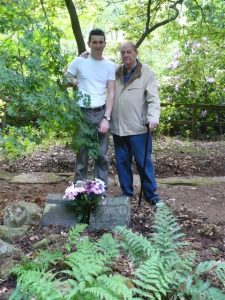
    His ashes were laid in the Garden of Remembrance, beside the grave of his father, Tony Joynson-Wreford, and close to that of Leila McClintock.

    For the first time, Patrick became physically part of the place that had once defined his father’s life.


    Closing the Circle

    Pat’s story came full circle.

    A man who had grown up knowing almost nothing of his father—
    who had never heard of Seskinore, nor of the McClintock family—
    was, in the end, laid to rest at the heart of that history.


    Significance

    Patrick Joynson-Wreford’s life reflects the fragmentation—and eventual recovery—of family memory.

    His search did not simply uncover facts.
    It restored connections:

    • between father and son
    • between past and present
    • and between lives long separated by silence

    His return to Seskinore, even in death, marks one of the final and most poignant chapters in the story of the estate.


    👉 See also:

  • The Seskinore Community and Local Memory

    During the 2005 visit to Seskinore, one of the most powerful aspects of the experience was the connection with the local community.

    Members of the Seskinore Community Group gathered to welcome Xenia and her family, recognising the significance of her return to the estate.


    Shared Memory

    In the courtyard and village, stories began to emerge—memories passed down or retained from earlier generations.

    One man recalled seeing Xenia’s grandfather walking hand-in-hand with her toward the stables.

    Another remembered the celebrations of the Coronation in 1937, when Xenia had arrived in her father’s blue SS Jaguar, while local boys admired the car and its Union flag.

    These recollections brought the past vividly to life.


    Personal Connections

    Xenia and family with Cecilia McHugh

    The visit also led to meetings with individuals who had preserved aspects of the estate’s history.

    Cecilia McHugh, who had worked at Seskinore as a young girl, remembered Tony Joynson-Wreford with great affection:

    “A lovely man, a kinder man you could not wish to meet.”

    Such memories added depth to the historical record, offering personal insight into individuals who might otherwise be known only through documents.


    Eccles Connections

    The visit extended beyond Seskinore to Ecclesville and Donacavey Church, where memorials to the Eccles family were viewed.

    A particularly striking moment came with the discovery of a portrait of Charles Eccles, an ancestor of Xenia. Despite its age and condition, the resemblance to her own family was unmistakable.

    The portrait was later gifted to Xenia, restoring a tangible link to her heritage.


    Significance

    The involvement of the local community demonstrated that the story of Seskinore had not been forgotten.

    It existed not only in records and archives, but in memory, tradition, and lived experience.

    Xenia’s return allowed these strands—family history and community memory—to come together once again.


    See also:

  • Military Careers within the McClintock Family

    Military service formed an important part of the identity of the McClintock family across several generations. From the late 18th century through the early 20th century, members of the family served in both the British Army and associated forces, reflecting the traditions and expectations of the landed class in Ireland.


    Early Service

    By the late 18th century, members of the McClintock family had already established connections with military service.

    Samuel McClintock (1790–1852), who succeeded to the Seskinore estate, served as a Lieutenant in the 18th Royal Irish Regiment. His service reflects the common practice among landed families of combining estate management with military involvement.


    George Perry McClintock

    George Perry McClintock (1839–1887), who inherited the estate from his father, continued this tradition.

    He held the rank of Lieutenant-Colonel and later served as Honorary Colonel of the 4th Battalion, Royal Inniskilling Fusiliers. His position placed him within the framework of local militia and volunteer forces, which played an important role in regional organisation and defence.

    In addition to his military role, he served as High Sheriff of County Tyrone in 1865 and acted as Aide-de-Camp to successive Lords Lieutenant of Ireland, including the Duke of Abercorn and the Earl Spencer.


    Colonel John Knox McClintock

    Colonel John Knox McClintock (1864–1936) represents the most prominent military figure within the family.

    Educated at Cheltenham College and Oxford Military College, he pursued a professional military career with the Royal Inniskilling Fusiliers.

    He served with distinction and was mentioned in despatches during the First World War. He ultimately attained the rank of Brevet-Colonel.

    In addition to his army career, he later served as County Commandant of the Ulster Special Constabulary, reflecting his continued involvement in military and quasi-military organisation.


    The Wider Context

    Military service among the McClintock family reflects a broader pattern among landed families in Ireland during this period.

    Such service:

    • Reinforced social status
    • Provided opportunities for advancement
    • Connected local families to national and imperial structures

    It also complemented their roles within the county, including positions such as High Sheriff and Justice of the Peace.


    Significance

    The military careers of the McClintock family form an important aspect of their history.

    They demonstrate:

    • A tradition of service across generations
    • The integration of estate life with wider national structures
    • The role of the family within both local and imperial contexts

    This tradition continued into the early 20th century, forming part of the broader story of the family and the Seskinore estate.


    See also: